




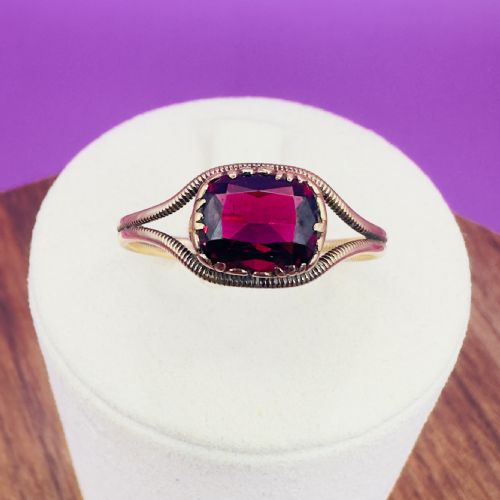
Old Mine Cut
Old mine cut jewels offer the warm, hand-faceted charm of Georgian, Victorian, and Edwardian eras, prized for their candlelit sparkle.
Old Mine Cut
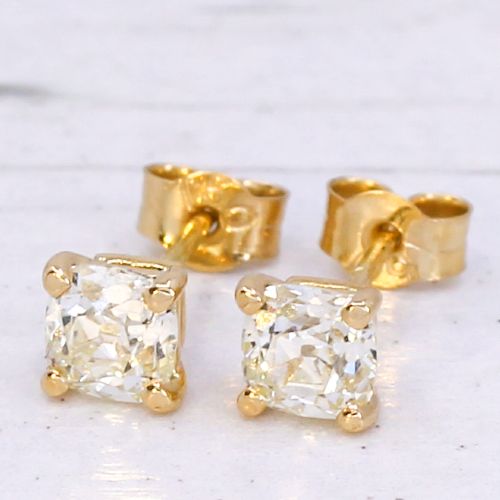
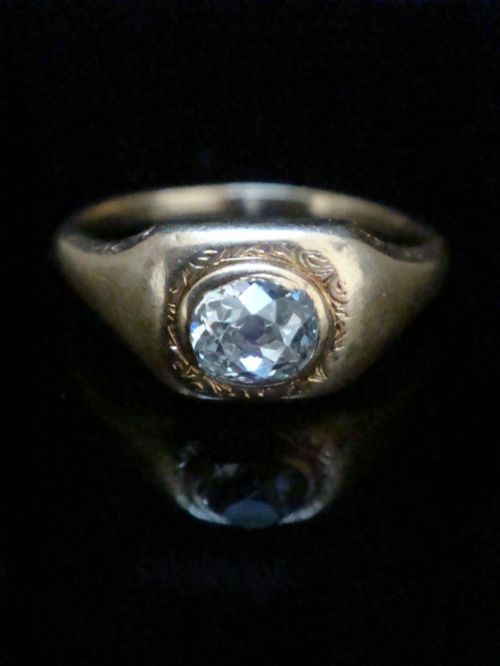
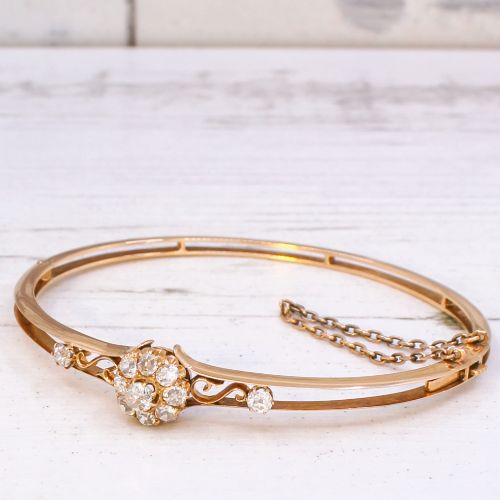
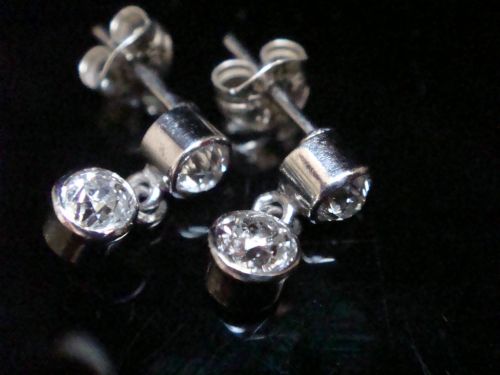
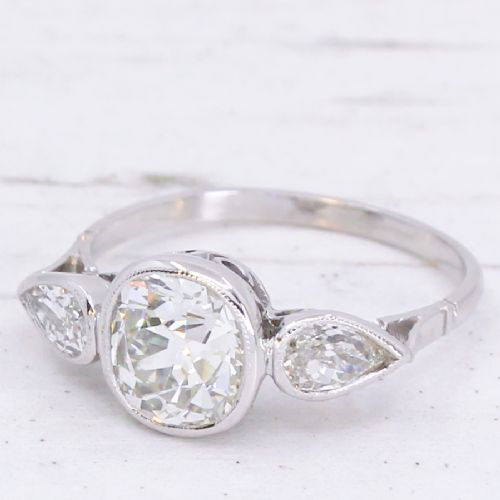
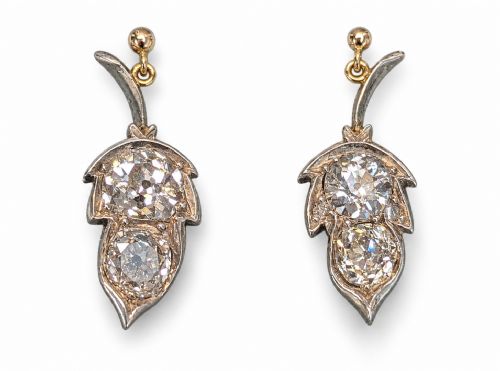
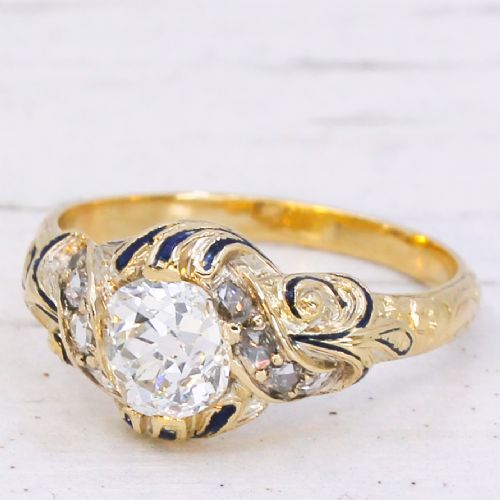
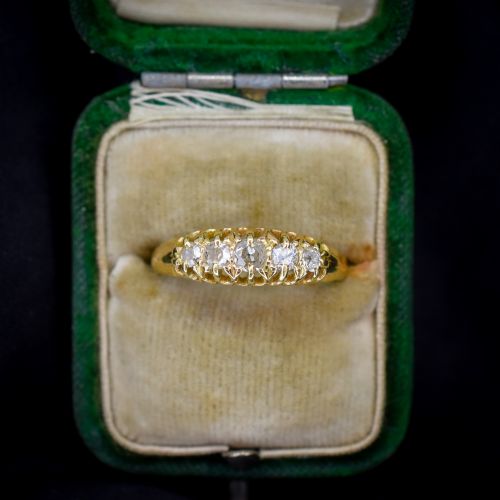
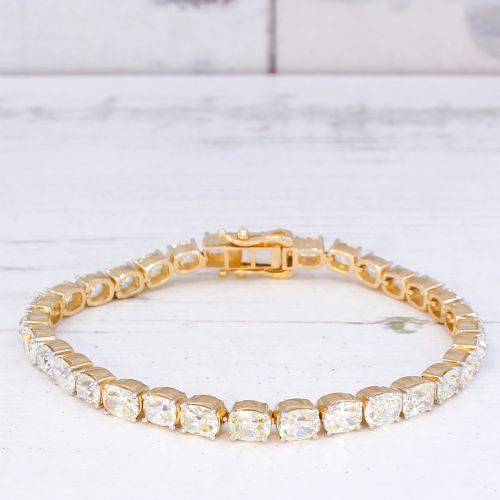
An old mine cut search reveals historical diamond jewellery spanning the Georgian, Victorian, and Edwardian periods, stretching into the Art Deco era. Buyers encounter rings, drop earrings, bangles, and brooches set with distinctive hand-shaped stones.
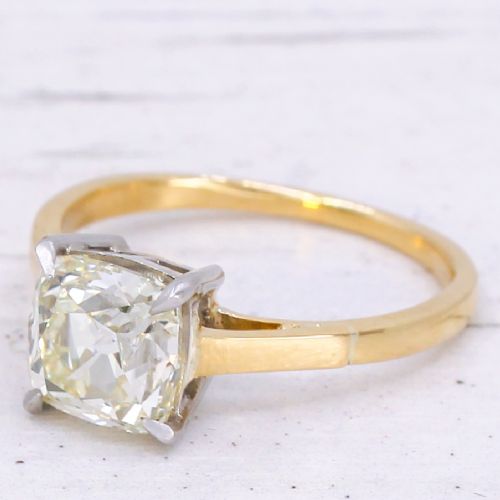
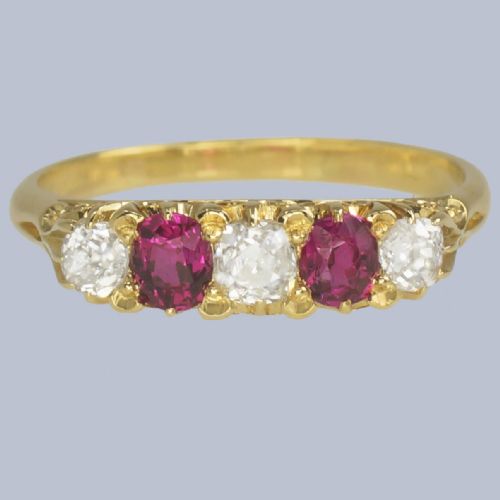
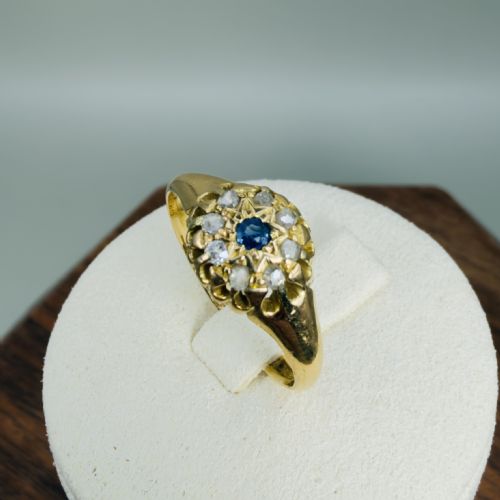
The most common pieces on this page are rings, particularly Victorian and Edwardian solitaire, cluster, and five stone rings. These frequently combine diamonds with rubies, sapphires, or emeralds in yellow gold settings.
Originating before modern machinery standardised diamond cutting, these pieces showcase deep crowns and small tables tailored for historic candlelight. Collectors value the survivor status and individual character inherent in each antique item.
How They Were Made
Goldsmiths worked primarily with yellow gold in varying purities, alongside silver settings designed to reflect white light off diamond facets. Platinum emerges in later Edwardian and Art Deco examples to hold stones securely with minimal metal.
Gems were hand-cut with high crowns, rounded corners, and open culets, maximising carat weight retention from rough stones rather than maximising mathematical brilliance. Settings were hand-forged, cast, or pierced to accommodate clusters, gypsy bands, and flexible bracelets.
Old Mine Cut Retail Price Guide 2026
Typical asking prices for old mine cut among the pieces listed under this phrase on Sellingantiques today, from the lower quarter to the upper quarter. They describe what is for sale here now, not the wider market.
Some Victorian serpent rings feature ruby eyes glaring permanently out from coiled gold bodies.
What Varies in Quality
Quality rests on the symmetry of the hand-cut facets and the preservation of the original setting against wear and tear. Superior pieces maintain crisp claw work and robust structural integrity across delicate galleries and engraved bands.
The integration of supporting gemstones, such as matched natural sapphires or unheated rubies, elevates a piece alongside the primary diamond's clarity and colour. Maker execution and hallmarks provide tangible markers of origin and period authenticity.
The Old Mine Cut Glossary
- Old mine cut
- A vintage diamond cutting style characterised by a cushion outline, high crown, small table, and deep pavilion.
- Culet
- The small flat facet at the bottom of a gemstone, often visible as an open circle through the centre of old mine cut stones.
- Carved half hoop
- A ring style featuring a continuous row of carved metal holding graduated gemstones across the top of the band.
- Gypsy ring
- A band design where gemstones are flush-set directly into the thick metal hoop, popular during the late Victorian period.
- Moi à toi
- A French phrase meaning me to you, describing a ring featuring two main gemstones symbolizing two closely linked individuals.
Old Mine Cut: Frequently Asked Questions
How do I care for antique jewellery?
Clean these pieces gently with soft brushes and warm soapy water, avoiding harsh ultrasonic machines that can loosen old settings.
Store items individually in padded boxes to prevent softer gold and silver from scratching alongside harder diamonds.
Can these rings be resized?
Most gold and platinum bands can be adjusted by a skilled jeweller experienced in working with antique structural elements.
Intricate gallery work or stones set all the way around the band may limit how much the size can change.
What is the difference between old mine and old European cuts?
Old mine cuts feature a squarish cushion outline with curved sides and asymmetrical hand-cut facets suited to antique lighting.
Old European cuts transition toward a rounder perimeter with more standardised symmetry developed closer to the turn of the twentieth century.
How do I identify the period of a piece?
Examine the metal types, mounting styles, and hallmark stamps that record assay office locations and specific production years.
Victorian pieces often feature heavy yellow gold or silver-topped gold, while Edwardian items lean toward lighter platinum lace work.