




Old Coffee Pot
An old coffee pot brings the weight of the Georgian and Regency dining room straight to your table.
Old Coffee Pot
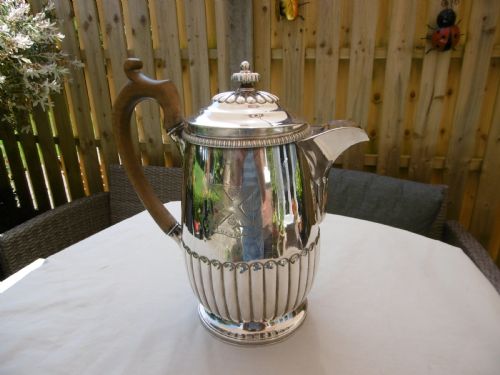
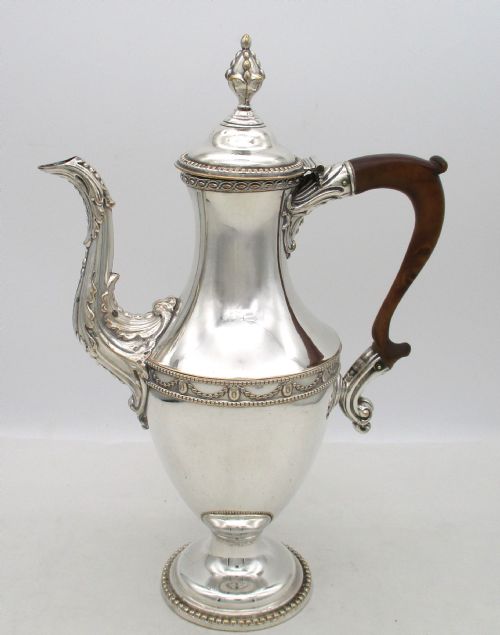
An old coffee pot is a tall serving vessel designed for the formal breakfast or drawing room, appearing in forms from the eighteenth and nineteenth centuries. The examples gathered here span the Georgian and Regency periods, showing the tall, slender profiles typical of the era.
Most pieces encountered on this page are formed from Old Sheffield plate or silver plate, reflecting the dominant manufacturing methods of the time. Makers such as Matthew Boulton and John Hoyland produced notable domestic metalwork that survives in these coffee pots and jugs.
Forms range from classic coffee pots to taller coffee jugs, often featuring insulating details like bone spacers on the handles. These vessels date primarily from the eighteenth and nineteenth centuries, including specific Regency and Grand Regency stylistic traits.
How they were made
The dominant material across these listings is Old Sheffield plate, a specialised fusing of silver and copper sheet developed in the eighteenth century. Makers also utilised solid silver, copper, and hardwood or bone for handle insulators to protect the hand from heat.
Construction techniques involved shaping metal sheets into tall bodies, often embellished with crests, early maker marks, and applied decorative borders. The fusion process in Old Sheffield plate required immense skill to ensure the underlying copper did not show through the wear of generations.
Old Coffee Pot Retail Price Guide 2026
Typical asking prices for old coffee pot among the pieces listed under this phrase on Sellingantiques today, from the lower quarter to the upper quarter. They describe what is for sale here now, not the wider market.
Listings feature pieces spanning the 18th century, 19th century, Georgian, and Regency periods.
What varies in quality
Quality rests in the crispness of the applied decoration, the legibility of early maker marks, and the integrity of the silver layer over the copper base. Pieces associated with recorded makers like Matthew Boulton or John Hoyland carry distinct craftsmanship that elevates them above standard workshop production.
The survival of original elements, such as bone handle rings and engraved family crests like the McFarlane crest, distinguishes superior examples. Weight and balance also indicate quality, as heavier silver plating and substantial hardwood or metal components demonstrate a higher grade of original manufacture.
Matthew Boulton·John Hoyland
The Old Coffee Pot Glossary
- Old Sheffield plate
- A composite material made by fusing a thin sheet of silver to a thicker copper ingot, common in high-quality domestic wares before electroplating.
- Bone spacer
- A small ring of bone fitted into the handle of a metal pot to prevent heat transferring from the vessel to the user's hand.
- Crest
- An engraved family heraldic symbol placed upon the body of the pot to denote the original owner or lineage.
- Georgian
- The period spanning the reigns of the four King Georges, characterised by neoclassical symmetry and refined decorative arts.
- Regency
- The stylistic era following the Georgian period, noted for bolder classical influences and grand proportions.
Old Coffee Pot: Frequently Asked Questions
What periods do these coffee pots come from?
These pieces date from the eighteenth and nineteenth centuries, encompassing the Georgian and Regency eras. The styles reflect the prevailing tastes of those periods.
Most examples lean towards the Georgian style, with several specifically attributed to the Regency and Grand Regency eras.
What materials were used to make them?
The listings show a heavy reliance on Old Sheffield plate, alongside solid silver, copper, and silver plate. Handles often incorporate wood or bone components.
These materials combined to create durable vessels capable of holding hot liquids while remaining presentable for formal dining.
How were these pots used historically?
These vessels served hot coffee during formal breakfast services and post-dinner gatherings in large domestic households. Their tall proportions held enough liquid for multiple guests.
The inclusion of bone handle spacers suggests they were designed for practical daily service rather than display alone.
How can I identify an early maker mark?
Early marks appear stamped into the metal, typically near the rim or base, indicating the workshop responsible for the piece. Names like John Hoyland and Matthew Boulton signify notable production.
These marks help anchor the date and origin of the silver plate or Old Sheffield plate construction.
How do I care for Old Sheffield plate?
Old Sheffield plate requires gentle cleaning with non-abrasive silver polishes to preserve the thin silver layer over the copper base. Excessive polishing wears away the precious metal surface.
Displaying the pot away from direct heat and moisture keeps the hardwood and bone handle components stable.