


Old Cluster Ring
An old cluster ring gathers precious stones around a central focal point, offering enduring sparkle rooted in Victorian, Edwardian and Art Deco design.
Old Cluster Ring
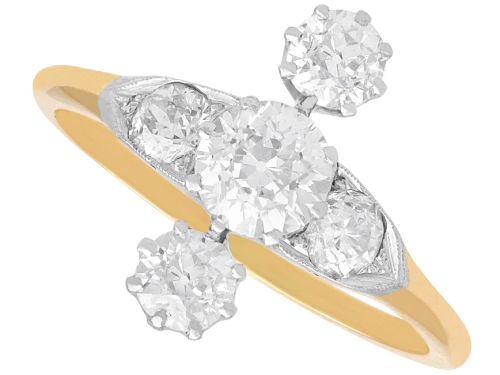
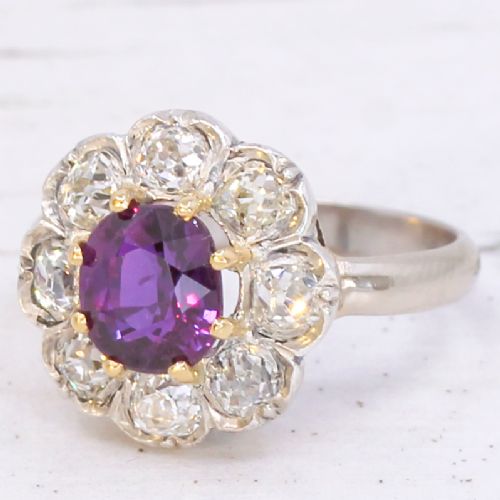
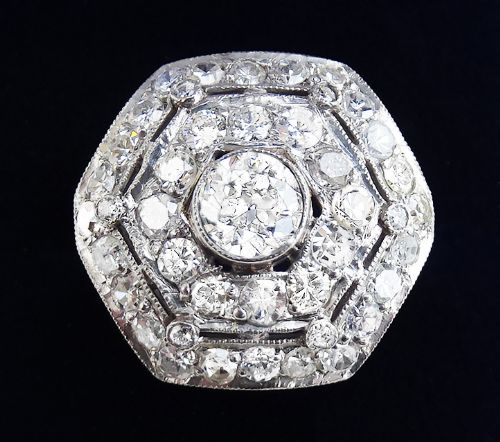
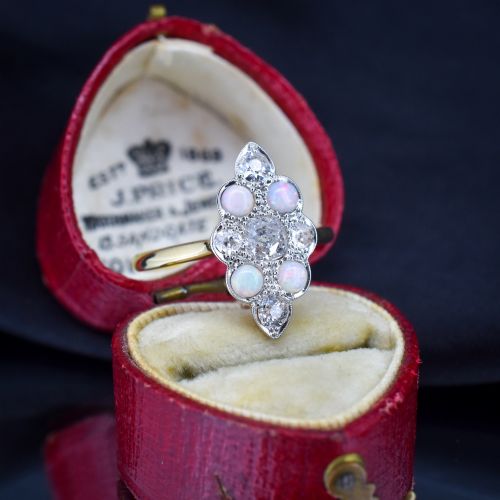
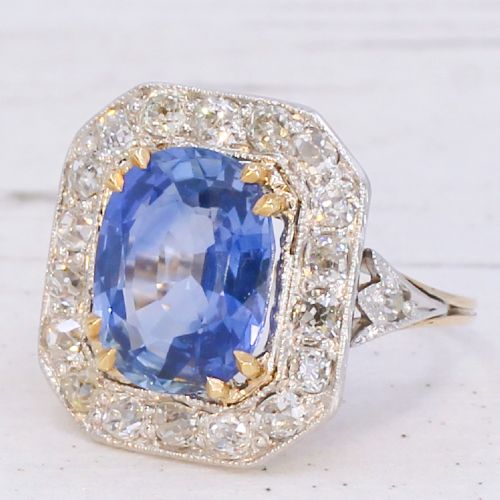
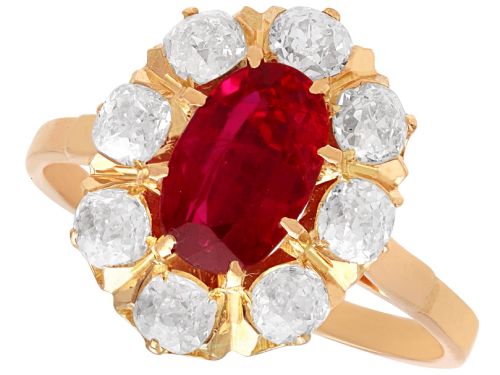
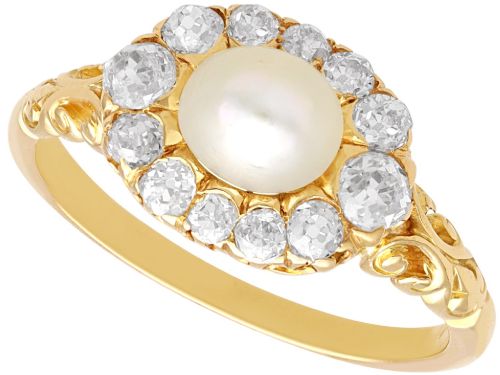
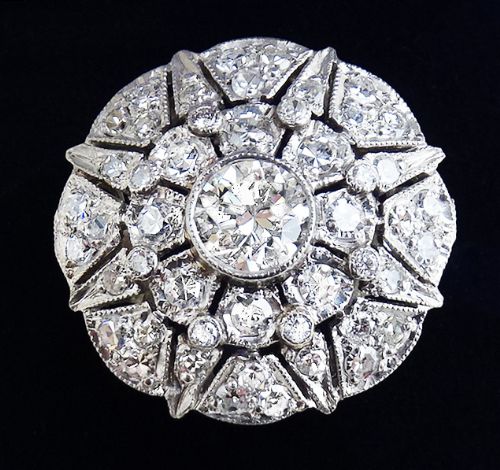
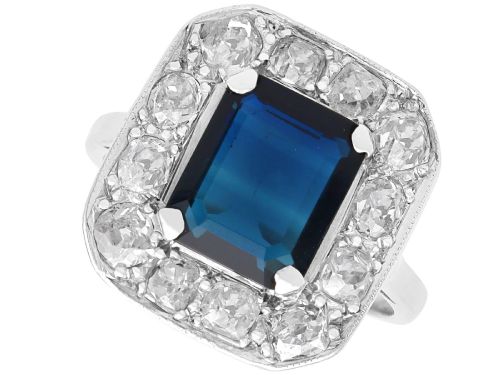
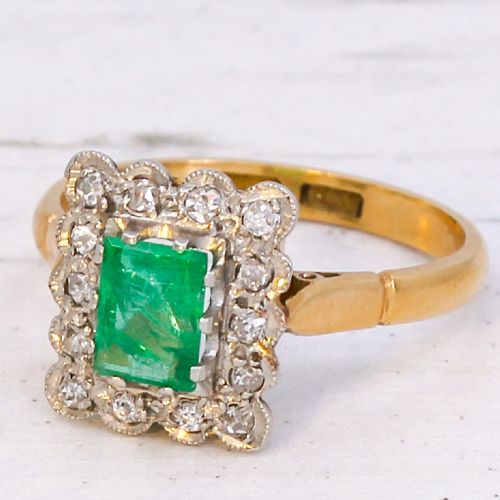
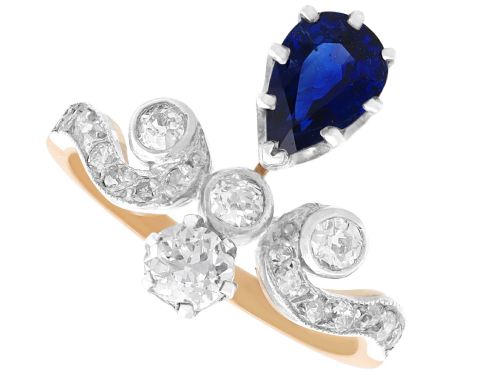
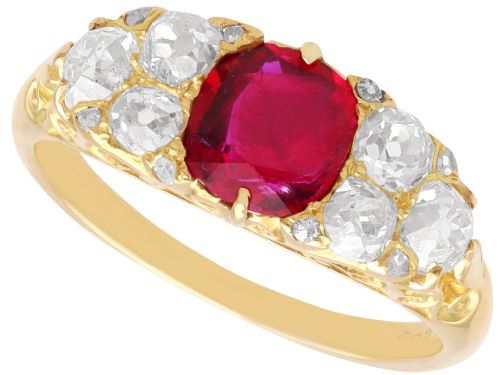
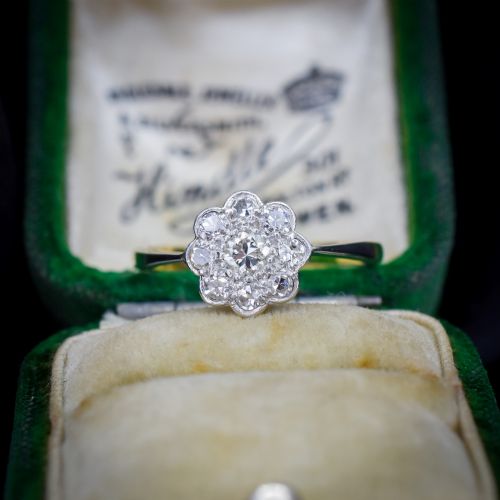
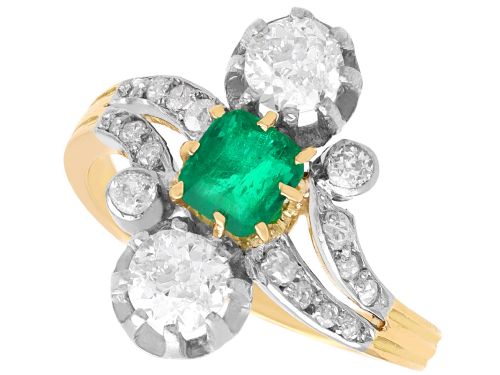
An old cluster ring centres on a primary gemstone, frequently a diamond, ruby, sapphire, emerald or pearl, surrounded by a border of smaller stones. These jewels span the late nineteenth century through the Edwardian era and into the Art Deco period, presenting diverse geometric and floral silhouettes.
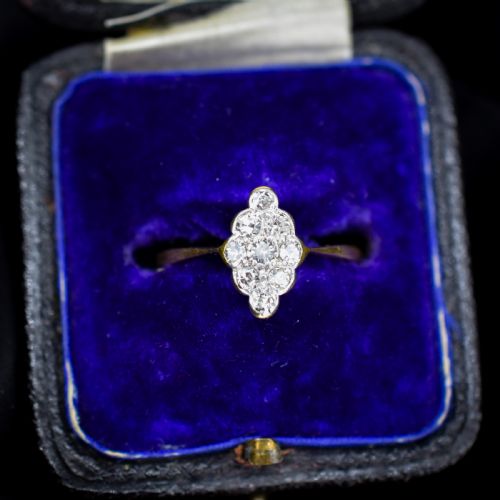
The most common forms on this page include traditional circular daisy designs alongside elongated navette and marquise shapes that sit lengthwise along the finger. Buyers encounter combinations of yellow gold, white gold, rose gold and platinum mounted with hand-faceted old cut stones.
Originating as high-status personal ornaments, these rings functioned historically as engagement tokens or fashionable dress rings. Their survival offers wearers a tangible connection to nineteenth and early twentieth-century goldsmithing.
Materials and construction
Goldsmiths utilised durable metals including yellow gold, white gold, rose gold and platinum to secure the stones. Platinum gained popularity in later Edwardian and Art Deco pieces for its strength in delicate, lace-like settings.
Stones were hand-cut, predominantly utilising old mine cuts or old European cuts that exhibit softer facets and deeper pavilions compared to modern machine-cut equivalents. Settings combined claw, bezel and pavé techniques to hold central gems and surrounding stones firmly in place.
Old Cluster Ring Retail Price Guide 2026
Typical asking prices for old cluster ring among the pieces listed under this phrase on Sellingantiques today, from the lower quarter to the upper quarter. They describe what is for sale here now, not the wider market.
Current listings feature rings spanning from the Victorian era through the Edwardian period and into the 1930s Art Deco movement.
What separates examples
The distinction between standard and exceptional pieces rests upon the quality and match of the central gemstone alongside the proportion of the surrounding border. Natural unheated sapphires or vibrant rubies paired with well-matched old cut diamonds elevate a piece significantly.
Metalwork finesse also determines distinction, seen in the delicacy of platinum piercing, the integrity of the original claw settings, and the overall balance of the cluster shape upon the hand.
The Old Cluster Ring Glossary
- Old cut diamond
- A hand-faceted diamond cut before the advent of modern brilliant cutting standards, typically featuring a smaller table, higher crown and larger culet. This cut produces a characteristic warm glow under candlelight.
- Navette
- A boat-shaped ring setting that tapers to points at either end, also known as a marquise shape. It creates an elongated silhouette along the finger.
- Cluster ring
- A ring design featuring a central stone encircled by a cluster of smaller accent stones. This arrangement maximises visual impact and light return.
- Daisy cluster
- A specific circular cluster configuration where round surrounding stones emulate the petals of a flower. It represents a popular motif across Victorian and Edwardian jewellery.
- Toi et Moi
- French for you and me, denoting a ring style featuring two main side-by-side gemstones symbolising two souls entwined. Often accented by smaller cluster elements.
- Basaltic sapphire
- A sapphire originating from specific geological basaltic environments, known for intense colour saturation. These stones provide deep blue hues in antique mountings.
Old Cluster Ring: Frequently Asked Questions
How do I care for an old cluster ring?
Clean your ring gently using warm soapy water and a soft brush, avoiding harsh ultrasonic cleaners that can loosen antique settings.
Store the piece separately in a fabric-lined box to prevent the old cut diamonds or softer gems from scratching adjacent jewellery.
Can an old cluster ring be resized?
Most gold and platinum cluster rings can be resized by a skilled jeweller who understands antique construction. The delicate gallery work and any shoulder stones must be evaluated prior to adjustment.
Consult a specialist to ensure the structural integrity of the band remains uncompromised during the alteration process.
Are these rings suitable for daily wear?
While sturdy platinum and 18ct gold pieces tolerate regular wear, antique settings require mindful treatment. Remove your ring during heavy manual tasks, gardening or swimming.
Routine inspection by a professional jeweller ensures the claws holding the cluster stones remain secure over time.
How do I distinguish Edwardian from Victorian clusters?
Victorian cluster rings often showcase heavier yellow gold bands and robust settings housing old mine cut diamonds or deep sapphires. Their aesthetic leans towards romantic, substantial designs.
Edwardian and later Art Deco examples frequently incorporate platinum, offering lighter, airier mountings and intricate openwork filigree that maximises diamond brilliance.