



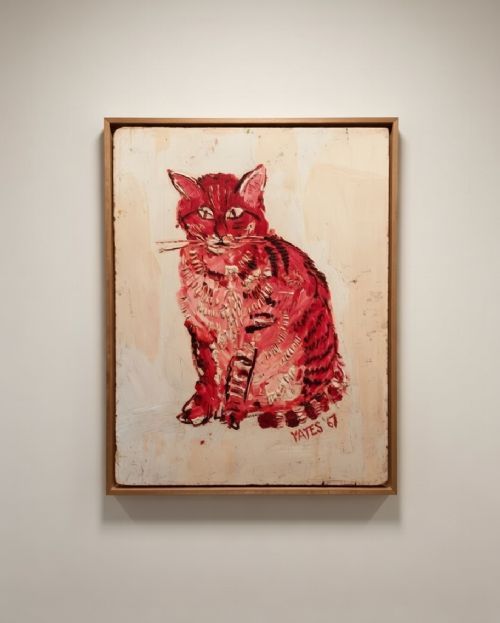


Oil Portrait of Cat
An oil portrait of cat captures feline character on canvas, offering enduring companionship and fine artistic skill for the home.
Oil Portrait of Cat
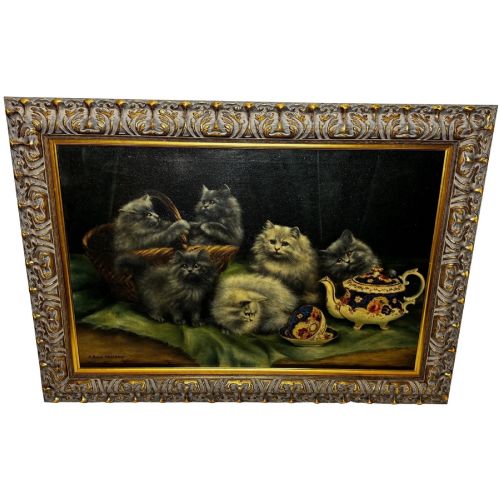
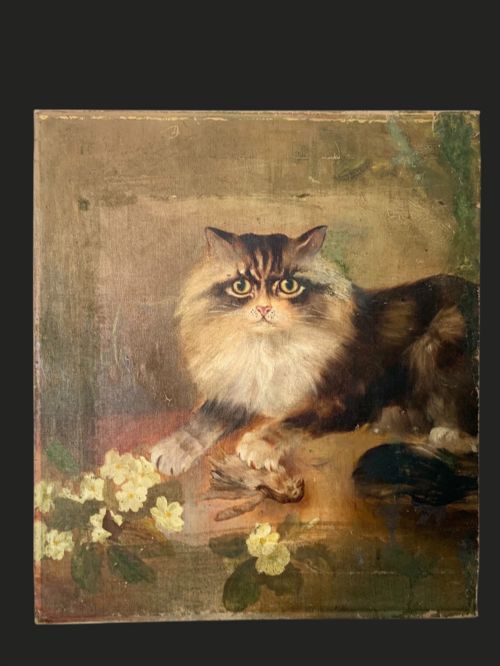
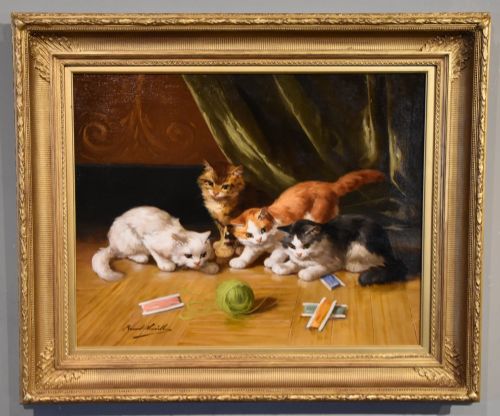
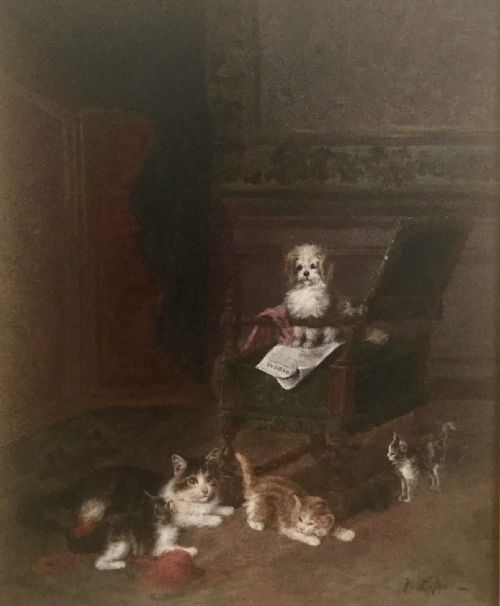
An oil portrait of cat brings together centuries of animal painting, ranging from formal Victorian studies to spirited folk art interpretations. These works record the individual personality of domestic pets, farm cats and pedigreed kittens with distinct charm.
The pieces available here lean heavily into nineteenth-century traditions, including naive school depictions and traditional realism. Buyers encounter everything from solitary sitters to lively groups of kittens at play rendered on canvas or board.
Provincial English and French traditions shape many of these paintings, alongside mid-century naive works and modern British interpretations. Each piece reflects the specific aesthetic of its period, whether through tight academic brushwork or bold, direct folk styling.
Materials and Techniques
Artists relied primarily on oil paint applied to stretched canvas, wooden panels or paper boards to build rich textures and deep tones. This medium allowed painters to render soft fur, glinting eyes and subtle shadow with lasting stability.
Frames play a vital structural and aesthetic role, frequently utilising carved wood, gesso and giltwood to house and elevate the painted surface. Gilding and decorative moulding frame the feline subject much like a human sitter of the era.
Oil Portrait of Cat Retail Price Guide 2026
Typical asking prices for oil portrait of cat among the pieces listed under this phrase on Sellingantiques today, from the lower quarter to the upper quarter. They describe what is for sale here now, not the wider market.
Cats occasionally share the canvas with fish, peacocks, lions, or staring humans who clearly understand who is truly in charge.
Defining Quality in Feline Portrature
Quality rests upon the artist's ability to capture bone structure, anatomy and the distinct inquisitive gaze of the animal without slipping into caricature. Skilled hands manage the play of light across whiskers and fur, creating a convincing sense of volume and life.
The confidence of the brushwork and the harmony of the palette separate standard decorative works from accomplished academic or expressive pieces. Greater mastery shows in the economy of strokes used to suggest texture and the psychological presence of the cat.
Agnes Augusta Talboys·Alfred Arthur Brunel de Neuville·Charles Burton Barber·Fred Yates·Horatio Henry Couldery·Bessie Bamber
The Oil Portrait of Cat Glossary
- Naive school
- A classification for art produced by artists without formal academic training, often characterised by flat perspective and direct charm. These works prize honesty of expression over strict anatomical correctness.
- Animalier
- A nineteenth-century artistic focus on the realistic portrayal of animals, particularly prevalent in French and British schools. Practitioners studied the musculature and behaviour of creatures with scientific and aesthetic intent.
- Oil on panel
- A painting executed on a wooden board rather than woven canvas. Panels provide a rigid, stable support favoured by artists seeking a smooth surface for fine detail.
- Giltwood
- Wood carved and coated with gold leaf or metallic powder to create a lustrous decorative surface. It frequently forms the ornate borders of antique picture frames.
Oil Portrait of Cat: Frequently Asked Questions
How do I date an oil portrait of cat?
Dating relies on examining the stretcher frames, canvas preparation, and the pigments used by the artist. Stylistic clues in the framing and the clothing of any human figures present also provide reliable chronological markers.
Secondary evidence such as old handwritten labels, framer stamps, and exhibition stickers on the reverse often help narrow down the exact decade of creation.
Where should I hang an oil portrait of cat?
These works suit traditional reception rooms, studies, or libraries where their intimate scale can be appreciated up close. Pairing them with period furniture enhances their historical context.
Avoid placing them in direct sunlight or areas with high humidity to protect the oil paint and the underlying canvas or board from warping and fading.
What is the difference between naive art and traditional realism?
Traditional realism follows strict academic rules regarding perspective, anatomical accuracy, and smooth blending to mimic life closely. Artists working in this mode aimed for photographic fidelity and detailed texture.
Naive art dispenses with strict academic rules in favour of expressive distortion, bold outlines, and flat planes of colour, resulting in a more direct and unpretentious character.