

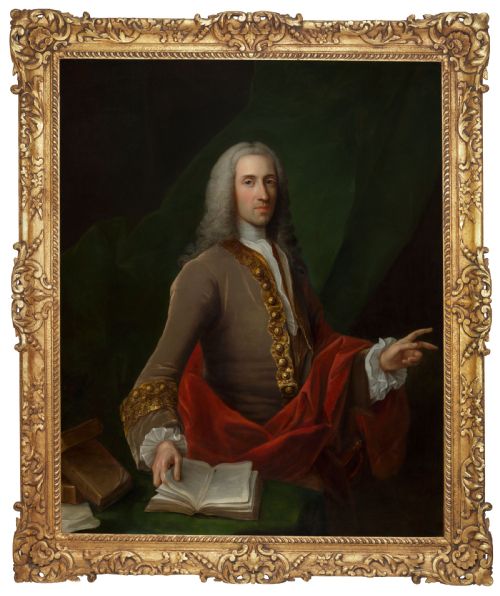


Oil Painting of Books
An oil painting of books captures stacked volumes or figures posed with literature across centuries of canvas and panel.
Oil Painting of Books
When you search for an oil painting of books, you encounter portraits of sitters holding bound volumes alongside still life studies of shelves and vanitas arrangements. These works span from eighteenth century portraiture showing landed subjects with their libraries to early twentieth century British figural compositions and Symbolist depictions of prayer books.
The most common examples on this page balance human subjects with literary accessories, such as lords, young girls, and religious figures posed near shelves or holding open pages. Pure still life representations also appear, ranging from Danish vanitas pieces to contemporary canvases featuring musical instruments and reading matter.
Originating across British, French, and Danish schools, these works display the evolving ways artists integrated literature into painted compositions. You find them executed on canvas, wood panel, and copper, reflecting the diverse material practices of their respective periods.
Assessing quality
The sophistication of the composition dictates the visual success of the piece, whether it is a formal portrait with stacked volumes or a symbolic still life. Superior examples maintain balance between the sitter and their literary accessories, ensuring the books contribute meaningfully to the narrative.
Oil Painting of Books Retail Price Guide 2026
Typical asking prices for oil painting of books among the pieces listed under this phrase on Sellingantiques today, from the lower quarter to the upper quarter. They describe what is for sale here now, not the wider market.
Listings feature oil paintings spanning from the seventeenth century through the Victorian era and into the twentieth century, utilising canvas, wood, and copper.
Jeremiah Davison·Edgard Maxence·Niels Wiwel·John Scougall·John Russell·Francis Alleyne·Edwaert Collier
The Oil Painting of Books Glossary
- Vanitas
- A symbolic still life painting meant to remind the viewer of the transience of life, earthly vanities, and the inevitability of death. These compositions frequently incorporate skulls, globes, and old books.
- Giltwood
- Wood that has been treated with gold leaf or a gilt finish, commonly used for traditional picture frames. This material adds a warm reflective border to the oil painting.
- Portrait Miniature
- A small, highly detailed painting, often executed on a small scale during the Victorian era and earlier periods. They capture likenesses with intimate precision.
- Classical Realism
- An artistic style focused on traditional techniques and accurate observation of the natural world. Works in this mode render objects like books and textiles with high visual fidelity.
Oil Painting of Books: Frequently Asked Questions
What is a vanitas still life?
A vanitas still life uses symbolic objects like books, skulls, and timepieces to reflect on the brevity of human existence. Artists arranged these items to prompt contemplation on earthly achievements.
In these paintings, books often represent human knowledge and learning contrasted against the passage of time.
How do I identify the period?
Dating relies upon the costume of any figures depicted, the style of the frame, and the painting technique. Georgian and Regency works show distinct sartorial fashions and palette choices.
Examining the canvas weave, stretcher bars, and framing materials also helps establish the era of creation.
Were these painted on copper?
Certain works, particularly from earlier centuries, utilise small copper plates as a base for oil paint. This smooth substrate allowed artists to achieve remarkable detail in miniature formats.
Copper panels provide a stable surface that prevents the cracking often seen in aged canvases.
How should I display them?
These paintings require stable indoor environments away from direct sunlight and excessive humidity to protect the oil paint and wood panels. Proper hanging ensures the giltwood frame supports the weight evenly.
Pairing them with traditional or eclectic interiors allows the historical character of the canvas to complement the room.