




Oil on Canvas Waterfall
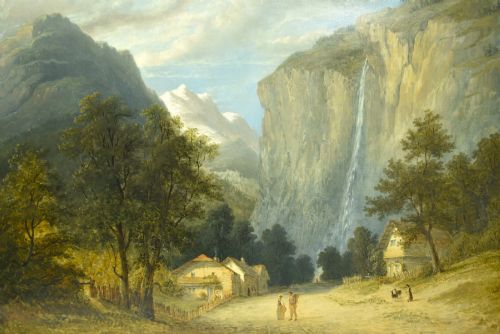
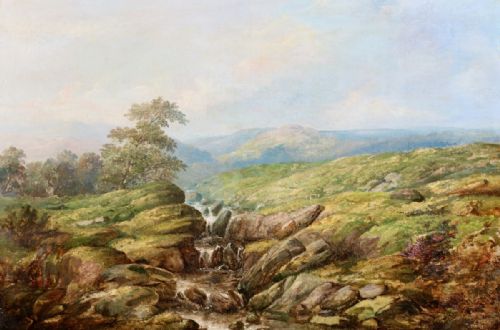
These oil on canvas waterfall paintings capture dramatic nineteenth-century cascades framed in original giltwood.
Oil on Canvas Waterfall
An oil on canvas waterfall brings nineteenth-century naturalism and romanticism into an interior space, depicting rivers, glens, and mountain torrents. These works range from unsigned British and Continental school landscapes to large framed panoramas by named artists.
Most examples date from the Victorian era, spanning the mid-nineteenth century up to nineteen hundred. Subjects often feature specific locations such as North Wales, Switzerland, and New York State.
The compositions frequently incorporate figures, travellers, anglers, or bridges set against wooded glens and dramatic rock faces. Buyers encounter both intimate canvas studies and substantial gallery-sized paintings in gilded frames.
What varies in quality
Quality rests in the handling of light on moving water and the fine detail within the surrounding landscape, from dense foliage to distant mountain peaks. The presence of a signature by an established nineteenth-century artist elevates a piece above unsigned school works.
The preservation of the original gilt frame and the undisturbed state of the canvas contribute significantly to the standing of the work. Superior paintings demonstrate greater depth in the perspective and more nuanced brushwork in the depiction of the falls.
An anonymous angler waits patiently by the roaring torrent, fixed in oil for over a century.
Alexandre Le Bihan·Clarence Henry Roe·William Mellor·John Syer junior·Frederick Richard Lee·James Poole·Peter de Wint·William James Smith Crampton
The Oil on Canvas Waterfall Glossary
- Oil on Canvas
- A painting medium where pigment suspended in drying oil is applied to a woven fabric support. This combination allowed nineteenth-century artists to achieve rich tonal variation and depth.
- Giltwood
- Wood that has been coated with a thin layer of gold leaf or metallic powder. Many nineteenth-century landscape paintings retain these ornate original surrounds.
- Gesso
- A plaster-like mixture applied to wood before gilding to create a smooth base for ornamentation. It defines the decorative relief on period frames.
- Continental School
- A term applied to nineteenth-century artworks produced by artists trained in mainland Europe. These pieces often contrast with contemporary British regional landscapes.
Oil on Canvas Waterfall: Frequently Asked Questions
How do I identify a Victorian oil painting?
Examine the canvas preparation, stretcher frame construction, and stylistic conventions typical of the nineteenth century. Victorian works often display naturalistic or romantic approaches to landscape subjects.
Look closely at the framing and any artist signatures, comparing them with documented examples from the period. Unsigned works can often be attributed to British or Continental schools based on pigment use and subject matter.
Where should I hang a large landscape painting?
These substantial works require a wall with adequate load-bearing support and enough clearance to accommodate their original gilt frames. Generous room proportions allow the detailed panoramas of waterfalls and mountains to be viewed from a comfortable distance.
Position the painting away from direct sunlight and steady heat sources to protect the oil pigments and canvas. Proper wall placement ensures the gilded elements and fine brushwork remain a focal point of the interior.
Are these paintings supplied in original frames?
Many nineteenth-century works retain their original gilded wood or gesso frames, which show period-appropriate wear and construction methods. These frames form an integral part of the piece, having been selected or made specifically for the canvas.
Check individual descriptions to confirm whether the frame is period-original or a later replacement. Original frames enhance the historical context and visual impact of the landscape.
What subjects typically appear alongside waterfalls?
Artists frequently integrated human figures, anglers, travellers, and rustic bridges to establish scale within the vast landscape compositions. Scenes often depict specific geographic locations such as North Wales, Swiss alpine falls, or North American rivers.
These narrative elements draw the viewer into the wooded glens and river valleys. They reflect nineteenth-century artistic preferences for picturesque and sublime scenery.