






Oil on Canvas Cats
Oil on canvas cats bring character and feline grace into a room through pigment laid directly upon stretched linen.
Oil on Canvas Cats
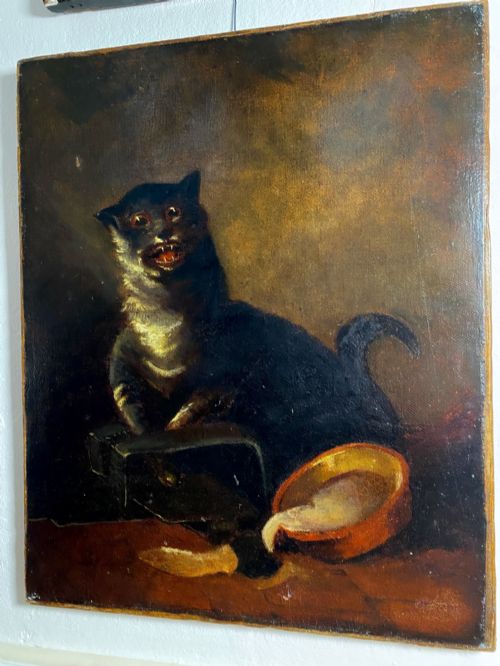
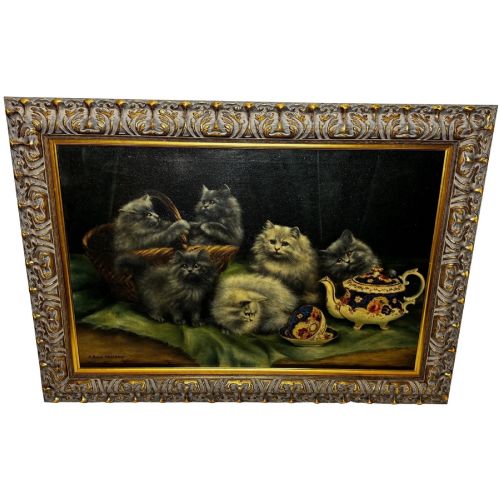
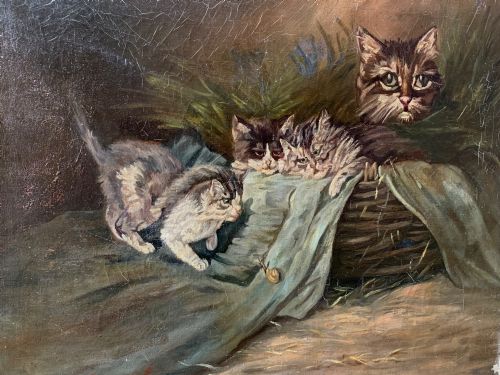
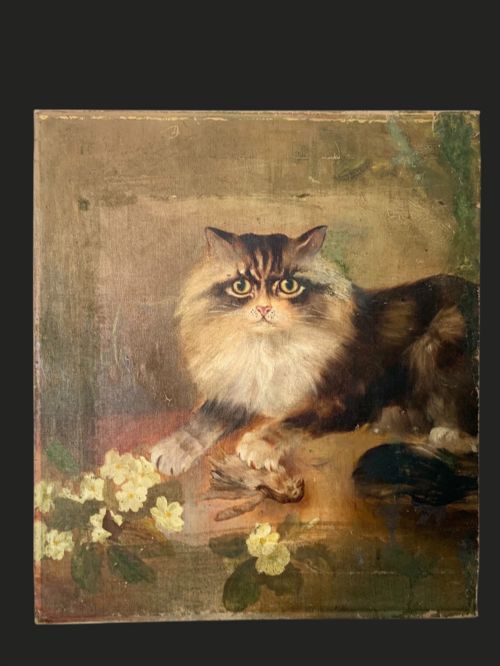
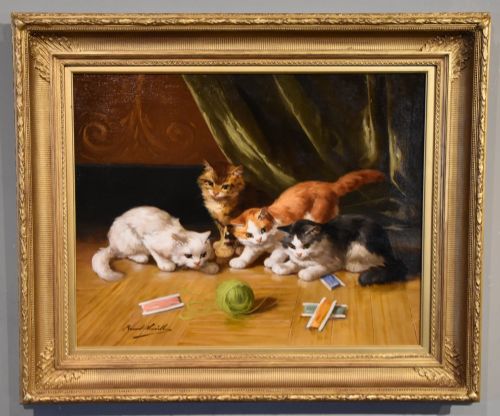
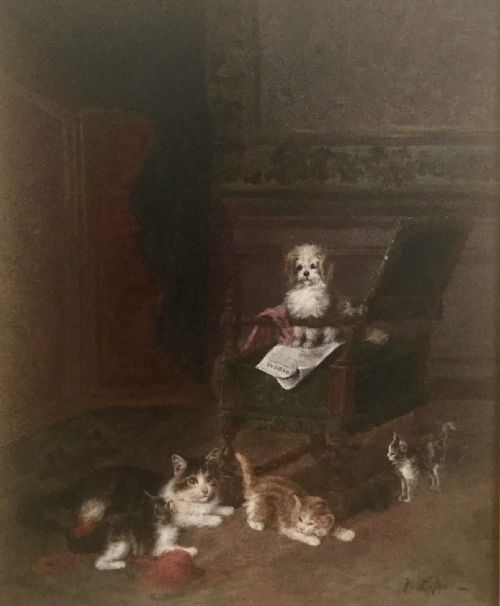
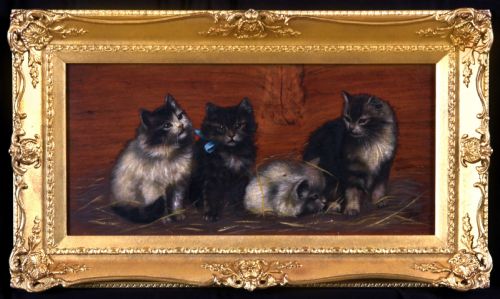
Oil on canvas cats encompass everything from spirited nineteenth-century naive depictions to polished Victorian animalier studies. These works capture felines at rest, playing with kittens, or engaging with prey through the traditional medium of oil paint.
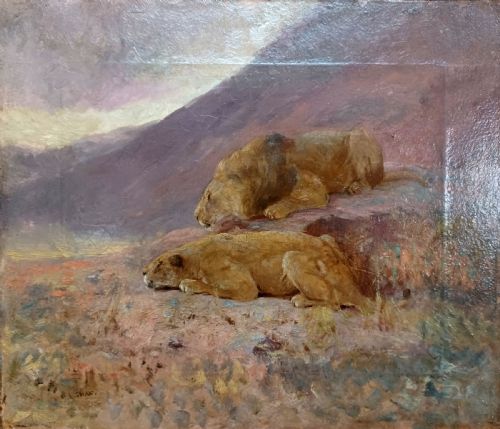
Buyers encountering this selection will find domestic pets portrayed alongside larger feline subjects like lions and leopards. The grouping spans nineteenth-century French and British schools, provincial folk art, and twentieth-century modern British canvases.
The dominant forms here are oil paintings set within timber or gilt wood frames, showcasing the enduring appeal of feline portraiture across different eras. Each canvas tells a distinct story of how artists observed domestic and wild cats over the past two centuries.
Materials and Technique
Artists built these images using oil paint applied to woven canvas, often supported by wooden stretchers. Gesso and timber frequently form the frames that house and protect the painted surface.
Techniques range from the fine, detailed brushwork seen in academic animalier painting to the direct, unpretentious marks of folk art and naive schools. Canvases are occasionally mounted onto boards for stability, particularly in mid-twentieth-century examples.
Oil on Canvas Cats Retail Price Guide 2026
Typical asking prices for oil on canvas cats among the pieces listed under this phrase on Sellingantiques today, from the lower quarter to the upper quarter. They describe what is for sale here now, not the wider market.
Listings feature works from the nineteenth century up to 1950, executed in oil paint on canvas and timber.
Evaluating Quality in Feline Art
Quality rests in the anatomical accuracy and the artist's ability to render the texture of fur and the alertness of a cat's posture. Stronger works convey personality and movement convincingly, whereas weaker pieces lack proportion and depth.
The handling of light, shadow, and background detail separates accomplished academic or school works from simpler provincial efforts. Original framing and the condition of the canvas surface also influence the overall standing of a piece.
Agnes Augusta Talboys·Alfred Arthur Brunel de Neuville·Cuthbert Edmund Swan·Horatio Henry Couldery·Raymond Arthur Roadnight·Geza Vastagh·Jules Le Roy·Bessie Bamber
The Oil on Canvas Cats Glossary
- Animalier
- Art focusing on the realistic portrayal of animals, prominent in nineteenth-century painting and sculpture. This genre requires close observation of animal anatomy and behaviour.
- Naive school
- Art produced by artists with little formal training, characterised by a charming simplicity of perspective and form. These works often rely on bold outlines and direct observation rather than academic rules.
- Gesso
- A plaster-like mixture applied to wooden frames before gilding or painting to create a smooth surface. It provides a stable base for decorative finishes.
- Stretcher
- The wooden frame that holds a canvas taut during and after the painting process. Traditional corners allow for adjustments to maintain canvas tension over time.
Oil on Canvas Cats: Frequently Asked Questions
How do I clean an oil painting?
Dust gently with a soft, dry brush to prevent accumulation. Avoid water and cleaning solutions entirely.
Professional conservators should handle deeper cleaning or removal of discoloured varnish to protect the pigment.
Where should I hang these paintings?
Keep paintings away from direct sunlight and damp environments to protect the canvas and paint layers. Stable indoor temperatures prevent warping of the timber stretchers.
Choose a wall at eye level where the detail of the brushwork can be appreciated closely.
What is naive art?
Naive art refers to work created outside the formal academic tradition, often displaying a flat perspective and simplified forms. These pieces possess an honest and direct charm.
Artists working in this style focus on personal expression rather than strict anatomical accuracy.
How do I identify a nineteenth-century canvas?
Examine the weave of the canvas and the construction of the wooden stretcher behind it. Older frames and handwritten inscriptions on the reverse often provide helpful clues.
Consulting the artist's recorded working dates helps place the painting within a specific era.