




Officers Campaign Drawers
Officers campaign drawers are dismantlable travel furniture built for officers on active service, offering modular timber storage packaged in brass-bound portability.
Officers Campaign Drawers
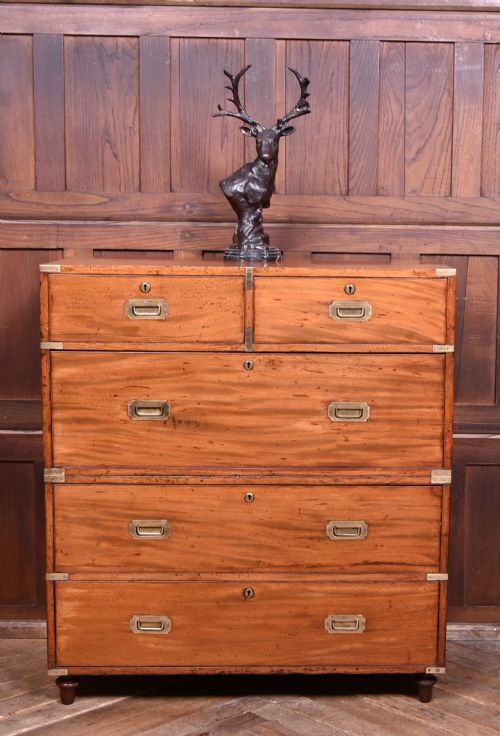
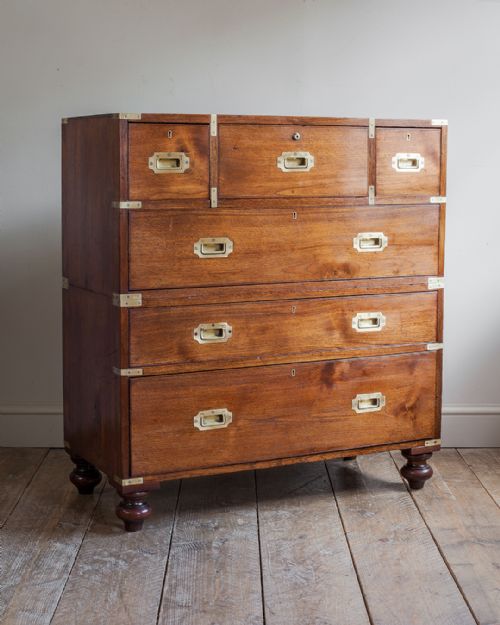
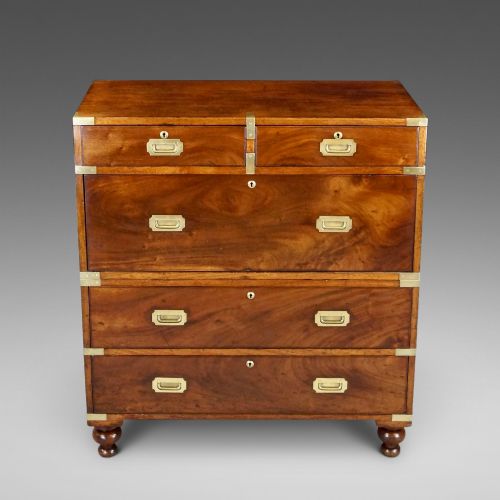
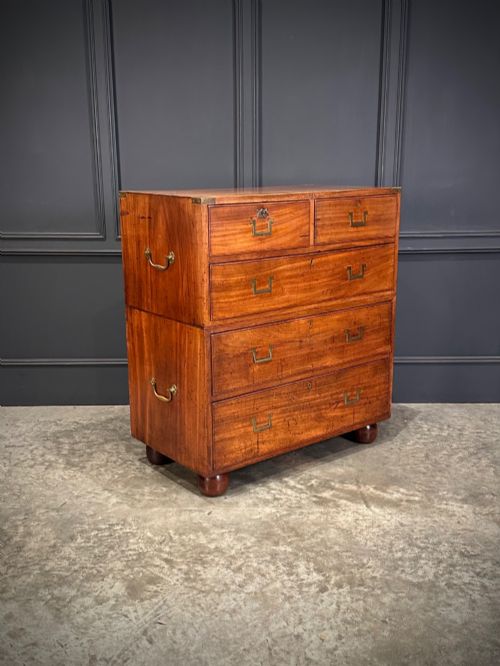
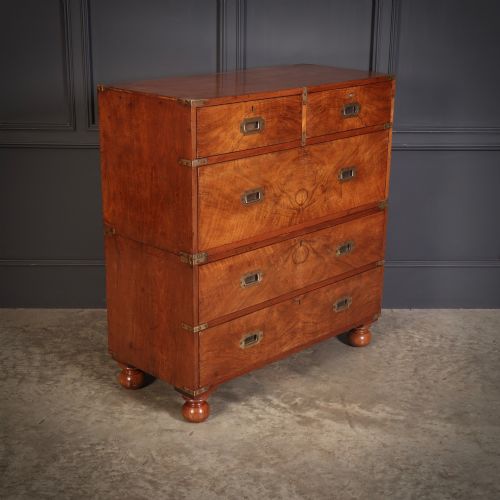
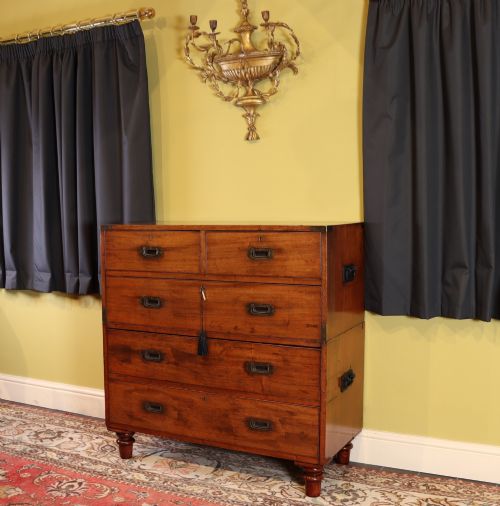
Officers campaign drawers are functional storage pieces designed to travel with military personnel across the British Empire. These items break down into separate modular sections to facilitate transport on ships, trains, and pack animals. A buyer searching for officers campaign drawers encounters chests of drawers, secretaire bureaux, and desktop storage.
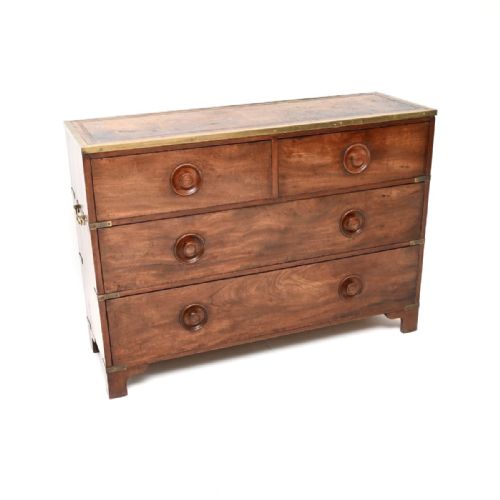
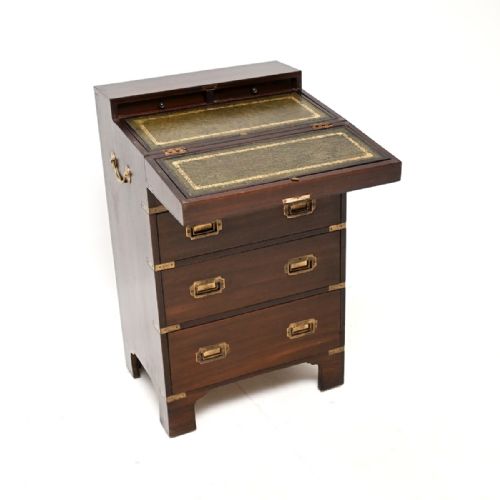
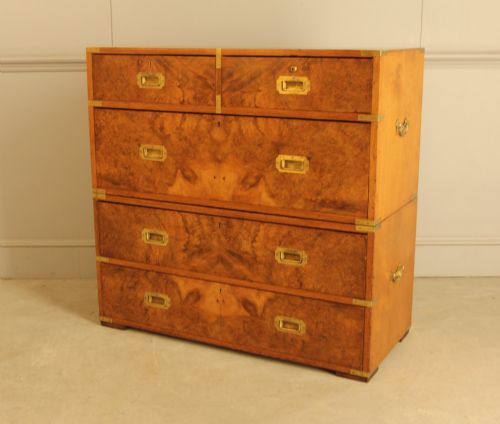
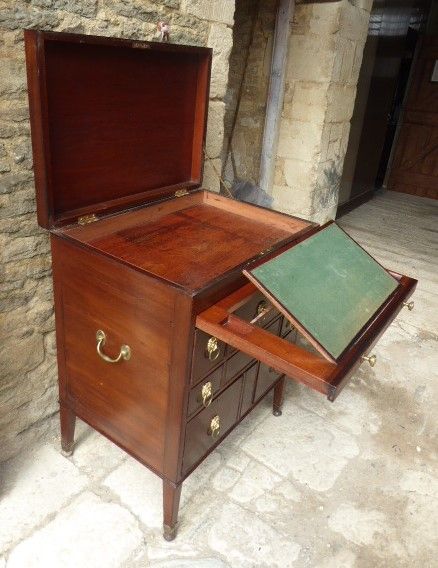
The pieces on this page originate predominantly from the nineteenth century, including Victorian periods, alongside Regency and early twentieth-century examples. Common formats include two-part chests, low chests, and secretaire chests fitted with drop-front writing drawers. Woods span traditional mahogany and teak to camphor wood, padouk, and burr walnut.
How they were made
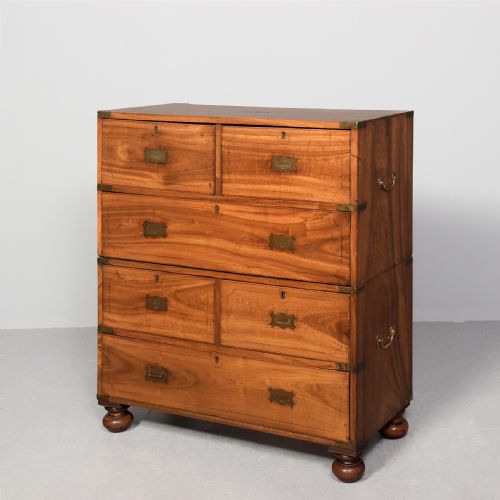
Makers constructed officers campaign drawers using dense timbers such as mahogany, teak, and camphor wood to withstand tropical climates and rough transit. Teak and camphor wood offered natural resistance to moisture and insects during colonial service. Timber sections utilised tight joinery to maintain structural integrity when repeatedly assembled and dismantled.
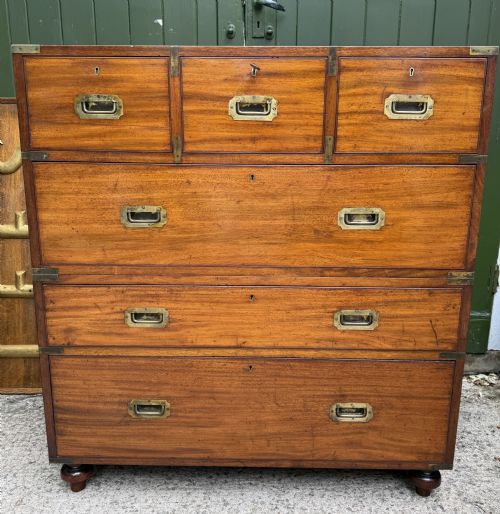
Brass corners, strapwork, and flush-fitting carrying handles protected the edges from impacts and allowed units to be packed closely together. Recessed ring handles and inset drawer pulls ensured no protruding hardware caught during movement. Leather writing inserts frequently appeared on secretaire variations designed for field correspondence.
Camphor wood chests brought their own built-in moth repellent, smelling faintly of the Empire wherever the regiment pitched tents.
What varies in quality
Quality in officers campaign drawers rests upon the crispness of the brass fittings and the precision of the sectional joints. Superior examples feature hand-cut dovetails, heavy brass corner brackets countersunk flush into the timber, and robust internal locking mechanisms. Lesser pieces display simpler construction with standard iron hardware or replaced components.
The choice of timber grain also dictates distinction, moving from utilitarian utility grades to highly figured mahogany, burr walnut, or solid camphor wood. Original two-part configurations with matching serial numbers or maker stamps command greater interest than later reproductions or altered carcasses.
S. W. Silver & Co.·Ross & Co.·Army & Navy
The Officers Campaign Drawers Glossary
- Two-part chest
- A cabinet constructed in separate upper and lower modular sections that stack together. This configuration allowed military officers to transport heavy storage more easily on campaign.
- Secretaire chest
- A chest of drawers featuring a dedicated writing drawer that drops open on hinges to reveal a fitted interior. It served as a portable desk and storage unit combined.
- Flush handle
- A recessed ring or drop handle set level into the timber face of a drawer. This design prevented snags and allowed chests to sit flush against one another during transit.
- Brass binding
- Corner brackets and straps fixed to the edges of campaign furniture. It reinforced vulnerable joints against the rigours of military travel.
- Camphor wood
- An aromatic timber frequently utilised in colonial campaign pieces. Its natural scent helped deter insects during overseas deployment.
Officers Campaign Drawers: Frequently Asked Questions
Why are officers campaign drawers built in two parts?
Modular construction allowed heavy storage units to be split into manageable sections for loading onto carts, ships, and pack animals during military campaigns.
Each half locked securely into place upon arrival at camp, maintaining stability despite frequent relocation.
How do I identify a true military campaign chest?
Look for recessed brass hardware, reinforced corners, and a split carcass designed for dismantling rather than static home use.
True examples also tend to use durable tropical hardwoods like teak, camphor wood, or dense mahogany.
What was the purpose of a secretaire drawer?
The drop-front drawer provided officers with a dedicated writing surface for handling military dispatches, reports, and personal correspondence in the field.
Inside, small pigeonholes and letter compartments kept stationery organised during transit.
Where should I place officers campaign drawers at home?
These compact and structurally robust chests suit bedrooms, studies, or hallways where sturdy storage is required.
Keep them away from direct heat sources to protect nineteenth-century timbers and original brass fittings from warping.