




Officer Military Furniture
Officer military furniture brings ingenious folding design and robust timbers straight from the campaigns of the nineteenth century into the home.
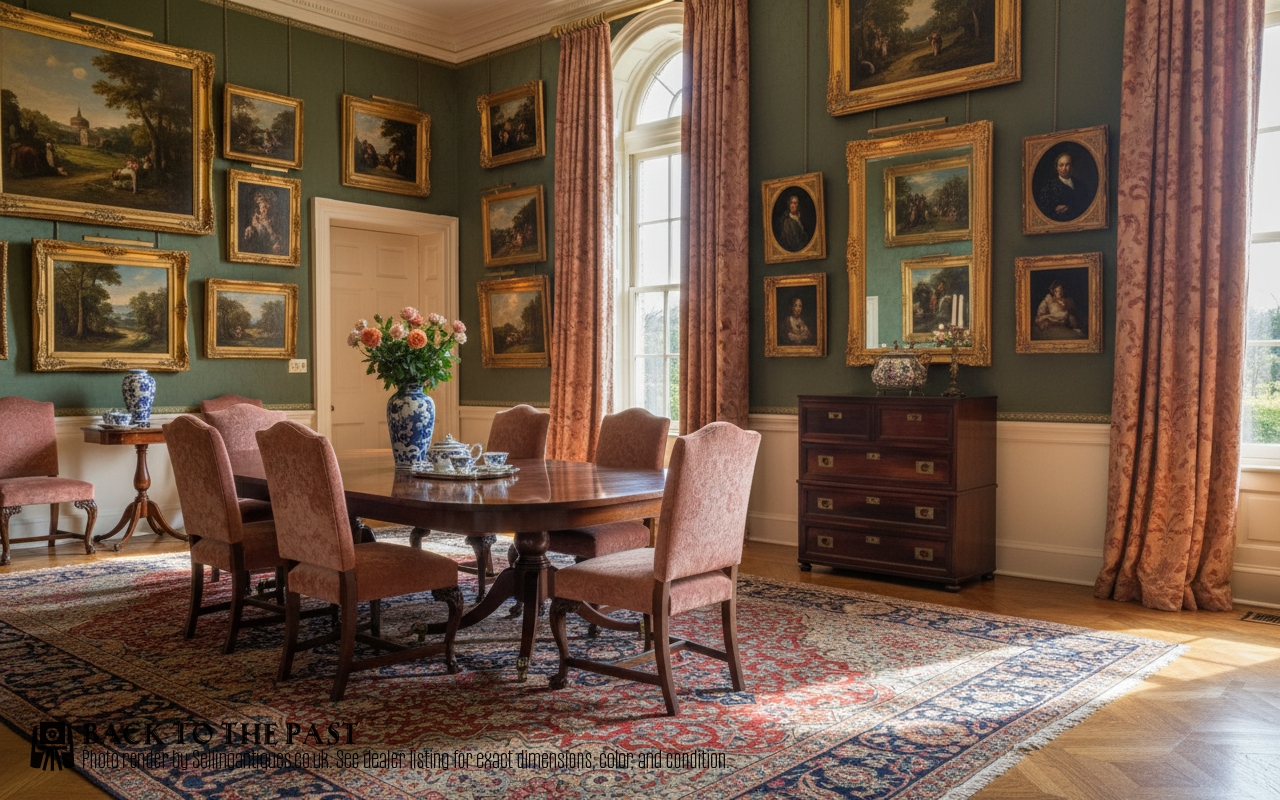
Officer Military Furniture
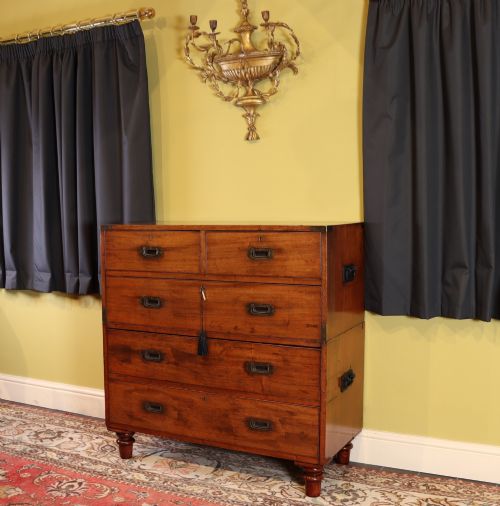
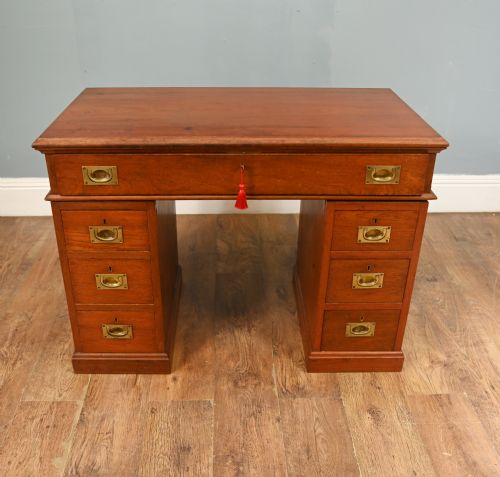
Officer military furniture comprises robust portable pieces designed for the campaigns and travels of British officers during the nineteenth century. Buyers searching this phrase meet practical forms built to dismantle or fold easily, primarily chests of drawers, desks, and chairs.
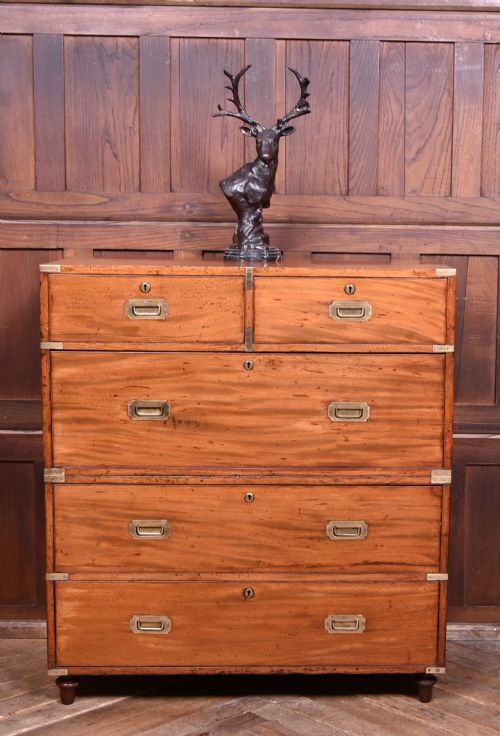
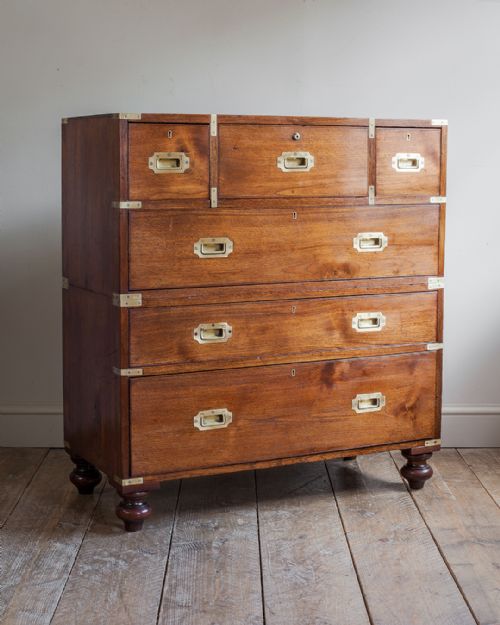
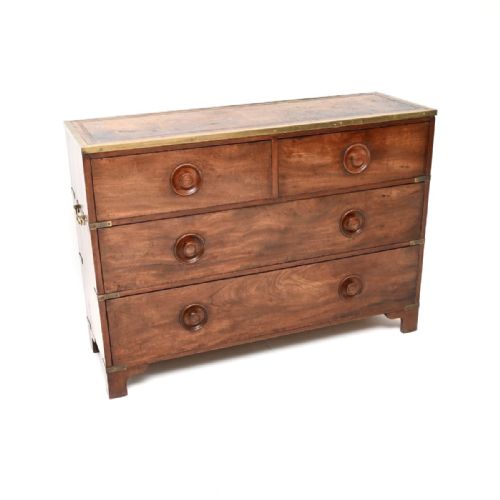
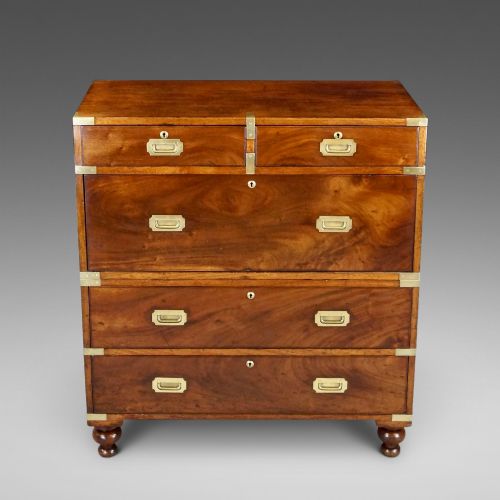
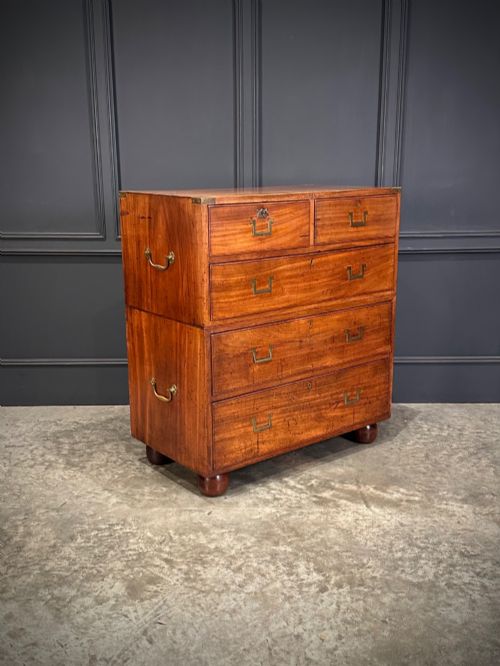
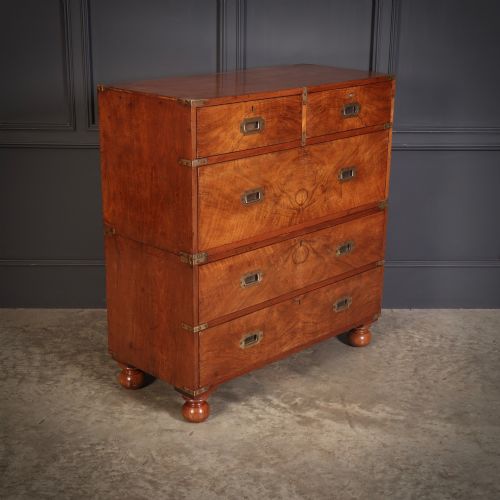
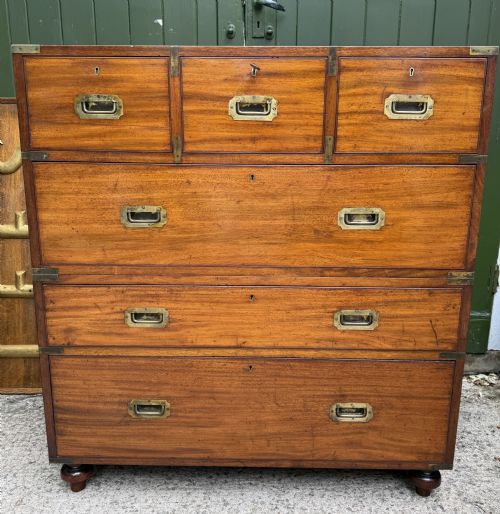
The most common version on this page is the two-part campaign chest constructed from dense timbers and bound with brass. These chests split cleanly into manageable sections for transit on horseback, wagons, or ships.
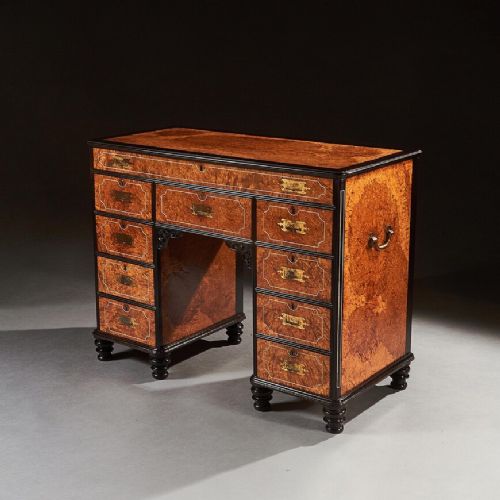
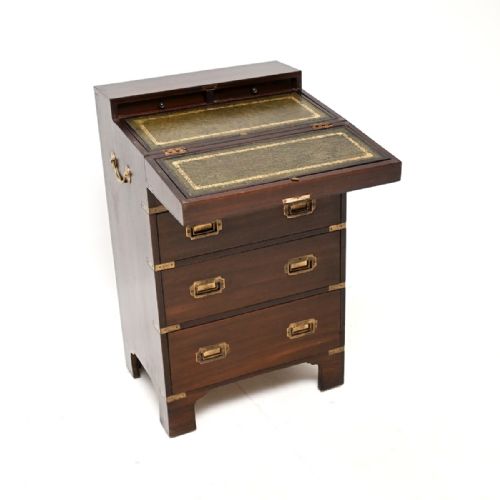
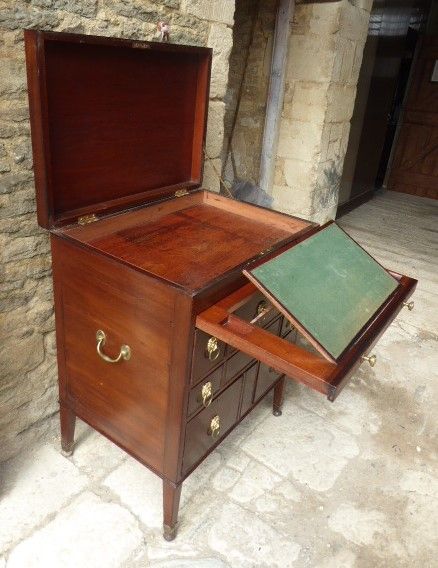
Beyond chests, the selection includes secretaire desks with fitted writing interiors, folding armchairs, and storage trunks. Each piece demonstrates the clever integration of recessed handles and screw-in legs required for service life.
How officer military furniture was made
Cabinetmakers utilised durable hardwoods such as mahogany, teak, and camphor wood to withstand harsh climates and frequent transit. These timbers resist warping and maintain their structural integrity when subjected to repeated assembly and dismantling.
Brass corners, flush-fitting drawer pulls, and strap hinges protect vulnerable edges from heavy knocks during transport. Recessed hardware ensures surfaces remain flat and snag-free while boxes are stacked or loaded into crates.
Listings feature nineteenth-century items constructed predominantly from mahogany, teak, and camphor wood.
What varies in quality
The distinction between standard utility items and superior pieces rests on the precision of the joinery and the grade of timber selected. Finer examples feature well-figured mahogany or solid camphor wood paired with substantial, heavy-gauge brass mounts.
Internal engineering marks the highest tier, visible in smooth-sliding secretaire drawers, neat pigeonholes, and robust internal locking mechanisms. Original fittings and fully functioning two-part separation retain the authentic character expected by serious collectors.
S. W. Silver & Co. London & Liverpool·Ross & Co.·Army & Navy
The Officer Military Furniture Glossary
- Campaign chest
- A portable chest of drawers built in two separate sections designed for military transit. Recessed brass handles and corner brackets protect the timber during long journeys.
- Secretaire chest
- A chest of drawers featuring a hinged writing flap that drops down to reveal fitted compartments and small pigeonholes. This clever dual-purpose form saved valuable space inside officers' tents.
- Brass bound
- The reinforcement of wooden edges and corners with flat brass strips secured by screws. This technique prevents splitting when items undergo rough handling on campaign.
- Two-part chest
- A modular cabinet construction where the upper and lower carcases stack securely together. Metal joining pins or side brackets lock the units firmly in place.
Officer Military Furniture: Frequently Asked Questions
What is officer military furniture?
Officer military furniture consists of portable, sturdy pieces built for British officers on active service during the nineteenth century. These items were engineered to disassemble, fold, or pack down compactly for transport across difficult terrain.
Common forms include two-part chests of drawers, secretaire desks, and folding campaign chairs. Each piece balances domestic comfort with the rugged demands of campaign life.
Why are campaign chests built in two parts?
Two-part construction allowed heavy furniture to be separated into manageable sections for loading onto pack animals, wagons, or ships. This modular design made handling and storage much easier during frequent relocations.
Once transport was complete, the upper section simply stacked onto the lower base and locked securely into position.
How do I identify a genuine campaign chest?
Look for recessed brass handles, reinforced corner brackets, and a modular two-part carcase designed for easy separation. Genuine examples also tend to use dense, durable timbers like mahogany, teak, or camphor wood.
Internal details such as secret compartments and drop-front secretaire drawers further confirm the military utility of the piece.
How do I clean teak or camphor wood?
Clean these timbers gently using a soft, dry cloth to remove dust without damaging the surface. Avoid using harsh chemical sprays or excessive water, which can penetrate and ruin antique polishes.
Application of a quality beeswax paste occasionally will nourish the wood and maintain its natural lustre over time.
Where should I place a campaign chest at home?
Campaign chests suit hallways, bedrooms, and living spaces where their compact proportions and flat tops provide useful display areas. Their rich mahogany or teak tones complement both traditional interiors and modern minimalist rooms.
Keep them away from direct heat sources and strong sunlight to prevent the timber from drying out or fading.