




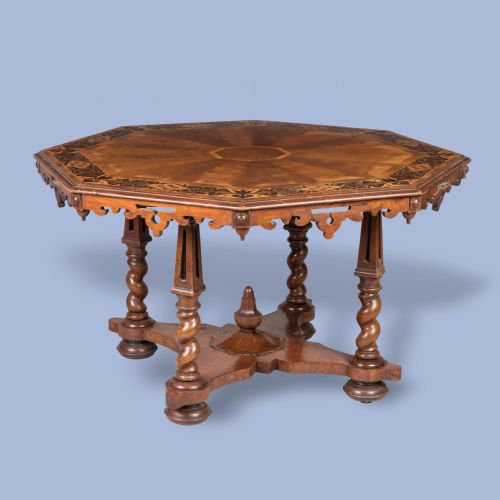


Octagonal Twist Table
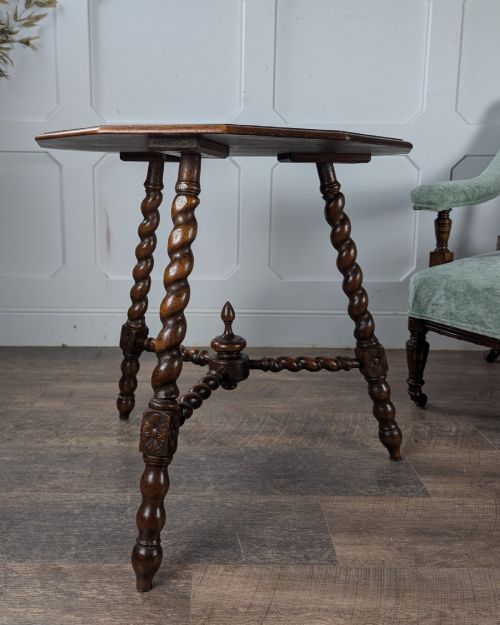
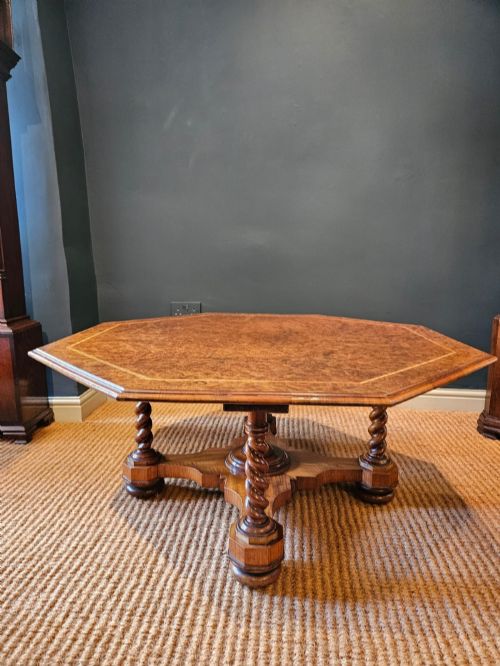
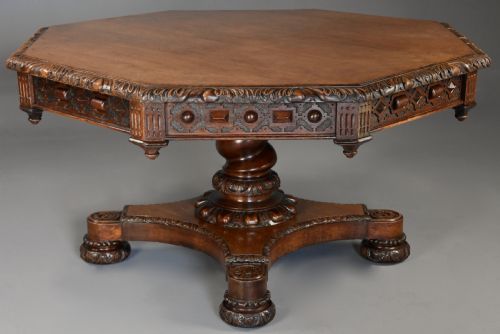
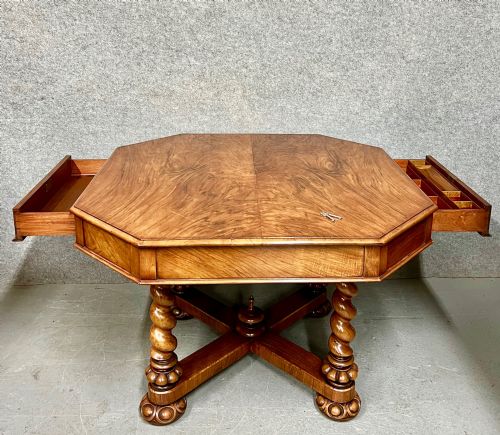
These octagonal twist table pieces offer striking geometric surfaces and turned supports, perfect for placing beside a chair or in the centre of a room.
Octagonal Twist Table
An octagonal twist table presents an eight-sided top paired with distinctive turned or barley twist supports, functioning primarily as a side, occasional, or centre table. The selection spans compact Victorian occasional pieces and larger nineteenth-century centre formats.
Makers shaped these designs across several periods, incorporating styles from early Victorian and Edwardian eras back to Jacobean and William and Mary influences. Collectors find both tilt-top mechanisms and fixed tops among the standard configurations.
The form appears in various domestic settings, serving as a library table, a coffee table, or a candle stand depending on its height and overall proportions.
Materials and construction
Cabinet makers utilised timber selections such as walnut, burr walnut, oak, solid oak, burr elm, and mahogany, often pairing figured veneers with boxwood stringing or marble inserts. The structural joinery relies on traditional methods suited to supporting multi-sided tops.
Turned elements, including barley twist legs, required precise lathe work to achieve the characteristic spiral rhythm seen on supports and columns. Tops were constructed using solid timber planks or framed construction to minimise movement across the eight angles.
Octagonal Twist Table Retail Price Guide 2026
Typical asking prices for octagonal twist table among the pieces listed under this phrase on Sellingantiques today, from the lower quarter to the upper quarter. They describe what is for sale here now, not the wider market.
The inventory includes specialised forms like drum tables and tripod candle stands alongside standard side and coffee tables.
Distinctions in quality
Quality rests in the choice of timber figure, such as the depth of grain in burr walnut or burr elm, compared to plain or heavily repolished surfaces. The crispness of the turned twists and the precision of the mitres on the octagonal rims mark the maker's hand.
Proportion and stability dictate the standing of a piece, with superior examples exhibiting balanced column supports and secure joints that withstand daily domestic use without wobble.
James Winter
The Octagonal Twist Table Glossary
- Barley twist
- A turned wooden column resembling a spiral rope. This form appears frequently on legs and stretchers during the seventeenth century and revival periods.
- Burr walnut
- A veneer sliced from walnut tree growths that yields intricate, swirling patterns. It is prized for decorative table tops.
- Tilt-top
- A mechanism allowing the table top to pivot to a vertical position when not in use. This clever design saved floor space in smaller rooms.
- Occasional table
- A small, movable table intended for specific, intermittent tasks rather than permanent placement. These items suit corners and beside seating.
Octagonal Twist Table: Frequently Asked Questions
How do I date an octagonal twist table?
Dating relies on examining the timber species, construction methods, and secondary woods used beneath the top. Stylistic cues such as heavy turned stretchers or boxwood inlay provide further clues to the manufacturing decade.
Comparing the hardware and surface patina against documented examples from the Victorian, Edwardian, or earlier eras helps confirm the chronological span.
Were these tables used as centre tables?
Larger examples served as centre tables in libraries or reception rooms where they stood away from walls. Their eight-sided tops allowed access from multiple angles.
Smaller variants functioned as side tables or occasional stands, placed strategically beside seating for books or lamps.
What is the difference between solid oak and burr walnut?
Solid oak provides a heavy, robust structure with a prominent grain pattern associated with early periods and revival styles. It offers durability and a rustic appearance.
Burr walnut relies on decorative veneer applied over a stable secondary wood to display swirling, highly figured patterns favored in formal reception spaces.
How should I care for a tilt-top table?
Keep the mechanism clean and check the pivot pins periodically to ensure smooth operation without undue stress on the surrounding timber. Avoid forcing the latch if the wood swells with seasonal humidity changes.
Polish the top with traditional wax to nourish the grain and protect the finish from moisture rings and daily wear.