

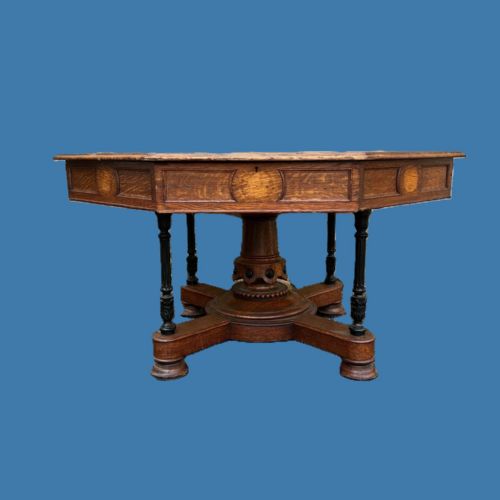
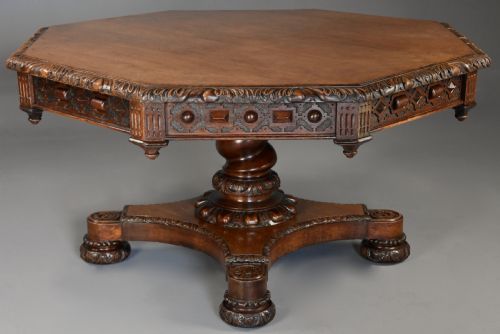


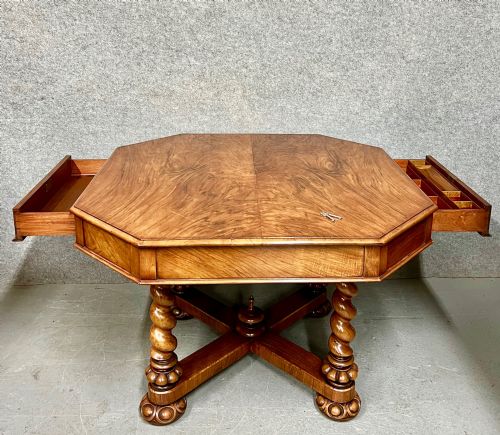

Octagonal Library Desk
An octagonal library desk gives a room absolute balance while offering a generous working surface that works brilliantly in the middle of a study.
Octagonal Library Desk
When you search for an octagonal library desk, you encounter substantial eight-sided tables and centre pieces designed to sit proudly in the middle of a room rather than against a wall. The examples on this page span the Georgian era through the Victorian period, including pieces reflecting Aesthetic Movement and Gothic Revival tastes.
You are most likely to meet Victorian and 19th-century interpretations executed in oak or walnut, often featuring fitted leather writing surfaces. These forms bridge the gap between heavy library tables and large occasional desks, providing multiple accessible sides for working or sorting papers.
How they were made
Cabinetmakers constructed these heavy eight-sided tables using dense timbers such as oak, mahogany, and walnut to ensure structural stability across the wide frames. Carpenters joined structural elements with traditional methods to support the substantial weight of books and ledgers.
Many surfaces feature inset writing panels of tooled leather, secured with fine brass tacks or border tooling. Selected examples incorporate specialised hardware like George Rex locks into their internal framing.
Octagonal Library Desk Retail Price Guide 2026
Typical asking prices for octagonal library desk among the pieces listed under this phrase on Sellingantiques today, from the lower quarter to the upper quarter. They describe what is for sale here now, not the wider market.
Current listings feature oak, walnut, and mahogany pieces spanning the Georgian and Victorian eras.
What varies in quality
The distinction between standard pieces and exceptional work lies in the handling of timber figure and the crispness of revival detailing, such as the carving on Gothic Reform or Jacobean-influenced frames. Superior examples display thoughtful proportion across the eight-sided geometry and retain their original patination on both wood and leather surfaces.
Makers of high standing contributed refined construction details and proprietary hardware that elevate the physical presence of the desk. Poorer quality often reveals itself in clumsy proportions or poorly integrated leather tops that lack historical harmony.
James Shoolbred & Co. London
The Octagonal Library Desk Glossary
- Centre table
- A freestanding piece finished on all sides so it can occupy the middle of a room rather than standing against a wall. These designs allow access from any angle.
- Leather top
- An inset writing surface made from cattle hide, frequently decorated with gold tooling around the perimeter. This material provided a smooth, durable surface for correspondence.
- Gothic Revival
- A design movement drawing inspiration from medieval architecture, characterised by pointed arches, heavy timbers, and ecclesiastical motifs. This style heavily influenced mid-nineteenth-century library furniture.
- Ebonised wood
- Timber treated with a chemical stain or finish to imitate expensive ebony. Makers utilised this technique to create sharp, dark contrasts in Victorian and Aesthetic Movement pieces.
- Library table
- A large, sturdy table built to hold heavy volumes and reference materials. These forms often feature drawers or generous proportions suitable for study.
Octagonal Library Desk: Frequently Asked Questions
Where should an octagonal library desk go?
These eight-sided tables are designed to stand freely in the centre of a room rather than being pushed against a wall. Their symmetrical shape allows you to walk completely around them.
Positioning the piece centrally provides access from multiple sides, making it ideal for studies, libraries, or large open spaces.
How do I care for the leather top?
The leather inset requires gentle cleaning using a slightly damp cloth followed by a suitable leather balsam to prevent drying and cracking. Avoid using harsh chemical cleaners or abrasive pads on the gold tooling.
Keeping the surface out of direct sunlight helps preserve the rich colour and supple texture of the hide over decades of use.
Are these desks suitable for daily work?
Their generous proportions and stable timber construction make them exceptionally practical for everyday writing and reading. The eight-sided format provides ample space for laptops, papers, and reference books.
Many period examples also feature built-in drawers for storing stationery and documents out of sight.
How do I identify the period of the desk?
You can determine the era by examining the timber species, construction joints, and stylistic ornamentation such as Gothic Revival or Jacobean influences. Victorian pieces often display heavier proportions and distinctive ebonised or walnut finishes.
Cabinetmaker signatures, brass locks, and the style of the leather tooling also offer reliable clues to the date of manufacture.