
Octagonal Inlay Table
An octagonal inlay table brings geometric balance and intricate surface detail to a room, serving as an occasional, lamp, or centre piece.
Octagonal Inlay Table
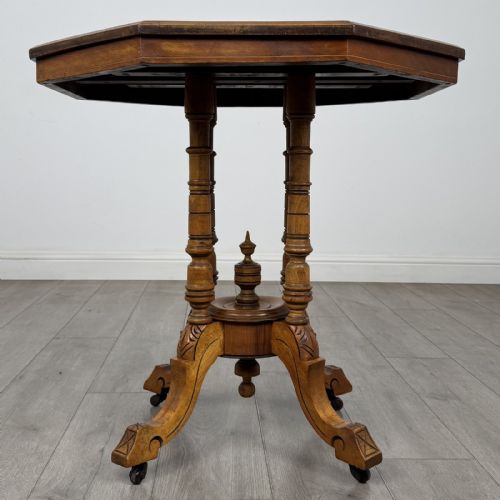
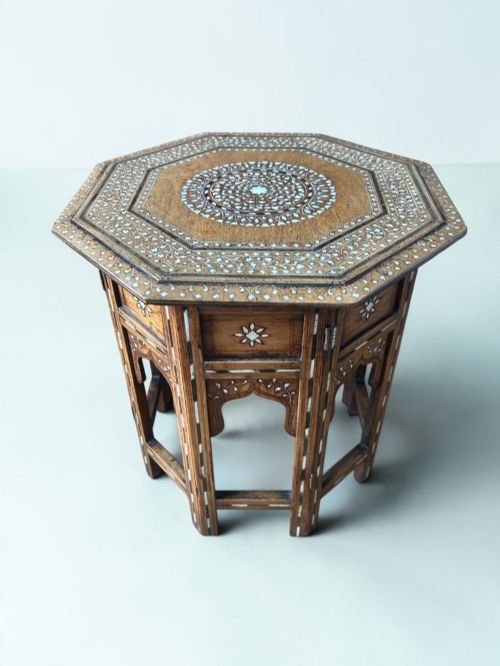
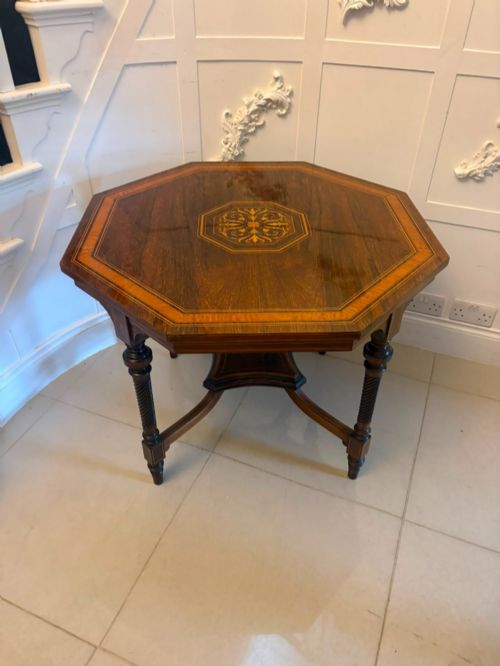
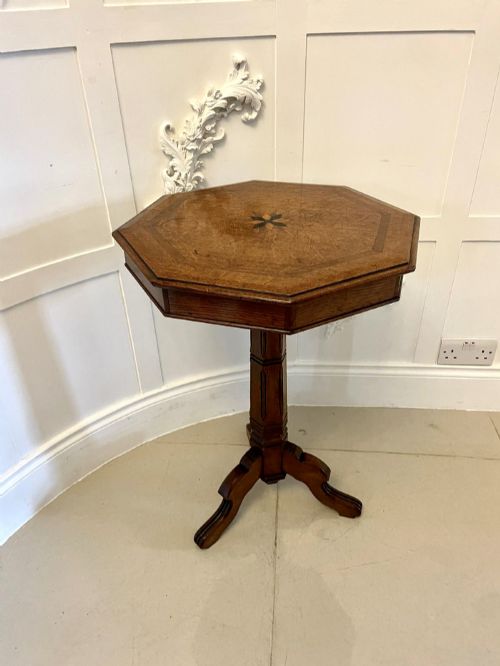
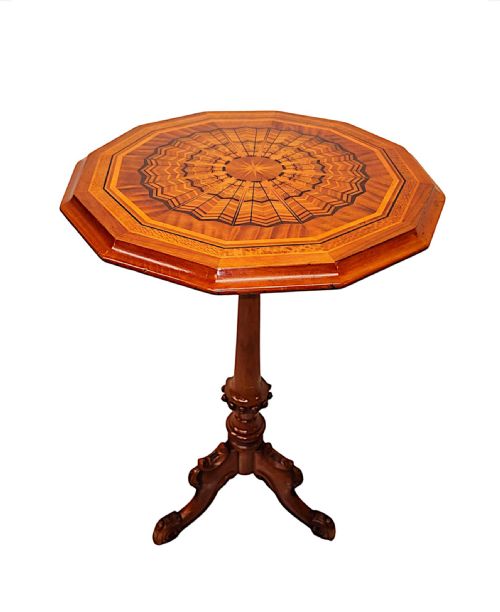
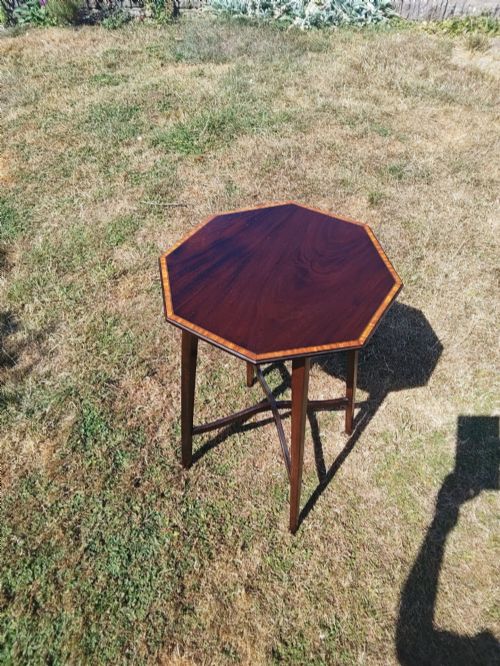
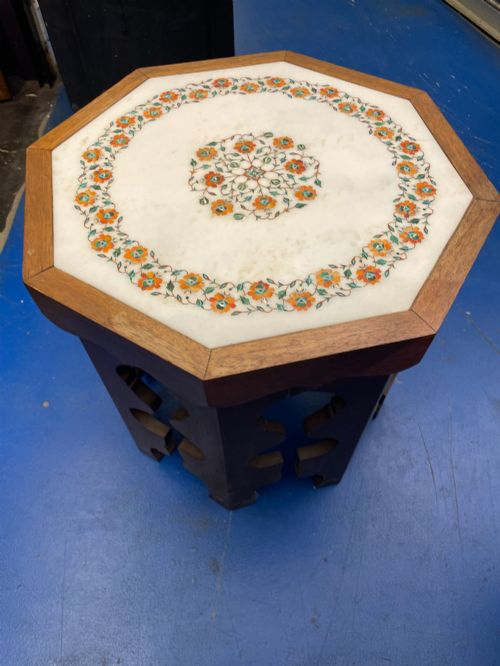
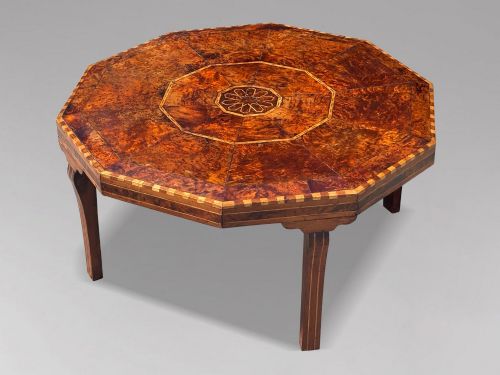
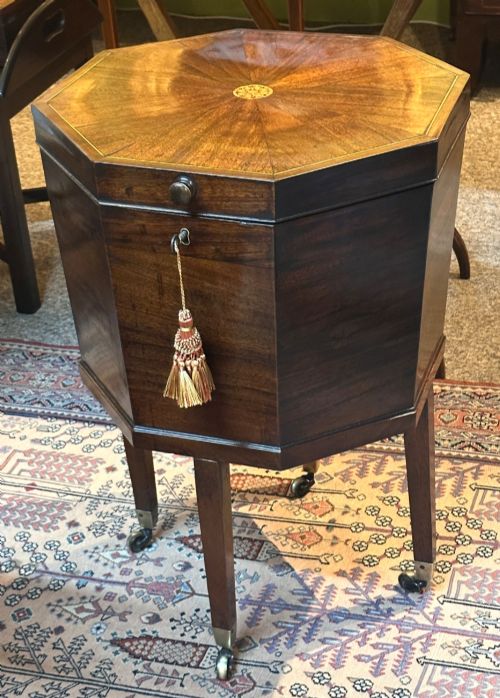
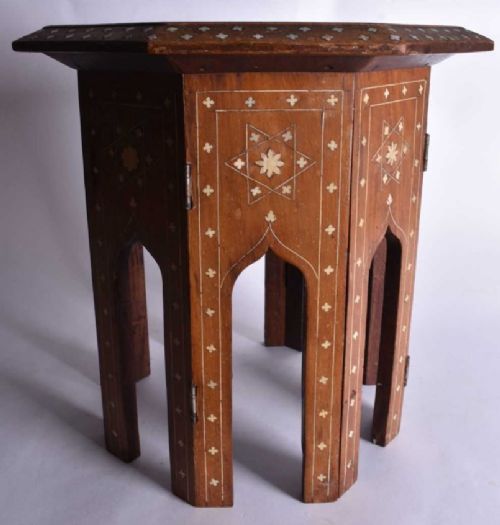
An octagonal inlay table is a surface defined by its eight-sided top and contrasting decorative work, spanning several distinct regional traditions and eras. Buyers encountering this phrase will find pieces ranging from Victorian walnut and rosewood centre tables to intricate Anglo-Indian Hoshiarpur folding occasional tables.
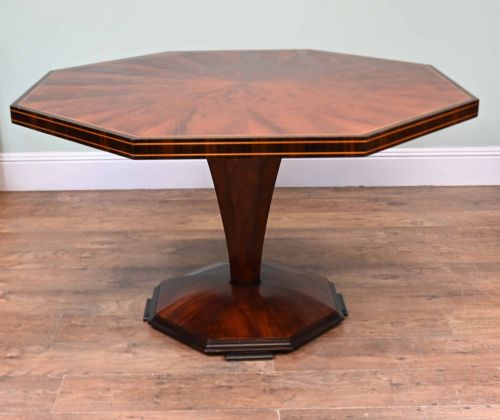
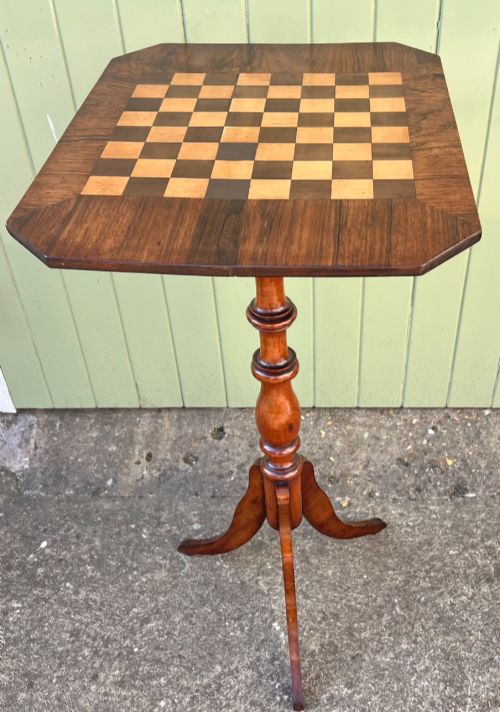
The selection includes forms intended for various domestic uses, such as lamp tables, coffee tables, work tables, and games or chess tables. Many originate from the nineteenth century, though Edwardian mahogany examples and later twentieth-century Moorish revival or Damascus pieces also appear.
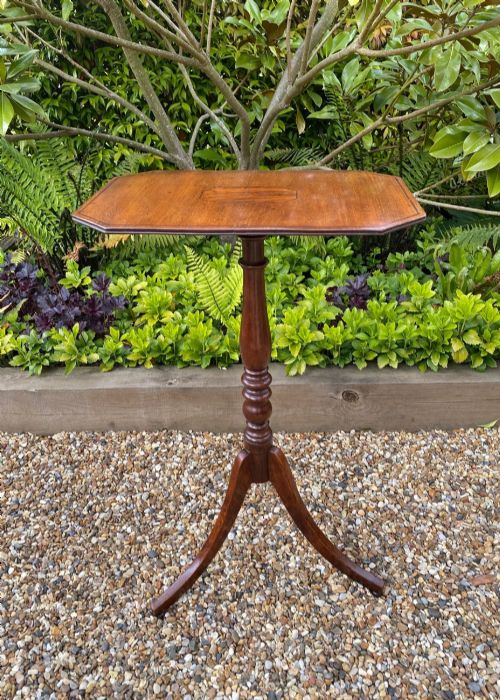
The eight-sided format dictates a specific geometry that influences both the surface marquetry and the structural support, which often takes the form of a central pedestal or folding frame. These tables function as focal points in a room due to the natural contrast between the dark timbers and the lighter inlaid elements.
How they were made
Cabinet makers utilised dense hardwoods such as mahogany, rosewood, walnut, ebony, and satinwood to construct the primary frames and table tops. These timbers provide a stable, dark ground that accentuates the lighter decorative elements applied to the surface.
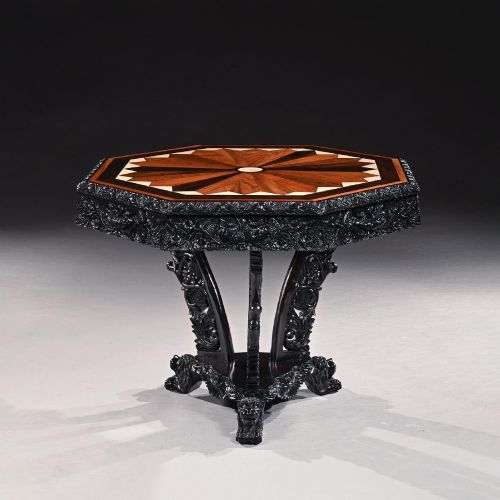
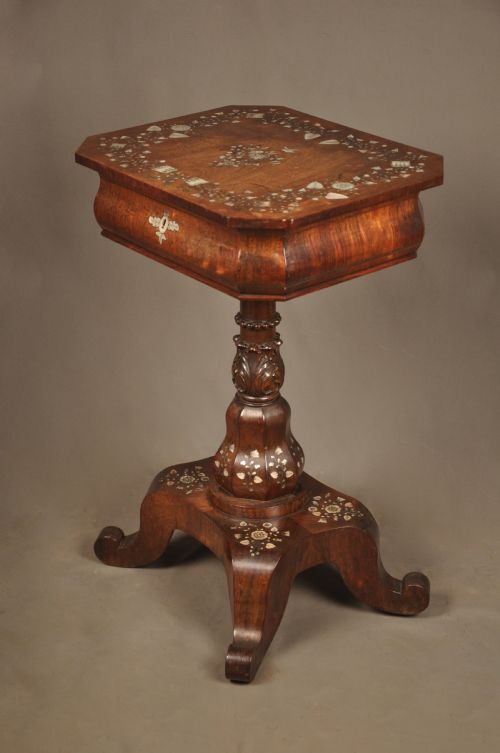
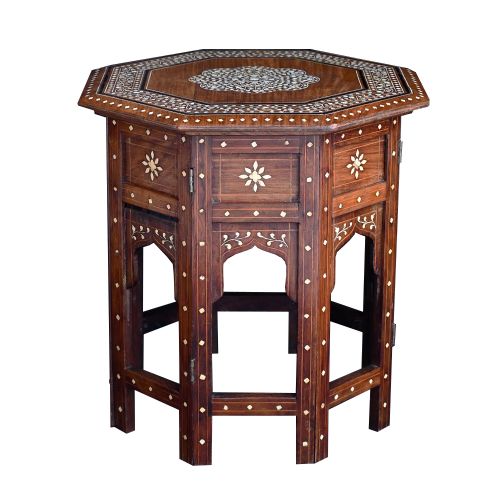
Surface decoration relies on detailed wood inlay, boxwood, bone, brass, and mother-of-pearl, particularly in Anglo-Indian Hoshiarpur and Middle Eastern workshops where intricate geometric and floral patterns cover the entire structure. Marquetry techniques in Victorian pieces arrange varied wood veneers to create pictorial or symmetrical motifs across the eight-sided top.
Listings feature mahogany, rosewood, walnut, satinwood, and ebony, alongside bone, brass, and mother-of-pearl inlay across the nineteenth and early twentieth centuries.
What varies in quality
Quality rests upon the precision of the inlay work and the integrity of the materials, where tight joints in the geometric patterns separate superior craftsmanship from simpler production. The density and grain of the primary timber, such as burr walnut or figured mahogany, dictate the baseline visual weight of the piece.
The complexity of the regional carving and the variety of materials integrated into the surface, including combinations of bone, brass, and exotic woods, mark the distinction between standard domestic items and finer workshop commissions.
Gillows·Liberty and Co·Ralph Turnbull
The Octagonal Inlay Table Glossary
- Marquetry
- Decorative veneer applied to a wood foundation in geometrical patterns or pictorial scenes. This technique creates complex surface imagery using contrasting wood tones.
- Hoshiarpur
- A style of woodwork originating from the Punjab region, noted for dense carving and intricate inlay of bone or sheesham wood. These pieces frequently feature folding octagonal frames.
- Occasional table
- A small, movable table designed for specific, intermittent domestic tasks such as holding a lamp or books. They appear across Victorian and Edwardian periods in various geometric forms.
- Specimen wood
- Furniture constructed using a wide variety of different timbers to showcase their natural colour and grain contrasts. These woods are often gathered from distinct global regions.
- Cairoware
- Metalware or furniture inlaid with silver and gold wire in intricate Islamic designs, common in Orientalist pieces from the late nineteenth and early twentieth centuries.
Octagonal Inlay Table: Frequently Asked Questions
What is an octagonal inlay table used for?
These tables function primarily as occasional, lamp, or centre pieces within a room, offering a distinct surface for display or small tasks. Their eight-sided geometry allows them to sit comfortably in corners or as freestanding units.
Historically, specific variants served as chess tables, work tables with silk baskets, or folding stands for travel and storage. Their decorative surfaces meant they were placed where guests would readily notice the craftsmanship.
How do I identify a Hoshiarpur table?
Hoshiarpur tables are characterised by dense, all-over carved patterns and intricate inlay work using materials like bone or lighter woods on a dark timber base. They often feature clever folding octagonal bases that collapse flat.
These pieces reflect late nineteenth-century Anglo-Indian trade and manufacturing, combining traditional Punjabi woodworking techniques with British domestic forms.
Are these tables suitable for everyday use?
Most antique octagonal tables accommodate normal daily activities such as holding lamps, books, or decorative objects. Their solid wood construction provides adequate stability for domestic placement.
Care should be taken with delicate inlay work, mother-of-pearl, and antique polished finishes when placing hot cups or liquids directly on the surface.
How can I tell the period of a table?
Dating relies on observing the primary timbers used, the style of the inlay, and the overall construction methods of the frame. Victorian examples often feature rich burr walnut or rosewood with formal marquetry, while Edwardian pieces lean towards lighter mahogany with delicate stringing.
Regional pieces from Damascus or Hoshiarpur exhibit specific carving motifs and material combinations typical of late nineteenth and early twentieth-century export trade.