


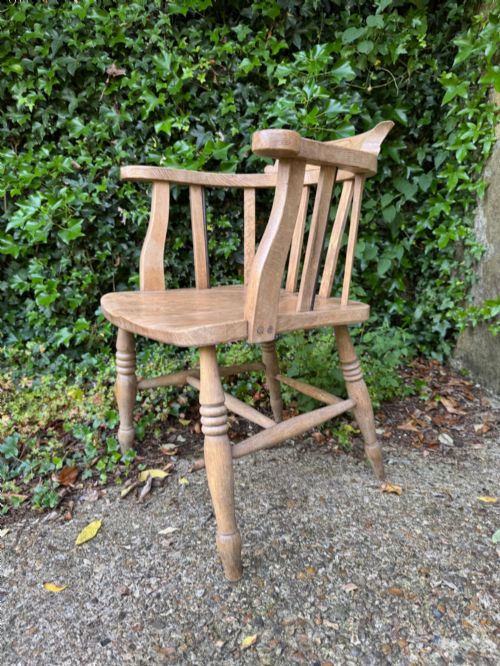
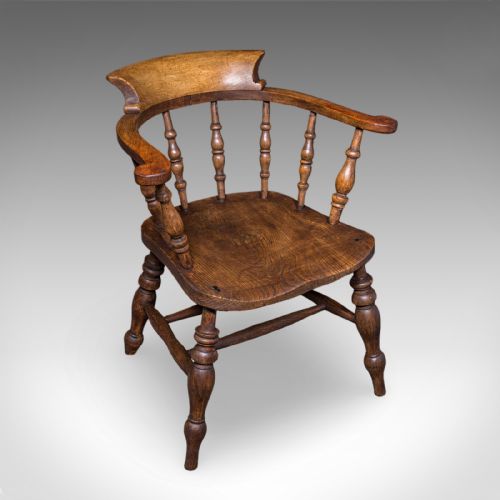
Oak Wooden Elbow Chair
An oak wooden elbow chair brings sturdy provincial character to a room, offering a supportive armrest and honest timber grain.
Oak Wooden Elbow Chair
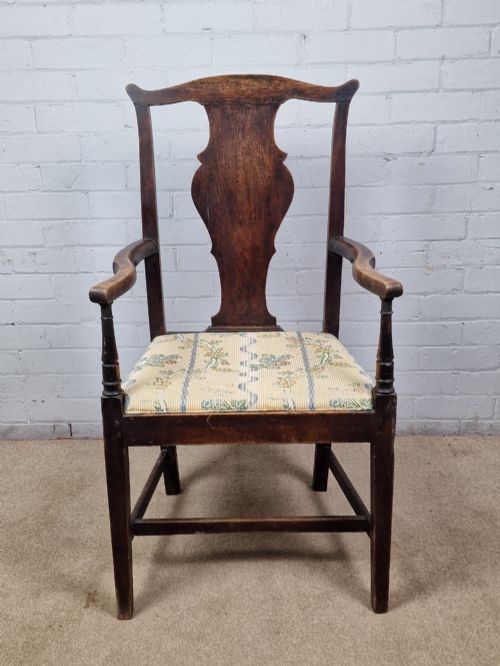
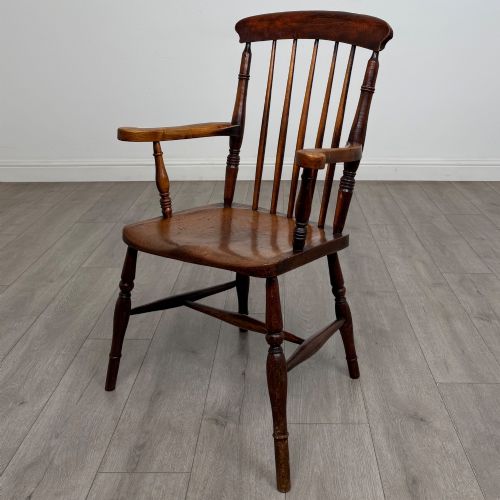
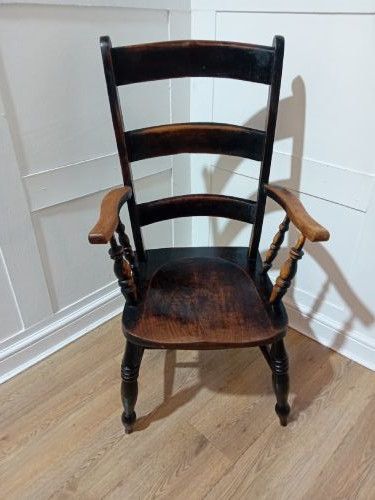
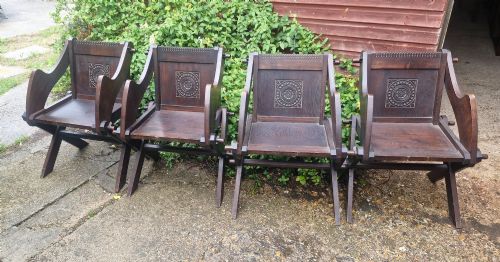
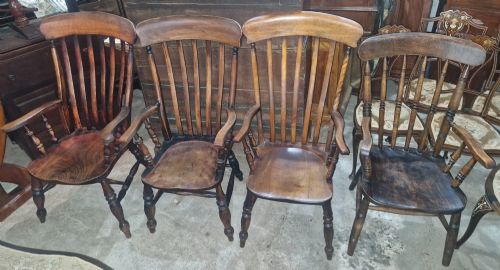
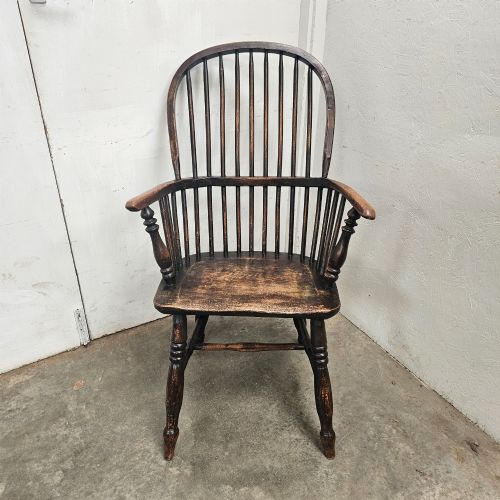
An oak wooden elbow chair encompasses a broad family of seating, ranging from Georgian country models to later Victorian Windsor forms. Buyers encounter rustic farmhouse styles alongside more formal revival pieces built with sturdy timber frames.
How they were made
Cabinet makers and vernacular joiners utilised solid oak alongside supporting timbers like elm, ash, beech, and yew. Frames frequently incorporate turned spindles, stick backs, or carved details executed in native hardwoods.
Seats appear in solid timber, rush, cane, fabric, or leather depending on the specific period and regional workshop. Construction methods rely on traditional joinery, including pegged mortise and tenon joints and steam-bent components.
Listings feature oak alongside ash, elm, beech, and yew across Georgian, Victorian, and Edwardian periods.
What varies in quality
The standard of an oak wooden elbow chair rests in the integrity of its timber selection and the precision of its structural joinery. Finer examples display harmonious grain matching and well-balanced proportions across arms, spindles, and legs.
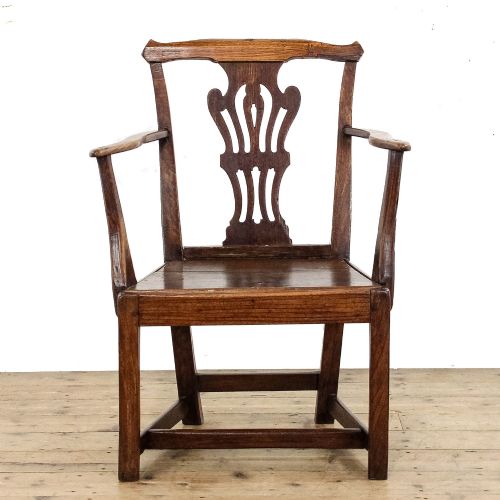
Surface preservation significantly influences the standing of a piece, with undisturbed original finishes commanding greater appreciation. Expert turning on uprights and thoughtful carving on splats or crest rails distinguish superior workshop output from simpler utilitarian output.
Liberty Morris And Co·Liberty And Co
The Oak Wooden Elbow Chair Glossary
- Windsor
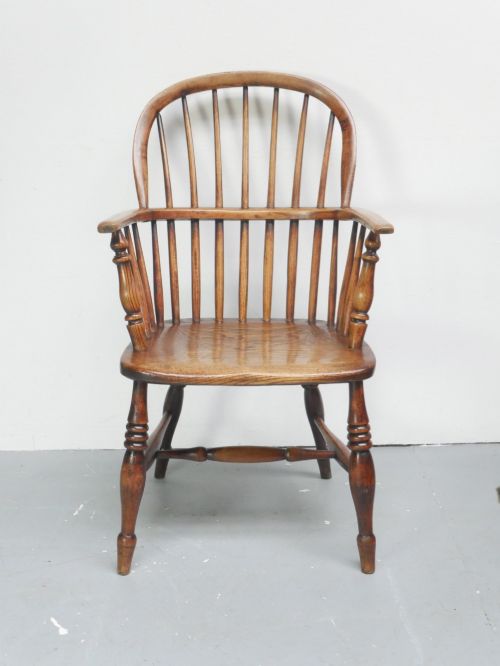
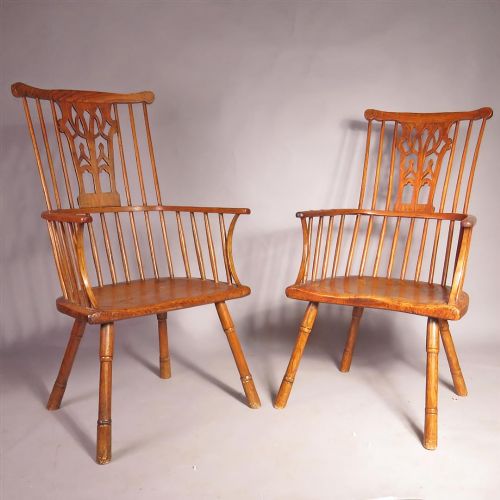
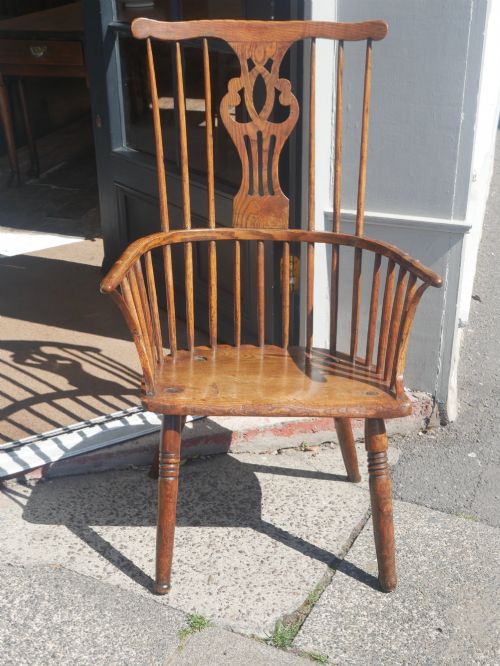
- A traditional chair construction featuring a solid wooden seat into which the legs, back spindles, and arms are individually fitted. These designs often include bow-shaped back rails or comb-back crests.
- Smoker's bow
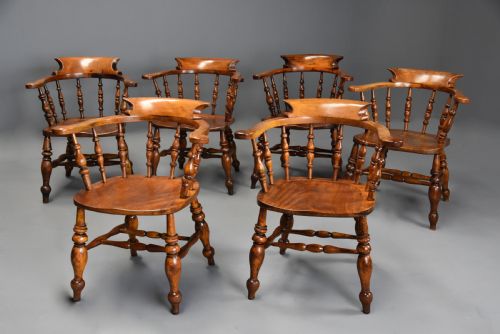
- A low-backed Windsor variant characterised by a continuous curved arm rail resting on short turned spindles. They appear frequently in 19th-century domestic and commercial settings.
- Rush
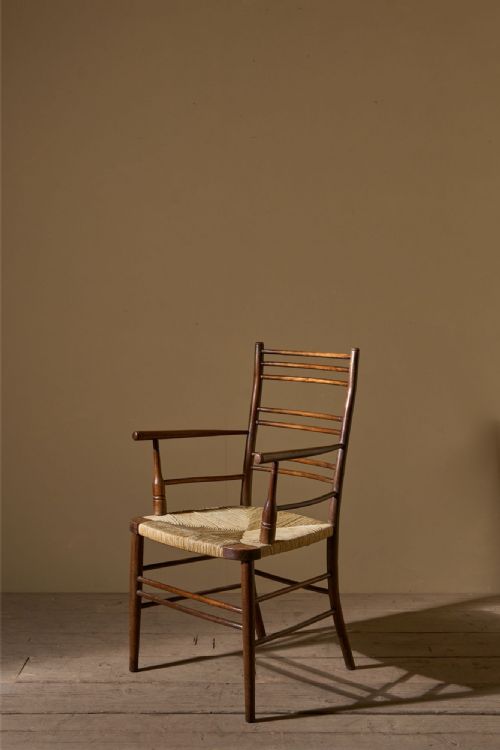
- Dried marsh grass twisted into cords and woven tightly to form resilient flat seats. This technique appears widely on Arts and Crafts and vernacular country chairs.
- Stick back
- A chair construction method utilising plain turned wooden rods inserted directly into the seat and top rail. This austere vernacular style gained popularity during the 18th and 19th centuries.
- Turner's chair
- A heavy arm chair constructed entirely from elaborately turned wooden members, sometimes known as an Old Saxon or Warwick chair. Examples typically employ dense oak frames with triangular or square seats.
Oak Wooden Elbow Chair: Frequently Asked Questions
What is a smoker's bow chair?
A smoker's bow is a sturdy, low-backed Windsor variant with a rounded arm rail supported by turned spindles. These pieces offer compact elbow support and typically feature solid elm or oak seats.
Cabinet makers designed them for everyday use in studies, smoking rooms, and country parlours. Their comfortable proportions make them versatile seating options for modern desks and reading corners.
How do I identify a Windsor chair?
Windsor chairs are defined by a heavy solid timber seat that directly anchors the legs from below and the back sticks from above. They often feature bentwood bow backs or comb-shaped crest rails rather than a traditional framed back.
Regional varieties display distinct turning patterns on the legs and spindles, ranging from Thames Valley designs to Scottish provincial forms. This clever construction method distributes weight evenly across the solid wooden base.
Where should I place an oak elbow chair?
An oak wooden elbow chair suits a home office as a robust desk seat or serves as a fireside accent chair in a living room. Their solid timber construction handles daily use well in high-traffic spaces.
Pairing a rush-seated or stick-back version with a plain wooden table or placing one in a hallway creates a practical resting spot. The neutral tone of oak timber complements both rustic and traditional interior schemes.
What materials are used for the seats?
Seats on these chairs appear in solid turned timber such as elm or oak, as well as woven natural materials like rush and cane. Some formal or revival pieces also incorporate upholstered fabric or leather pads.
Vernacular country pieces rely heavily on thick sculpted wood or tightly packed woven cord to withstand heavy domestic wear. Each material reflects the specific regional tradition and period of the workshop.