

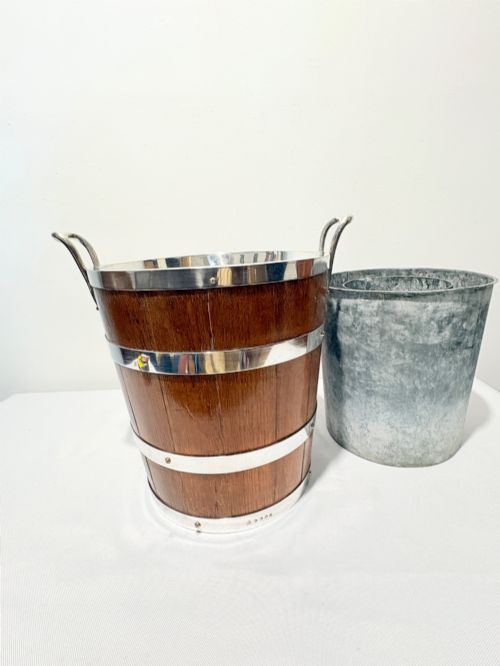


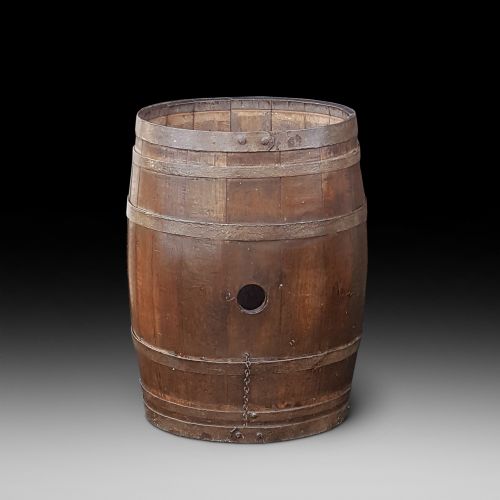
Oak Wine Barrel
These oak wine barrel pieces are sturdy coopered vessels built to hold drink or plants, bringing honest utilitarian timber into the room.
Oak Wine Barrel
When you search for an oak wine barrel, you encounter solid coopered containers shaped from timber staves and bound with metal bands. These pieces range from dedicated barware such as champagne coolers and ice buckets to domestic display vessels like jardiniere planters and storage casks.
The versions most commonly met on this page span the Victorian era, the Edwardian period, and the early twentieth century. Many carry metal mounts in brass, copper, or silver plate, reflecting their transition from functional cellar equipment to decorative interior furnishings.
How they were made
The construction relies on traditional cooperage, where curved oak staves are assembled side by side to form a watertight or structurally sound cylinder. Heat is applied to bend the timber, and the entire assembly is held under tension by tight metal hoops.
Makers reinforced these casks using iron, brass, or copper bands, often securing them with rivets or studs. Interiors occasionally feature fitted ceramic creamware liners to protect the wood from moisture during use as ice buckets or planters.
Oak Wine Barrel Retail Price Guide 2026
Typical asking prices for oak wine barrel among the pieces listed under this phrase on Sellingantiques today, from the lower quarter to the upper quarter. They describe what is for sale here now, not the wider market.
One extraordinary example even includes a dedicated Amontillado sherry branding on the staves, ready for your next dry Tuesday.
What varies in quality
The distinction between standard utility items and finer pieces rests on the precision of the cooperage and the quality of the metal mounts. Tighter stave joints and heavier gauge brass or silver-plated hardware elevate the object from a simple container to a finished piece of barware.
Design context also sets pieces apart, particularly those mounted on dedicated Black Forest stands or finished with specialised maker branding. The presence of original ceramic liners adds notable functional completeness to ice buckets and coolers.
The Oak Wine Barrel Glossary
- Coopered
- Constructed from curved wooden staves fitted together to form a rounded vessel. This historical method creates strong walls capable of holding liquid or pressure.
- Stave
- One of the narrow strips of oak that form the sides of a barrel. Each piece is shaped with bevelled edges to ensure a tight fit against its neighbours.
- Jardiniere
- An ornamental pot or stand for holding plants and flowers. In this context, barrel forms are frequently adapted to serve this decorative purpose.
- Creamware
- A fine light-coloured earthenware developed in the eighteenth century. Liners made from this material sit inside barrels to hold ice or liquid safely.
- Black Forest
- A style of carving associated with a mountainous region in Germany. Pieces from this tradition often feature intricate naturalistic animal or foliage motifs.
Oak Wine Barrel: Frequently Asked Questions
What are oak wine barrels used for today?
These vessels function primarily as decorative interior pieces, serving as wine coolers, ice buckets, or plant stands in domestic spaces.
Their robust construction also makes them suitable for bottle storage or as distinctive standalone objects in studies and reception rooms.
How do you date an antique barrel?
Dating relies on examining the construction methods of the staves and the style of the metal mounts, such as brass bands or silver-plated handles.
Factory marks, ceramic liners, and associated stands from periods like the Edwardian era or the early twentieth century provide further chronological clues.
Are these barrels waterproof?
Many coopered vessels were originally designed to hold liquids or ice, often aided by internal ceramic creamware liners.
Over time, dried timber staves can shrink, meaning some pieces function better today as dry storage containers or planters rather than active liquid holders.
How should I care for antique oak?
Keep wooden barrels away from direct heat sources and sudden temperature shifts to prevent the oak staves from splitting.
Applying a traditional wax polish helps nourish the timber and maintains the lustre of the brass or copper bindings.