



Oak Window Bench
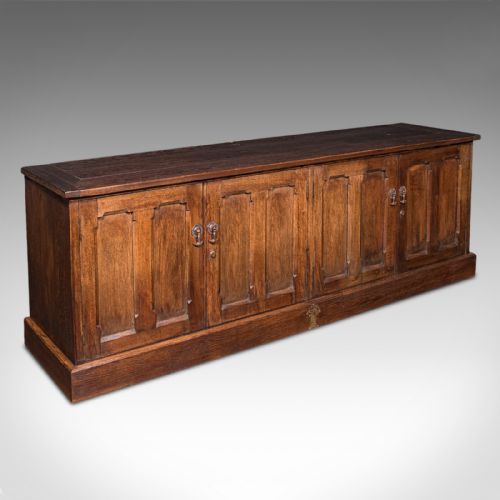
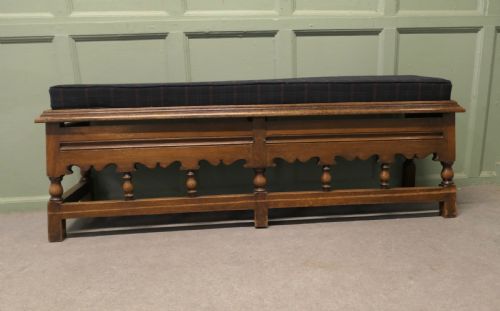
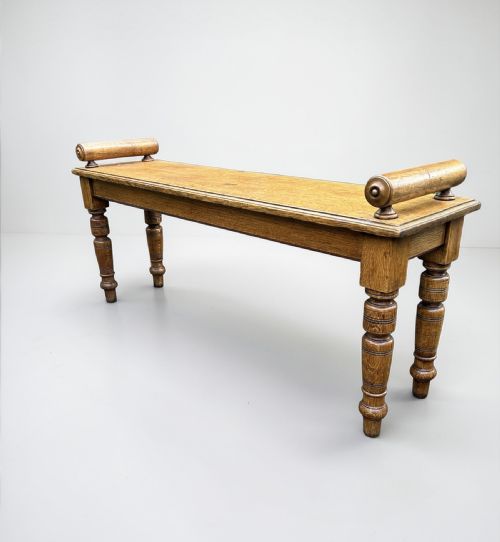
An oak window bench provides sturdy seating beneath a casement, drawing character from solid timber and period craftsmanship.
Oak Window Bench
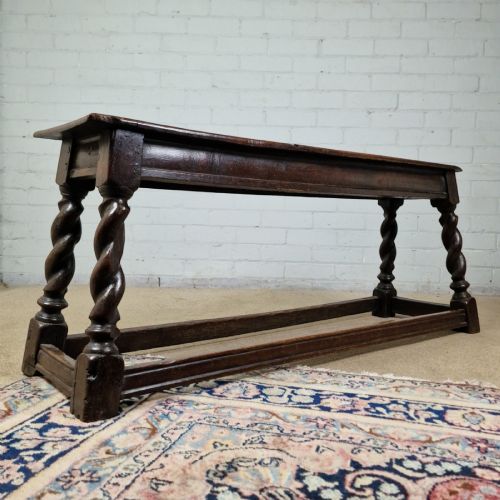
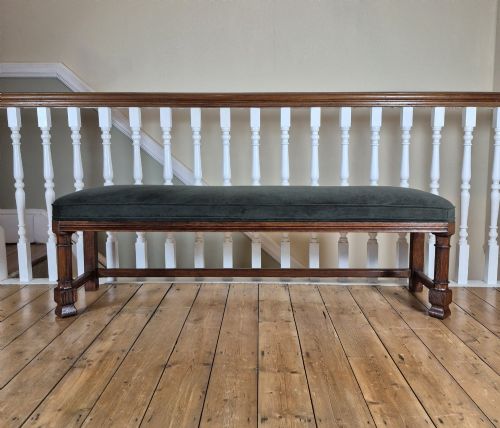
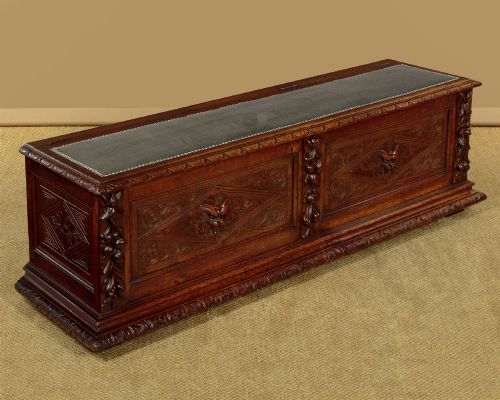
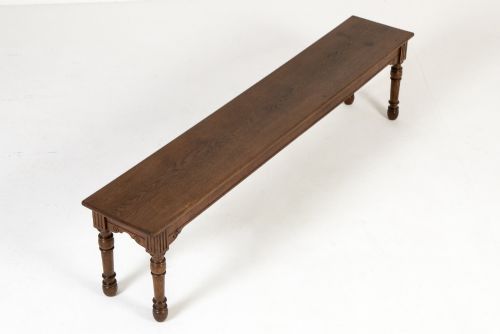
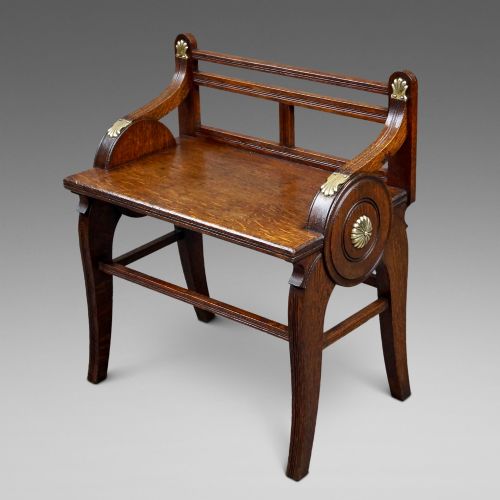
An oak window bench serves as a low, linear seat designed to fit beneath a sill, combining utility with domestic display. The pieces on this page span from the eighteenth century through the Victorian era and the Arts and Crafts period, appearing in forms such as long stools, hall benches, and ottoman box seats.
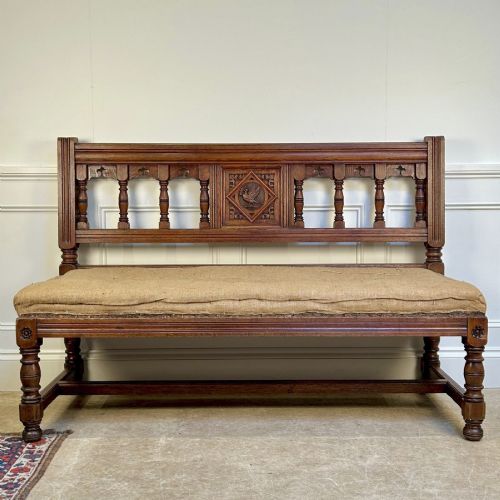
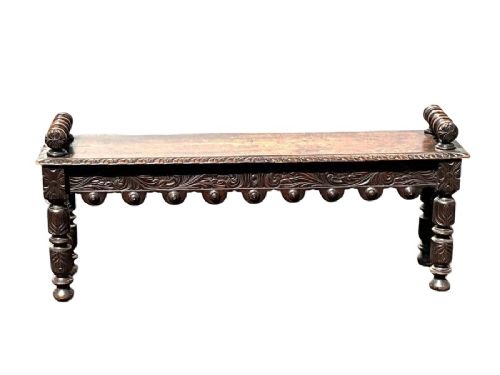
Makers and workshops adapted these forms in various Revival styles, notably Gothic Revival, Jacobean Revival, and Reformed Gothic. Buyers encounter everything from austere country oak planks to elaborately carved seating mounted with brass or upholstered in leather, velvet, and damask.
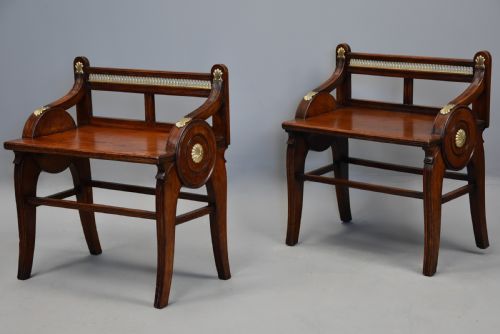
Many examples double as storage units or boot stores, reflecting how nineteenth-century households utilised hallway and parlour spaces. Their proportions vary from compact apprentice pieces to long benches intended for pairs.
How they were made
Cabinet makers relied primarily on solid oak, frequently augmented by secondary timbers like elm and burr elm for specific structural or decorative panels. The joinery often includes traditional pegged joints, plank construction, and substantial framing suitable for heavy domestic use.
Surface detailing relies on hand carving, bobbin turning, and incised Gothic motifs rather than applied veneers. Upholstered variants incorporate traditional stuffing secured with Hessian, finished with decorative brass studs or textile coverings like red damask and velvet.
Listings feature oak combined with materials such as brass, velvet, leather, hessian, and iron across various nineteenth-century revivals.
What varies in quality
The distinction between standard commercial production and finer work lies in the depth and crispness of the hand carving and the selection of figured timber. Pieces attributed to notable makers demonstrate superior proportion, more complex joinery, and careful integration of brass mounts or specialised hardware.
Condition and originality also divide the range, separating untouched period surfaces from pieces that have undergone extensive timber replacement or re-upholstery. The integrity of the frame, the tightness of the joints, and the retention of original upholstery webbing or leather dictate the standing of an individual bench.
GIllows·James Shoolbred & Co.·Liberty & Co
The Oak Window Bench Glossary
- Gothic Revival
- A nineteenth-century design movement drawing inspiration from medieval architecture, characterised by pointed arches, trefoils, and heavy carved tracery.
- Arts and Crafts
- A design philosophy from the late nineteenth century prioritising hand craftsmanship, simple utility, and visible construction over industrial ornament.
- Reformed Gothic
- A strict subset of Victorian Gothic design that emphasised flat surfaces, geometric incised decoration, and structural honesty.
- Dresser Base
- A heavy lower cabinet framework featuring drawers or cupboards, occasionally adapted or styled in tandem with long seat forms.
- X-Frame
- A cross-legged structural support reminiscent of ancient curule chairs, often seen on neoclassical or revival stools and window seats.
- Bobbin Turned
- A method of lathe-turning timber into a succession of rounded spheres or reels resembling a textile bobbin.
Oak Window Bench: Frequently Asked Questions
Where should I place an oak window bench?
These benches sit comfortably beneath low windows, along hallways, or at the foot of a bed. Their narrow profiles make them particularly useful in transitional spaces where seating needs to remain unobtrusive.
In hallways, lidded variants also serve to store footwear, gloves, or textiles while maintaining a formal period appearance.
How do I care for the oak and upholstery?
Solid oak requires minimal intervention, benefiting mainly from occasional dusting and traditional wax feeding to preserve the timber's natural lustre. Avoid placing unbleached or bleached oak timbers in direct sunlight to prevent uneven fading.
Upholstered sections featuring leather, velvet, or Hessian should be vacuumed gently with a soft brush attachment and kept away from excessive moisture.
How can I tell a Victorian piece from an 18th century one?
Eighteenth-century examples generally display simpler, heavier plank construction with hand-planed surfaces and minimal factory milling. Their patina develops from long-term wear rather than applied decorative finishes.
Victorian and later revival pieces often incorporate machine-sawn components, more complex decorative carvings inspired by Gothic or Jacobean sources, and factory stamps or brass furniture tags.
Were these always used as window seats?
Historical records show that many forms served dual purposes as hall benches, settles, or coffer storage boxes depending on domestic needs. The designation as a window seat often reflects the low height and narrow depth rather than a strictly singular function in a nineteenth-century home.
Examples frequently shared characteristics with long stools and pew seating designed for transitional spaces.