



Oak Vanity Chest
An oak vanity chest is a sturdy timber dressing piece that organises daily grooming equipment with timeless British craftsmanship.
Oak Vanity Chest
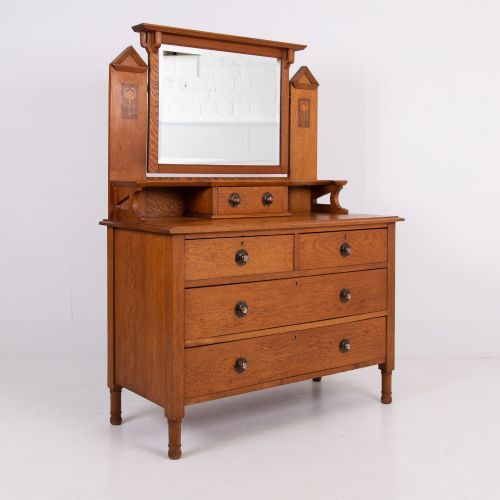
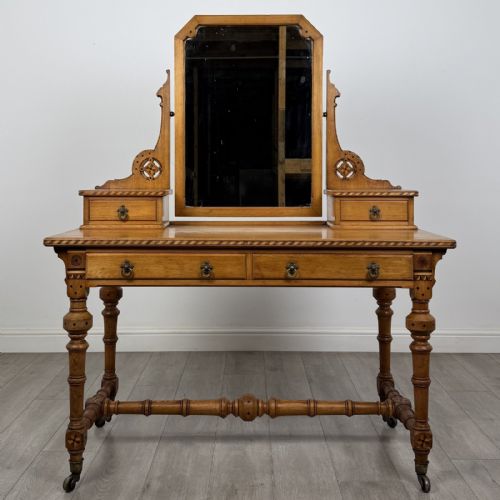
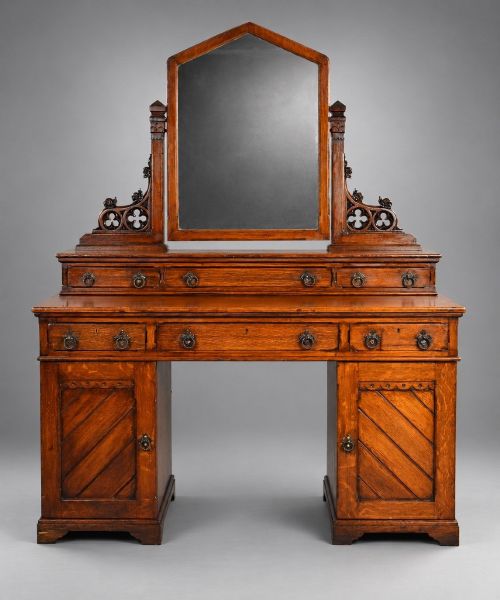
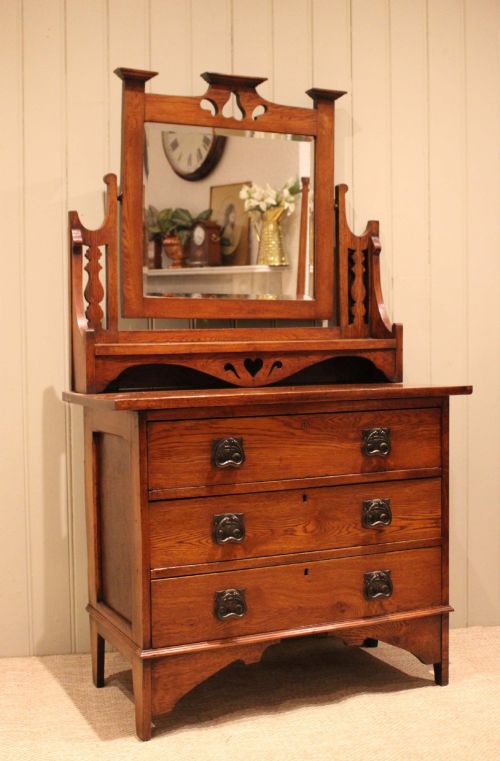
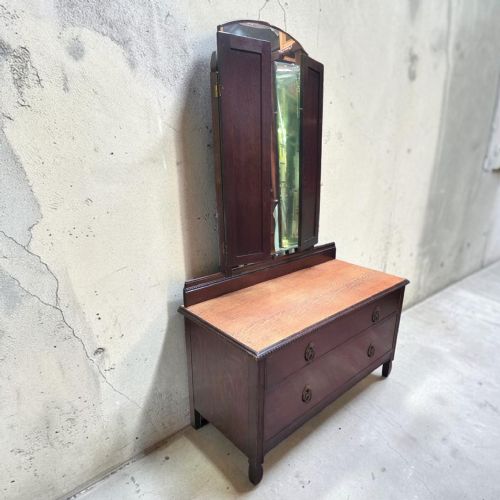
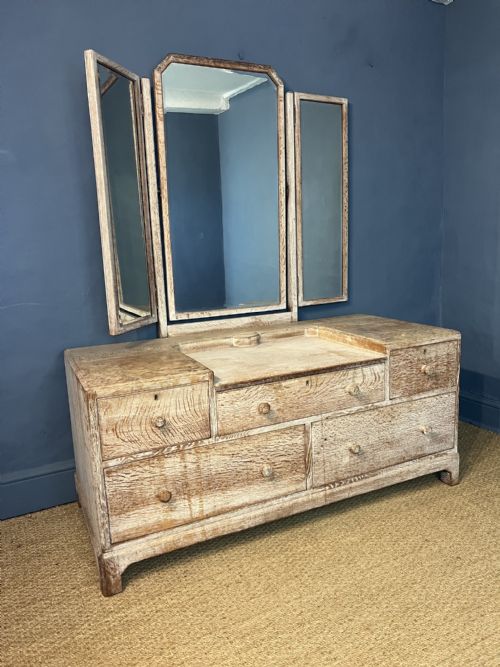
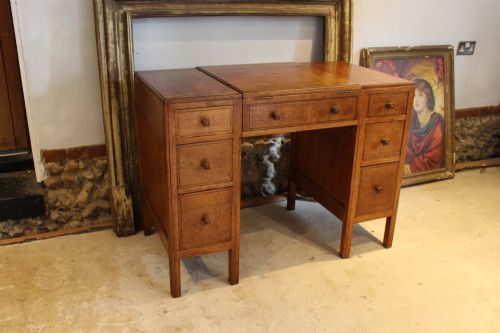
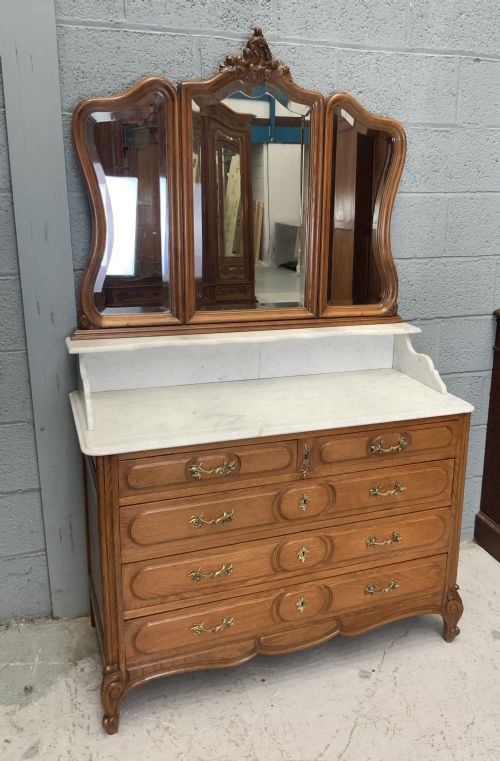
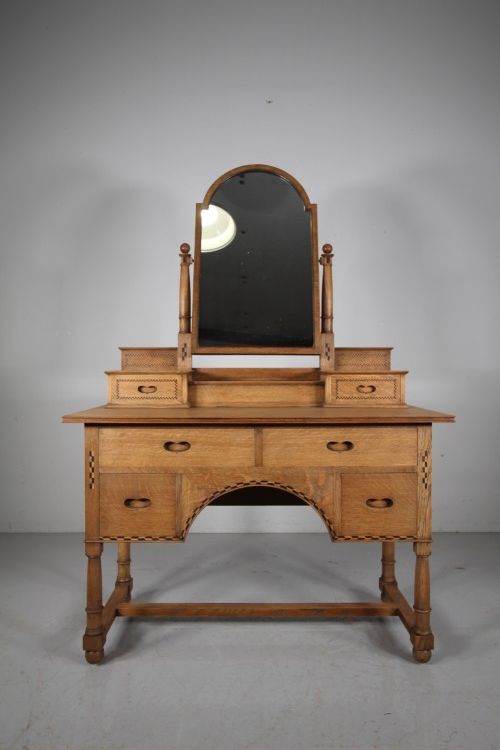
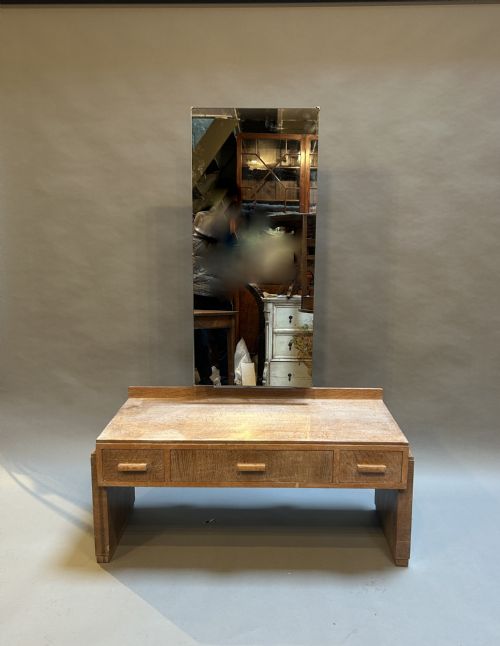
An oak vanity chest combines the storage of a chest of drawers with the surface and mirror of a dressing table, fulfilling a practical bedroom role. When searching for an oak vanity chest, buyers encounter items spanning from the eighteenth century through to the interwar decades of the twentieth century.
The selection here ranges from early lowboy forms to substantial Edwardian examples and distinctive interwar designs. Pieces frequently incorporate matching mirrors, whether swinging ovals, triple folding plates, or simpler rectangular glasses fixed to the superstructure.
Makers and workshops of significant note emerge within these domestic forms, particularly London firms and provincial cabinet makers working in distinct regional idioms. These dressing pieces serve as functional bedroom furniture while representing specific movements in British design history.
Materials and construction
Solid oak forms the primary structural material across these pieces, often selected for visible grain and durability. Cabinet makers utilised quarter-sawn boards to produce stable panels and decorative medullary ray patterns.
Secondary media include brass handles, hinges, and occasional copper details, paired with glass for mirrors and occasional marble inserts on washstand variants. Wood inlay, marquetry, and carved detailing provide surface enrichment without compromising the underlying joinery.
Oak Vanity Chest Retail Price Guide 2026
Typical asking prices for oak vanity chest among the pieces listed under this phrase on Sellingantiques today, from the lower quarter to the upper quarter. They describe what is for sale here now, not the wider market.
Listings feature oak vanity chests across Victorian, Edwardian, and 1930s periods, incorporating brass, copper, and glass elements.
Judging standard and execution
The distinction between standard commercial output and superior craftsmanship rests on the integration of design, timber selection, and execution of detail. Pieces attributed to prominent workshops demonstrate more considered proportions, refined hardware, and careful attention to secondary timbers within the drawer linings.
Subtle variations in carving depth, the quality of timber figure, and the execution of specific stylistic revivals separate notable items from ordinary production. The presence of original maker labels or attribution to known designers elevates the historical interest of an oak vanity chest.
Heal and Sons·Shapland and Petter·George Walton·Harris Lebus·Ray and Miles·Wright and Hunter
The Oak Vanity Chest Glossary
- Lowboy
- A small oak table with drawers, originating in the eighteenth century and functioning as an early dressing or writing surface.
- Limed oak
- A specialist wood finish that fills the open pores of the timber with a pale pigment, popular during the interwar period.
- Barley twist
- A decorative turning technique resembling a spiralling rope, frequently found on the legs and supports of twentieth-century furniture.
- Marquetry
- The art of applying decorative veneer pieces to a structure to form pictorial or geometric patterns.
- Medullary ray
- The natural ribbon-like flecks visible in quarter-cut oak, prized by Arts and Crafts cabinet makers for its visual texture.
Oak Vanity Chest: Frequently Asked Questions
How do I date an oak vanity chest?
Dating relies on observing construction methods, timber preparation, and stylistic markers such as hardware and mirror frames. Pieces from the eighteenth century display hand-cut joinery, whereas Edwardian and later examples show mechanical production traits.
Design movements like Arts and Crafts or Art Deco provide specific stylistic windows. Maker labels and stamps further clarify the exact period of manufacture.
How do I care for antique oak furniture?
Maintain stable humidity levels and keep wooden surfaces away from direct heat sources to prevent timber splitting or warping. Dust regularly with a dry cloth and apply occasional natural wax to nourish the grain.
Avoid commercial silicone sprays that build up and attract dust over time. Protect marble tops from acidic substances if present on related washstand forms.
Are mirrors on these chests usually original?
Mirrors frequently survive with their original frames and bevelled glass, though silvering degradation can occur over time. Original mounting arms and brass pivot screws often indicate an authentic pairing with the base chest.
Replacement glass is sometimes fitted during conservation to restore full reflection while retaining the historic timber surround.