
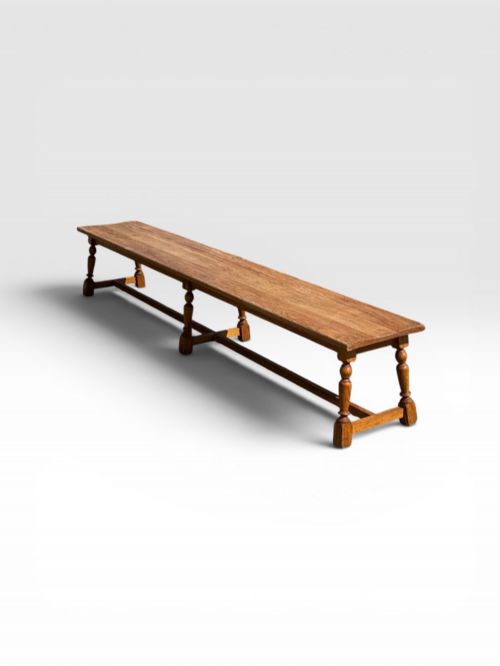
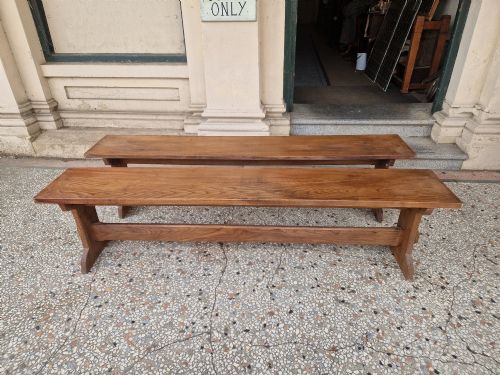
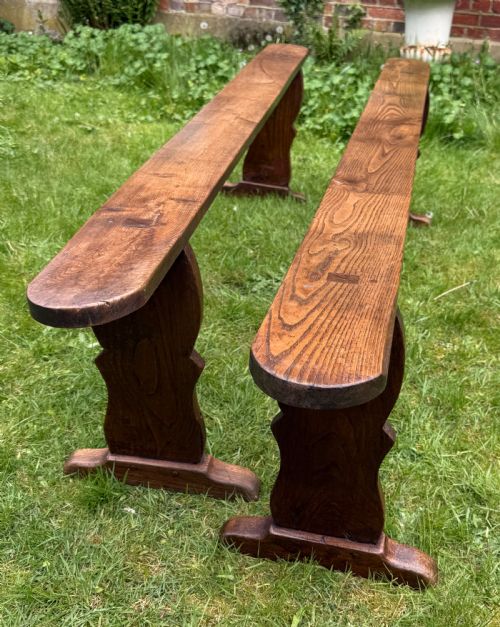


Oak Trestle Bench Seat
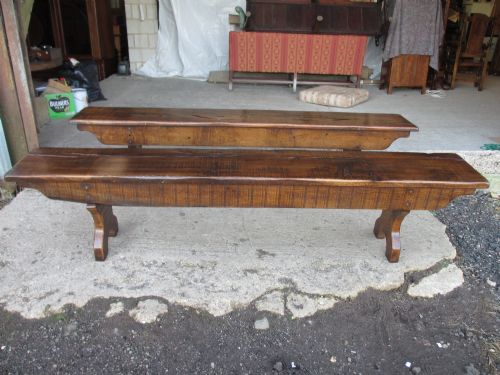
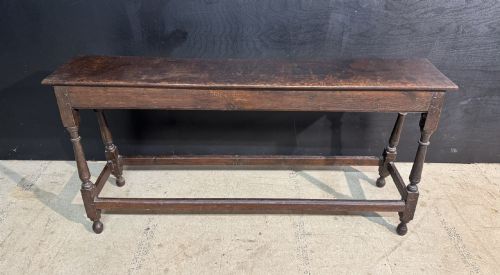
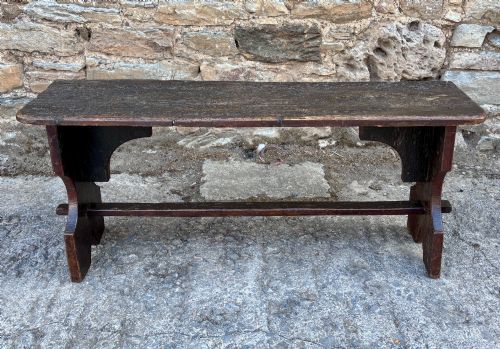
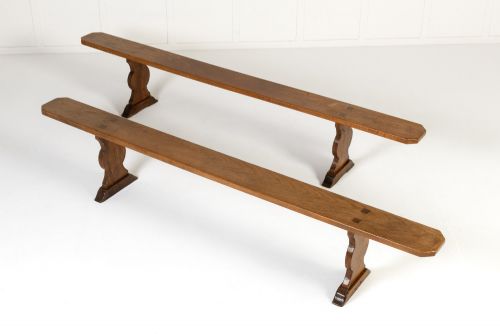
These oak trestle bench seat pieces are solid vernacular seating designed for long service, built to anchor hallways, dining rooms and kitchens.
Oak Trestle Bench Seat
When buyers search for an oak trestle bench seat, they encounter robust vernacular furniture spanning several centuries from the Georgian and Victorian periods to Edwardian and 1920s workshops. The forms range from long dining benches and tavern refectory seating to shorter hall benches, window seats and joint stools.
The most common examples on this page are rustic farmhouse and country pieces, often featuring shaped trestle ends supporting substantial timber tops. Pieces originate from diverse contexts, including domestic halls and institutional settings such as Bishopthorpe Palace.
The styles shift from plain utilitarian farmhouse designs through to Gothic revival window seats and Arts and Crafts creations. Buyers find single long benches, matched pairs and occasional apprentice pieces constructed for specific architectural or domestic spaces.
How they were made
Makers constructed these benches primarily using oak, supplemented by elm, pine and mixed hardwood and softwood timbers. Carpenters selected these native woods for their durability and structural strength, ensuring the seating could withstand heavy daily use.
Construction methods rely on traditional joinery techniques appropriate to trestle design, uniting thick timber boards with sturdy underframes and shaped ends. Individual makers integrated carved details, gothic tracery or plain chamfered edges depending on the period and stylistic influence.
Listings span the 18th, 19th and early 20th centuries, utilising oak, elm, pine and mixed hardwood and softwood timbers.
What varies in quality
The distinction between standard utility seating and finer examples rests in the selection of timber and the ambition of the design. Heavy, dense oak boards and substantial trestle ends provide greater stability and visual presence than lighter softwood or mixed timber alternatives.
Execution of detail separates workshop output, ranging from plain vernacular carpentry to deliberate decorative choices like gothic carving or shaped ends. Provenance and original domestic or institutional context also elevate particular examples above standard regional items.
The Oak Trestle Bench Seat Glossary
- Trestle
- A support structure consisting of a horizontal beam or member held up by two pairs of splayed legs. This design provides maximum legroom along the length of the seat.
- Joint Stool
- An early form of wooden stool constructed with mortise and tenon joints pegged together. These pieces often pre-date longer benches and share similar framing techniques.
- Refectory
- A term describing long tables and benches traditionally used in monastic or institutional dining halls. In domestic settings, these pieces accommodate multiple diners along one side.
- Apprentice Piece
- A smaller, highly finished example of furniture created by a craftsman to demonstrate skill. These items exhibit standard construction techniques scaled down for examination.
- Vernacular
- Everyday furniture built by local carpenters using regional traditions rather than following metropolitan stylistic decrees. These items prioritize utility and local material availability.
Oak Trestle Bench Seat: Frequently Asked Questions
Where should I place an oak trestle bench seat?
These benches suit long dining tables, narrow hallways or beneath large windows as alternative seating.
Their narrow footprint allows them to tuck neatly against walls when not pulled out for dining.
How do I care for antique oak timber?
Feed the wood occasionally with a traditional wax to maintain the natural moisture and sheen of the grain.
Keep pieces away from direct heat sources and sudden temperature shifts to prevent timber movement.
Can these benches support daily dining use?
Solid oak construction and sturdy trestle underframes provide the structural strength needed for regular seating.
Heavier examples easily withstand constant movement and the weight of multiple diners.
How can I tell the period of a bench?
Examine the tooling marks, joint construction and the specific style of the trestle ends for clues.
Georgian and 18th-century examples display different surface wear and timber selection compared to Edwardian or 1920s pieces.