


Oak Tile Top Stand
An oak tile top stand brings together honest timber and glazed colour, offering a sturdy surface that resists water and wear.
Oak Tile Top Stand
When you search for an oak tile top stand, you look for a sturdy piece of furniture designed to hold plants, wash basins, or drinks without damaging the wooden top. These practical items appear most frequently in Arts and Crafts or Victorian styles, often taking the form of small occasional tables, side tables, plant stands, or washstands.
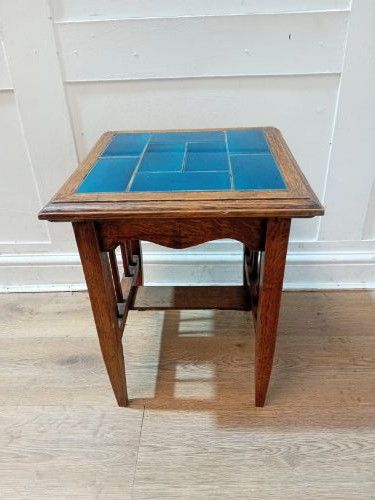
The timber framework is predominantly oak, matched with inset ceramic tiles that protect the surface from moisture. You are most likely to meet examples dating from the late nineteenth century up to the early twentieth century, spanning periods such as Victorian and Edwardian production.
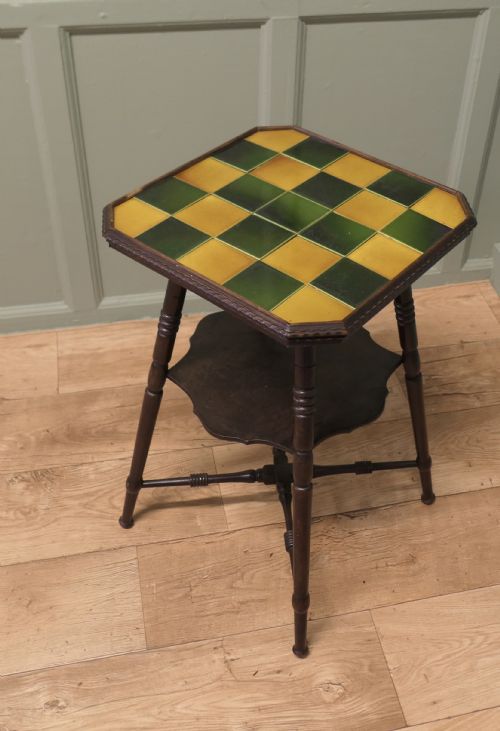
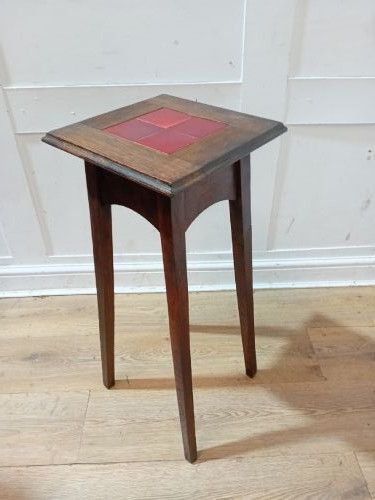
Forms vary from simple two-tier side tables to taller jardinieres and hall stands fitted with mirrors or brass hooks. Certain pieces originate from notable workshops and retailers like Liberty of London or Shapland and Petter, while others reflect domestic vernacular cabinet making.
Materials and construction
Makers built these stands using solid oak, shaped with traditional joinery to support the substantial weight of inset ceramic tiles. The wood is frequently left with a natural grain or darkened finish suited to the Arts and Crafts aesthetic.
Glazed ceramic tiles form the centrepiece of the top surface, sometimes decorated with floral motifs or geometric patterns in the Art Nouveau style. Metal components such as brass brackets, handles, or hooks appear on washstands and hall stands to provide additional utility.
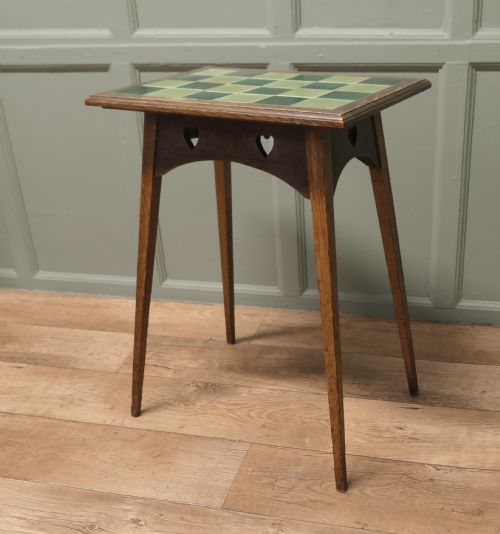
Some tables feature heart-carved cut-outs in the oak frame, offering a charming reminder that Victorian cabinetmakers liked to wear their hearts on their sleeves.
Judging quality and character
Quality rests upon the harmony between the timber framing and the ceramic inserts, where finer pieces display hand-carved details or heart motifs rather than plain mouldings. The choice of tiles matters greatly, with hand-painted or art pottery designs elevating a standard table into a work of distinct character.
Construction methods also distinguish better examples, seen in tight joints and well-seasoned oak that resists warping around the damp-prone tile borders. The presence of documented maker stamps or distinctive workshop styling adds a layer of design history to the object.
Liberty London·Shapland & Petter·Baillie Scott
The Oak Tile Top Stand Glossary
- Arts and Crafts
- A design movement valuing handcraftsmanship and simple forms over mass production. This style heavily influences the oak furniture and decorative tiles found on these stands.
- Art Nouveau
- A style characterised by flowing, organic lines and floral motifs. Tiles decorated in this manner often feature on the tops of tables from the turn of the twentieth century.
- Jardinier stand
- A tall piece of furniture specifically designed to hold a plant pot or flower display. The tile surface protects the wood from water splashes.
- Washstand
- A bedroom cabinet or table fitted with a splashback and a waterproof top for personal washing equipment. Some examples combine tiles with marble surfaces.
- Occasional table
- A small, movable table used for various domestic purposes around a room. These frequently incorporate tiled centres for practicality.
Oak Tile Top Stand: Frequently Asked Questions
What were oak tile top stands used for originally?
These versatile stands served practical roles in Victorian and Edwardian homes, functioning as plant holders, washbasin supports, or convenient side tables for everyday objects. The glazed tiles provided a durable, heat-resistant, and waterproof surface that protected the surrounding timber from spills.
Over time, homeowners placed them in hallways, drawing rooms, and bedrooms where damp items or hot vessels required a safe resting place. Their sturdy construction allowed them to handle heavy ceramic bowls and potted ferns without sustaining water damage.
How do I care for the tiled surface?
Cleaning the glazed ceramic top requires only a damp cloth and mild soap to remove dust and surface marks. Avoid harsh chemical scourers that might dull the glaze or scratch the surrounding oak frame.
Keep the timber nourished by applying occasional beeswax to maintain the grain and protect the joints from drying out. Ensure excess water is wiped away promptly from the grout lines between the tiles to prevent long-term degradation.
How can I tell an Arts and Crafts stand apart from a Victorian one?
Arts and Crafts pieces typically emphasise honest construction, exposed joinery, and nature-inspired motifs such as carved hearts or stylized floral tiles. They lean towards a simpler, more robust aesthetic that rejects excessive factory-made ornamentation.
Victorian stands often embrace a more eclectic mix of materials, sometimes combining tiles with marble tops, brass fittings, and heavier turned legs. Examining the overall decorative restraint helps separate the reformist ideals of the Arts and Crafts movement from mainstream Victorian manufacture.
Can I use an antique tile top table outdoors?
These antique stands are designed for interior domestic environments and lack weather-resistant treatments for outdoor conditions. Exposing the antique oak and traditional tile grouting to rain, frost, and direct sunlight will cause the wood to warp and the mortar to crumble.
Keeping the furniture indoors ensures the timber stays stable and the delicate ceramic tiles remain secure within their wooden frames. They look best in conservatories or interior rooms where humidity levels remain relatively controlled.