



Oak Study Chair
An oak study chair provides a solid anchor for a working room, bringing nineteenth and early twentieth century joinery directly to the desk.
Oak Study Chair
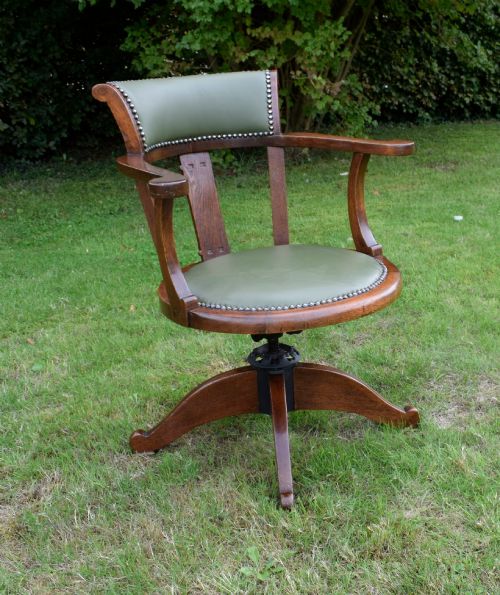
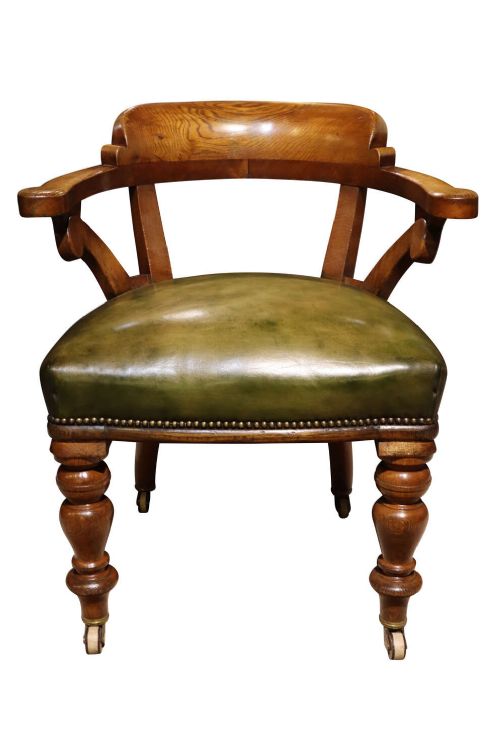
When searching for an oak study chair, buyers encounter heavy timber frames designed for libraries, offices and writing rooms from the Victorian and Edwardian eras. These seating pieces range from sturdy library armchairs to adjustable swivel models fitted with metal and cast iron mechanisms.
The versions most commonly met on this page date from the nineteenth and early twentieth centuries, spanning stylistic revivals such as Gothic, Jacobean and Carolean. Many incorporate practical working elements including leather upholstered seats, open elbow rests and revolving office frames.
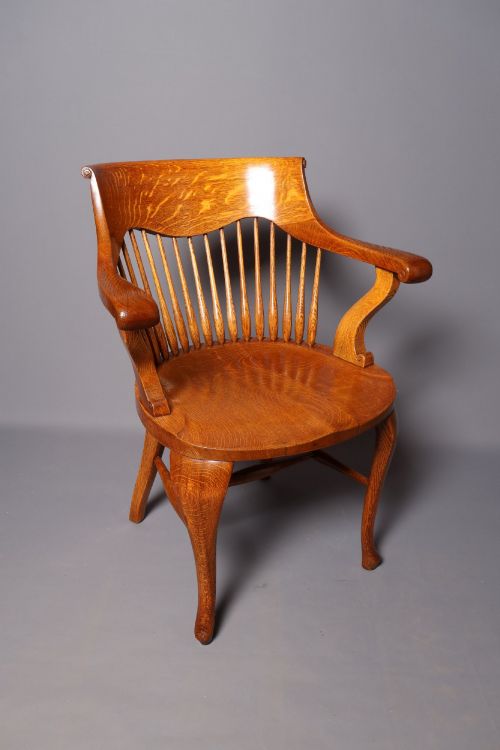
Beyond standard desk seating, the selection includes related library armchairs, smokers' bows and captain's chairs constructed in solid oak, sometimes accompanied by secondary woods like beech, ash and elm.
Materials and construction
Makers built these frames predominantly from solid oak and golden oak, utilising secondary timbers such as beech, ash, chestnut and elm for internal supports and secondary framing. Joinery relied on traditional pegged mortise and tenon joints to withstand daily working use.
Upholstery materials typically include buttoned leather, tan hide, fabric, velvet and tapestry needlepoint, secured with brass tacks or metal studs. Swivel and adjustable height examples incorporate iron spindles, cast iron bases and brass mechanisms to allow movement.
Judging quality in working seats
Quality rests in the weight of the timber and the crispness of the carved details, distinguishing standard utility office seating from pieces made by notable designers or workshops. Golden oak selections with deep patination and substantial framing sit at the higher end.
The integrity of the internal mechanical components, such as revolving iron swivels and adjustable height screws, dictates the functional standard. Original leather upholstery retaining correct buttoning and period hide also separates superior examples from later replacements.
Bruce James Talbert·A W N Pugin·Kendrick and Jefferson·Edward William Godwin·J S Ford Johnson Chicago
The Oak Study Chair Glossary
- Bergere
- A closed armchair with a cane or wicker panelled back and sides, often seen in oak frames from the Edwardian period.
- Smokers Bow
- A low wooden armchair with a curved back rail supported by turned spindles, commonly used in offices and studies.
- Gothic Revival
- A nineteenth-century design style drawing on medieval architectural motifs, frequently featuring pointed arches and tracery carved into oak.
- Carolean Revival
- A late Victorian revival style mimicking the ornate carved scrollwork and turned legs of the seventeenth century.
- Swivel Chair
- A seat mounted on a central pivoting spindle and metal or cast iron base, introduced widely for office use around 1900.
Oak Study Chair: Frequently Asked Questions
Are these chairs comfortable for daily desk work?
Many nineteenth and early twentieth century office designs offer supportive high backs and wide upholstered seats suitable for everyday use.
Adjustable height swivel models provide additional ergonomic flexibility for modern working environments.
How do I date an oak study chair?
Dating relies on combining stylistic revival clues with construction methods, such as iron swivel mechanisms appearing around 1900.
Victorian examples often display heavier carved ornamentation, while Edwardian pieces lean towards simpler revolving office configurations.
What is the difference between a captain's chair and a library chair?
Captain's chairs typically feature a rounded low back supported by spindles, designed for mobility and tight spaces around a desk.
Library armchairs are larger upholstered seating pieces intended for reading comfort and often feature padded arm rests and deep buttoning.
Did these chairs always have leather seats?
While leather and hide upholstery remained standard for executive and library seating, many utility desk chairs featured solid carved wooden seats.
Some examples also incorporated cane panels, fabric or tapestry needlepoint depending on their specific domestic or institutional use.