





Oak Spirit Cabinet
An oak spirit cabinet is a sturdy home for your finest bottles, built to keep your whiskey locked away from prying hands.
Oak Spirit Cabinet
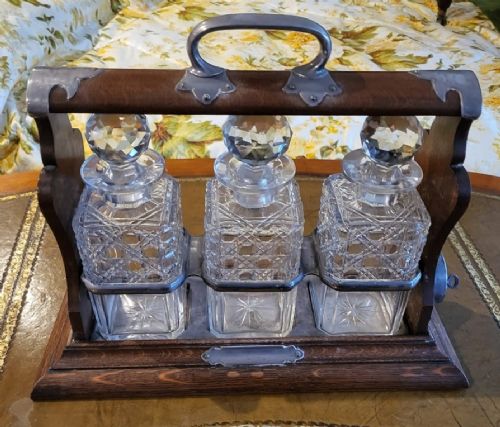
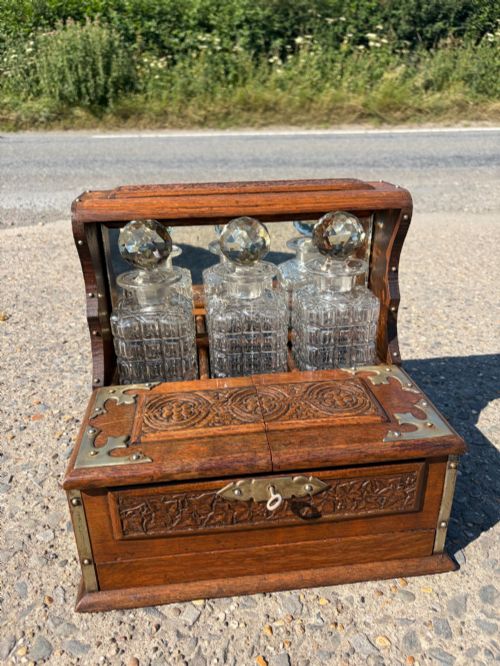
When you search for an oak spirit cabinet, you encounter sturdy Victorian and Edwardian drinking furniture designed to secure bottles under lock and key. These pieces combine practical storage with display, frequently taking the form of tantaluses and games compendiums.
The versions you meet most often on this page date from the late nineteenth century and the early twentieth century. They range from compact single-bottle cases to large, fitted barware cabinets mounted in brass.
How they were made
Cabinetmakers built these pieces using solid oak, often figured or blonde, complemented by heavy brass mounts and locks. Marquetry stringing occasionally adds fine detail to the timber surfaces.
Interiors frequently house cut glass decanters alongside mirrored backs and storage wells for games. Silver plate mounts and hardware finish the pieces, securing the bottles in a mechanism that stays locked until the key turns.
Oak Spirit Cabinet Retail Price Guide 2026
Typical asking prices for oak spirit cabinet among the pieces listed under this phrase on Sellingantiques today, from the lower quarter to the upper quarter. They describe what is for sale here now, not the wider market.
One exceptional Edwardian storage option abandons standard decanters entirely to serve as a brass-bound Guinness bottle storage barrel.
What varies in quality
The distinction between a standard piece and a superior example lies in the complexity of the internal fittings. Combination compendiums that merge a decanter tantalus with a games box demand much finer carpentry than simple single-bottle cases.
Material execution also separates the ranges, seen in the weight of the brass mounts, the clarity of the cut glass decanters, and the presence of marquetry stringing on the oak case.
The Oak Spirit Cabinet Glossary
- Tantalus
- A locking drink container that holds decanters securely in place while displaying the contents through a wooden or brass framework. The clever mechanism prevents removal of the bottles until the lock is released.
- Games compendium
- A fitted box containing boards and pieces for various parlour games, frequently integrated directly into a drinking cabinet. These multi-use items served as entertainment centres in period drawing rooms.
- Marquetry
- The art of applying pieces of veneer to a structure to form decorative patterns. Craftsmen utilised this technique to adorn the outer oak surfaces of finer cabinets.
- Brass mount
- Metalwork fitted to the corners, handles, and locking mechanisms of the cabinet. Sturdy mounts protected the edges of the oak and added structural reinforcement.
Oak Spirit Cabinet: Frequently Asked Questions
What is an oak spirit cabinet?
An oak spirit cabinet is a locking container designed to house decanters and barware securely. These pieces originate from the Victorian and Edwardian eras.
They combine heavy timber construction with brass hardware to protect valuable spirits while presenting them attractively for guests.
How did people use a tantalus?
A tantalus was used to store whiskey and other spirits safely in the parlour or dining room. The locking mechanism kept household staff or guests from accessing the bottles without permission.
Turning the key released the retaining bar, allowing the cut glass decanters to be lifted free for pouring.
What is a games compendium?
A games compendium is a multi-purpose box holding equipment for traditional board games and card games. In period drinking cabinets, these compartments were built directly beneath or alongside the bottle storage.
This integrated design provided complete evening entertainment within a single piece of furniture.
How do I date an oak spirit cabinet?
Dating relies on observing the period characteristics, such as the style of the brass mounts, the type of oak finish, and construction methods. Pieces from the Victorian era often feature robust brass handles and figured timber.
Edwardian examples frequently expand into larger compendiums that combine barware with dedicated space for games.