
Oak Side Serving Table
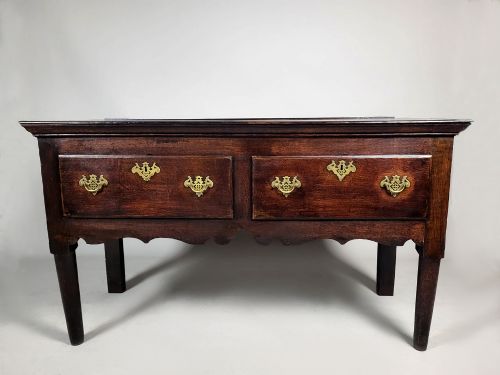
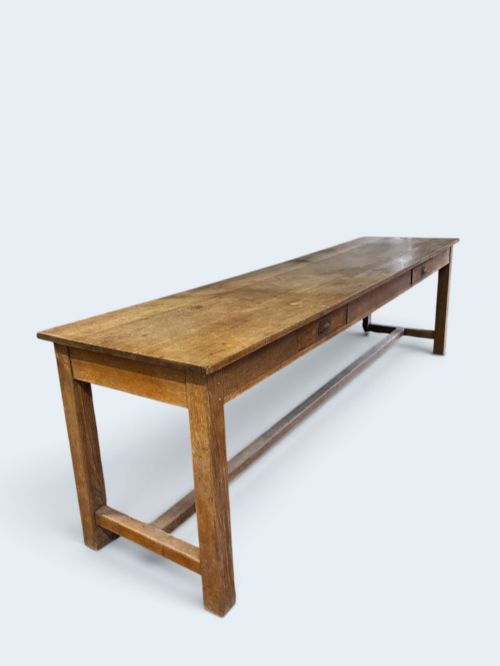
An oak side serving table brings robust utility and vernacular warmth to a dining room, hallway, or kitchen.

Materials and construction
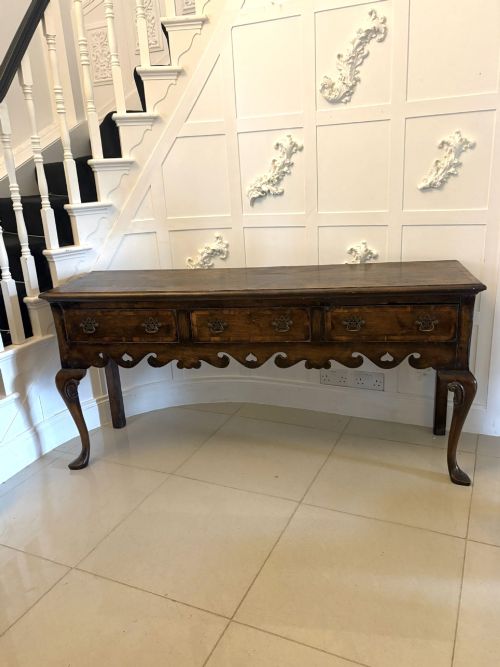
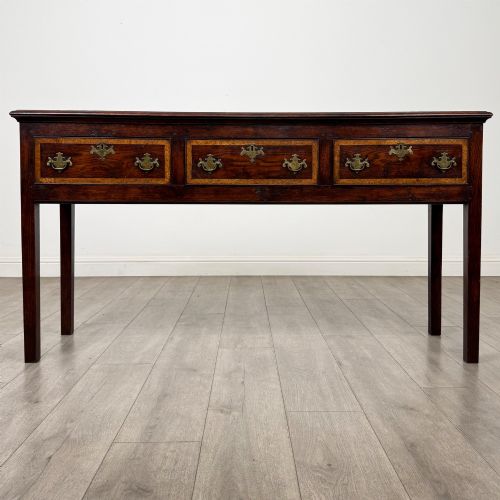
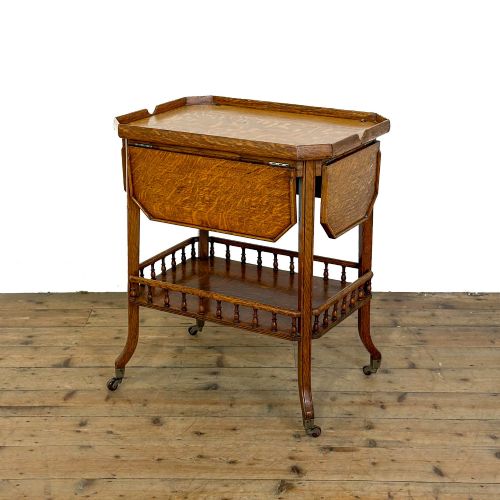
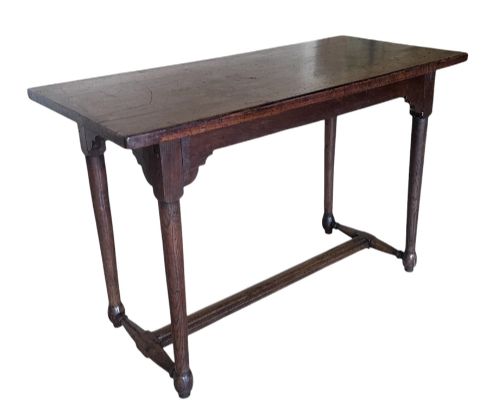
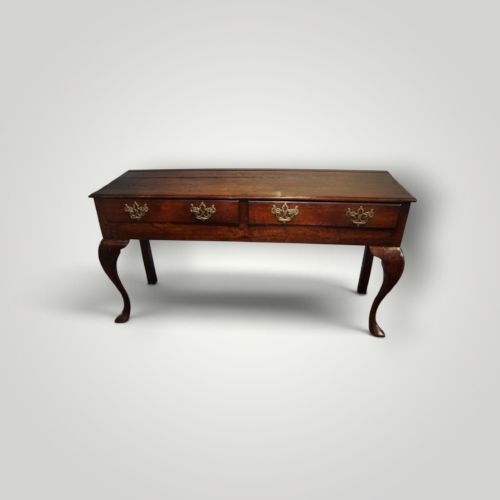
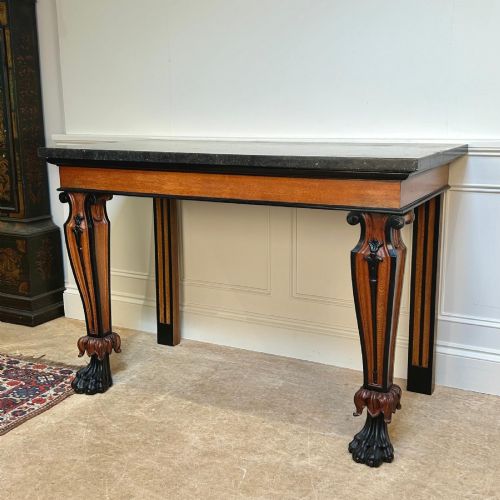
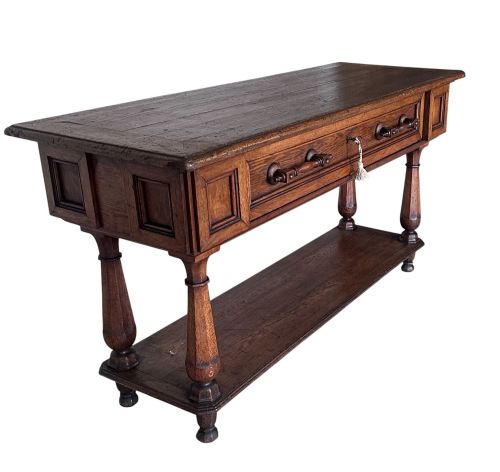
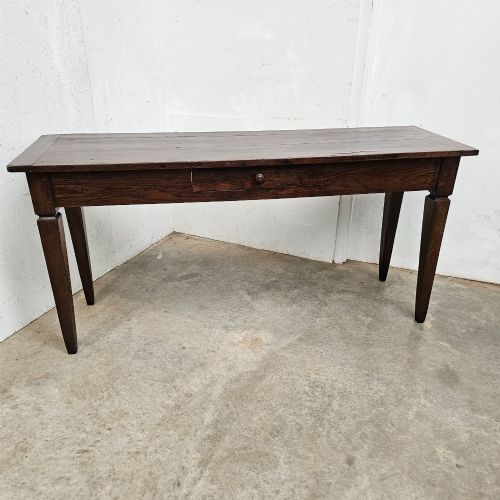
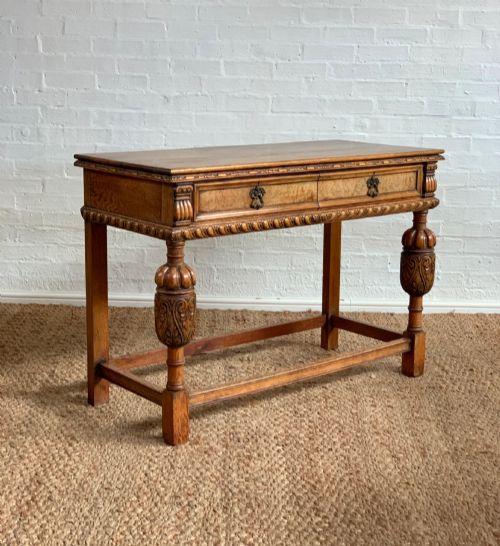
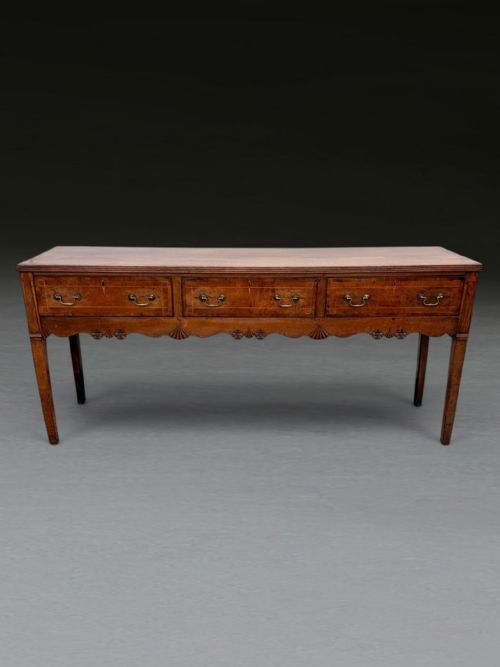
Solid oak provides the structural core of these pieces, often complemented by secondary timbers and enhanced through bleaching, ebonising, or intricate carving. Cabinetmakers utilised traditional joining techniques, integrating brass handles, iron hardware, and occasional marble tops or inlaid details.
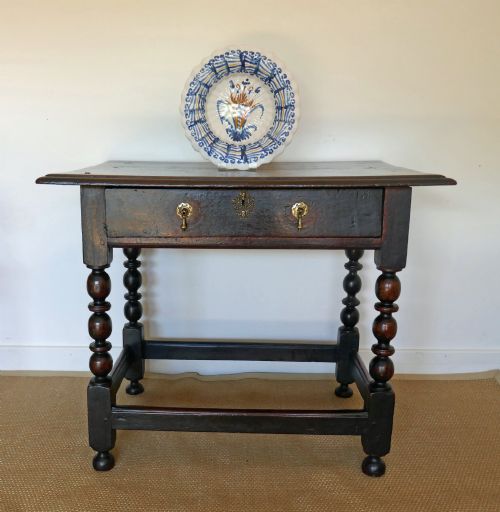
Surfaces display the natural grain of the timber, sometimes shaped with cabriole legs, bobbin turnings, or bold proportions typical of Jacobean and Georgian workshops.
Indicators of quality
Quality rests upon the selection of timber, the crispness of any hand-carved ornamentation, and the integrity of the original construction rather than decorative excess alone. Superior examples retain their original brasses, patinated surfaces, and balanced proportions without heavy modern alterations.
The distinction between a humble country workshop piece and a high-status commission lies in the precision of the joinery, the thickness of the solid oak boards, and the retention of period character.
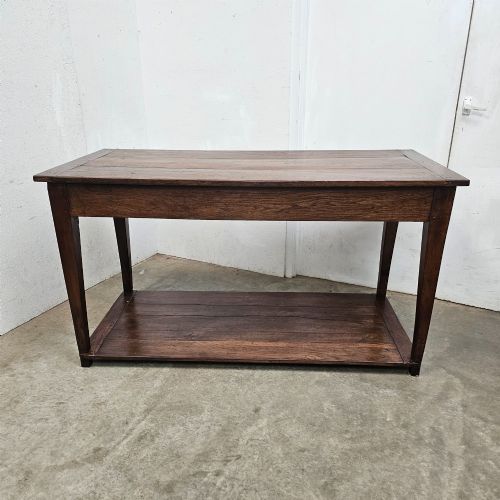
Regional variants represented include Welsh pot board bases, French provincial work tables, and Spanish servers alongside English country house pieces.
Beresford and Hicks London·George Oakley
The Oak Side Serving Table Glossary
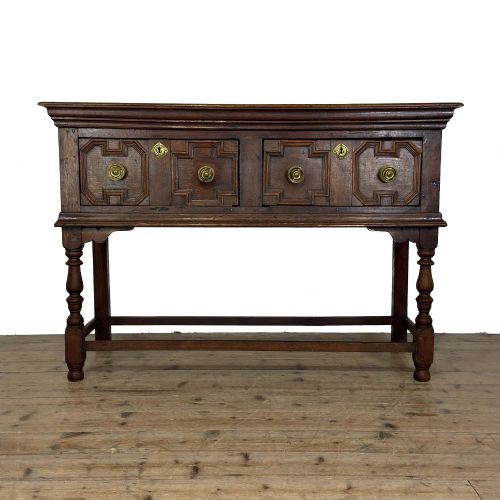
- Dresser base
- A low sideboard fitted with drawers and occasionally cupboards below, used traditionally for storing and serving food.
- Pot board
- An open lower shelf fitted between the legs of a dresser base or serving table, originally intended for storing earthenware pots.
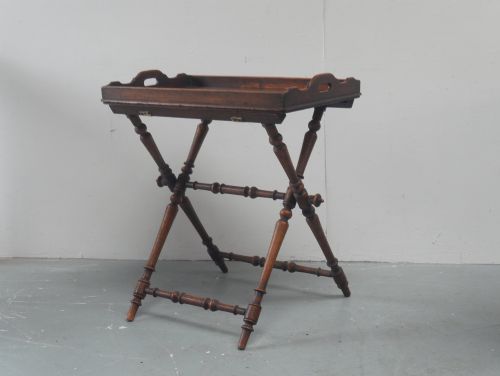
- Butlers tray
- A portable wooden tray with hinged or fixed sides, typically mounted on a folding wooden stand for serving drinks or meals.
- Cabriole leg
- A furniture leg that curves outward at the knee and tapers inward toward the foot, often ending in a pad or scroll.
- Bobbin turning
- A type of furniture leg or stretcher shaped on a lathe to resemble a series of wooden bobbins or spools.
Oak Side Serving Table: Frequently Asked Questions
Where should I place an oak serving table?
These pieces suit dining rooms as auxiliary surfaces during meals, or hallways as console tables for keys and correspondence. Their depth allows them to sit against walls without obstructing pathways.
Kitchens also benefit from their robust timber surfaces, which handle daily domestic use comfortably.
How do I care for antique oak?
Maintain the timber by applying natural beeswax periodically to nourish the grain and preserve the historic patina. Avoid placing tables near direct heat sources or strong sunlight, which can dry out the wood.
Use coasters and felt pads to protect the surface from moisture and heat damage.
How can I tell eighteenth-century oak from later revivals?
Earlier pieces exhibit hand-cut joints, pegged tenons, and timber shrinkage consistent with age and hand tools. Revival pieces from the Victorian and Edwardian periods often show standardised machine-cut elements and different internal secondary woods.
Examine the underside and drawer linings for tool marks that reveal the period of manufacture.
What is the difference between a console and a serving table?
Serving tables were traditionally built heavier to support heavy platters of food and dining utensils within dining spaces. Console tables are generally narrower and often designed purely for architectural display against a wall.
In practice, makers and historic inventories frequently used the terms interchangeably for similar rectangular oak furniture.