

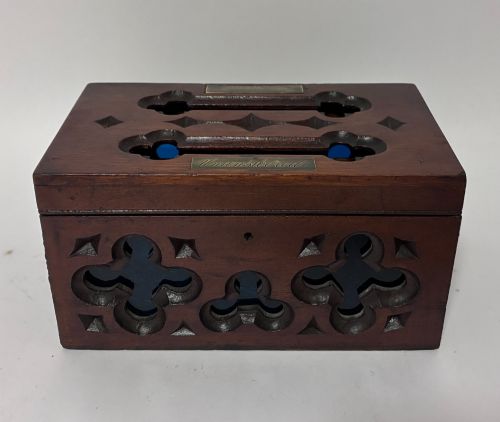


Oak Post Box
These oak post box examples are sturdy domestic and institutional letter receptacles that bring tactile period utility to any hall or desk.
Oak Post Box
An oak post box is a functional container designed to hold incoming or outgoing mail within large residences, country houses, hotels and institutions. When you search for an oak post box, you encounter pieces originating from the nineteenth century up through the Edwardian period, styled in Victorian, Gothic Revival or Arts and Crafts manners.
The most common versions met on this page include desk-standing correspondence boxes and wall-mounted postal boxes constructed from solid timbers. Many retain brass mounting, glass viewing panels and inscribed posting slots indicating delivery or collection details.
How they were made
Maker construction relies heavily upon solid oak, frequently golden or polished, combined with brass hinges, mounts, locks and handles. Some examples incorporate glass viewing windows, ash secondary woods, and applied fabric linings within fitted interior compartments.
Surface ornamentation ranges from plain brass-bound panels to profusely carved Gothic Revival motifs, decorative brass lettering, and specialised security mechanisms such as Bramah locks.
Oak Post Box Retail Price Guide 2026
Typical asking prices for oak post box among the pieces listed under this phrase on Sellingantiques today, from the lower quarter to the upper quarter. They describe what is for sale here now, not the wider market.
Site listings demonstrate materials spanning oak, brass, glass, copper, steel, fabric and ash across Victorian and Edwardian periods.
What varies in quality
Quality in these pieces rests upon the crispness of the timber carving, the substance of the brass hardware, and the integrity of the original locking mechanisms. Superior examples exhibit substantial brass mountings, integrated maker plaques, and architectural detailing appropriate to the Gothic or Arts and Crafts styles.
Simpler domestic boxes rely purely on proportion and grain pattern, whereas high-end iterations feature specialised compartments, heavy lion paw feet, or specific retail signatures from makers like Hardman, Powell and Company or Halstaff and Hannaford.
Hardman Powell and Company·Halstaff and Hannaford
The Oak Post Box Glossary
- Correspondence box
- A desk accessory or small cabinet designed to hold writing paper, envelopes and incoming post. These often feature sloping lids or fitted pigeonholes inside.
- Bramah lock
- A high-security cylindrical lock patented by Joseph Bramah in the eighteenth century, frequently fitted to better-quality nineteenth-century boxes. It requires a tubular key with precise longitudinal cuts.
- Gothic Revival
- An architectural and decorative style popular during the Victorian era, drawing inspiration from medieval forms. Pieces in this manner often display pointed arches, tracery and heavy carved oak.
- Arts and Crafts
- A design movement valuing handcraftsmanship, simple structural honesty and natural materials. Boxes of this type display unpretentious golden oak construction and visible joinery.
- Pillar post box
- A freestanding or column-form postal receptacle used in large country houses or boarding schools. These stand independently rather than hanging on a wall.
Oak Post Box: Frequently Asked Questions
How were these boxes used?
These boxes served as secure collection points for letters and telegrams within large domestic households, hotels or boarding schools. Staff collected outgoing post from them or sorted incoming mail for residents.
They stood upon desks, hung on entrance hall walls or sat as small pillars in central corridors to organise daily correspondence.
Are they wall mounted or desk standing?
Examples survive in both configurations, with many desk accessories doubling as portable correspondence cabinets. Wall-mounted variants typically feature flat panel backs with hanging brackets.
Buyers should inspect the rear panels and mounting points to determine the original intended placement.
How do I date an oak post box?
Dating relies on stylistic clues, hardware types and construction methods spanning the nineteenth and early twentieth centuries. Gothic Revival and heavy brass-bound pieces generally point to the mid-to-late Victorian decades.
Edwardian and later examples show simpler Arts and Crafts influence or lighter golden oak finishes without excessive carving.
What do post and delivery plaques mean?
Many boxes feature brass plates inscribed with words like post or delivery to designate sorting slots. These reflect contemporary postal routines where households separated incoming mail from outgoing letters.
Original lettering adds historical authenticity to the piece and indicates its specific functional role.