





Oak Office Storage
Oak office storage pieces bring practical twentieth-century utility and robust timber construction directly into modern workspaces.
Oak Office Storage
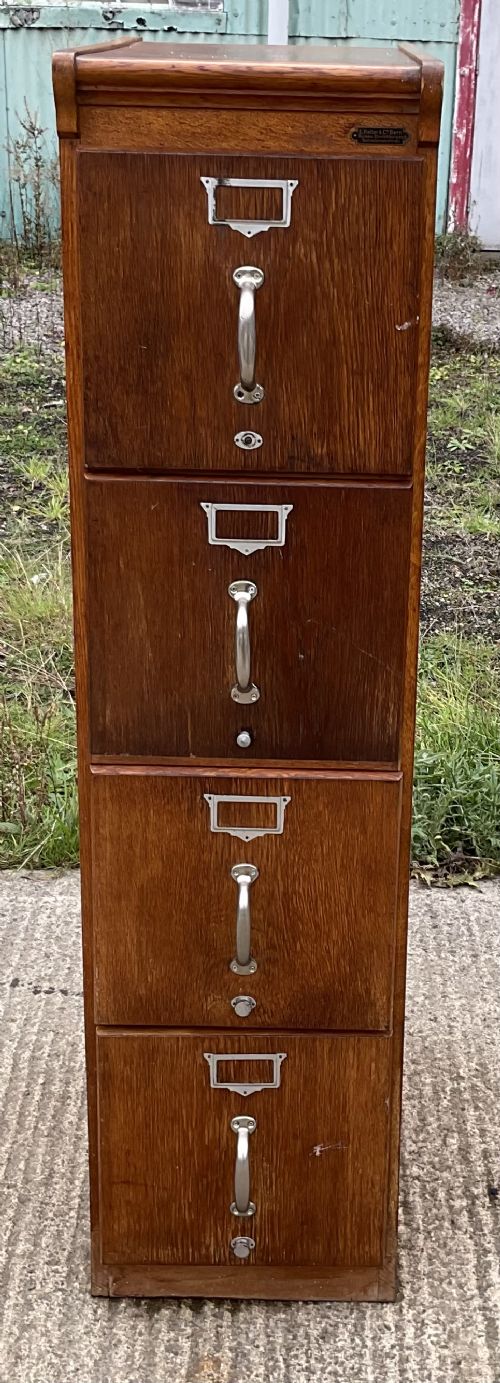
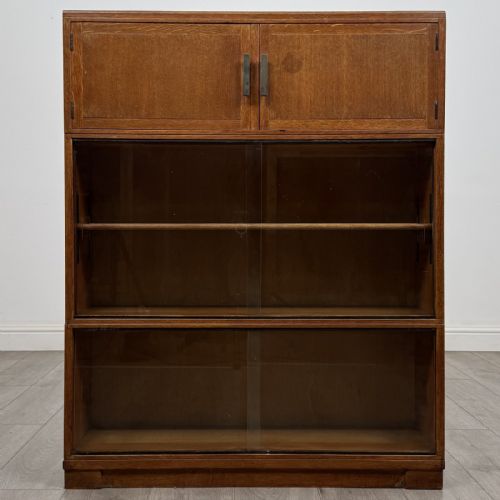
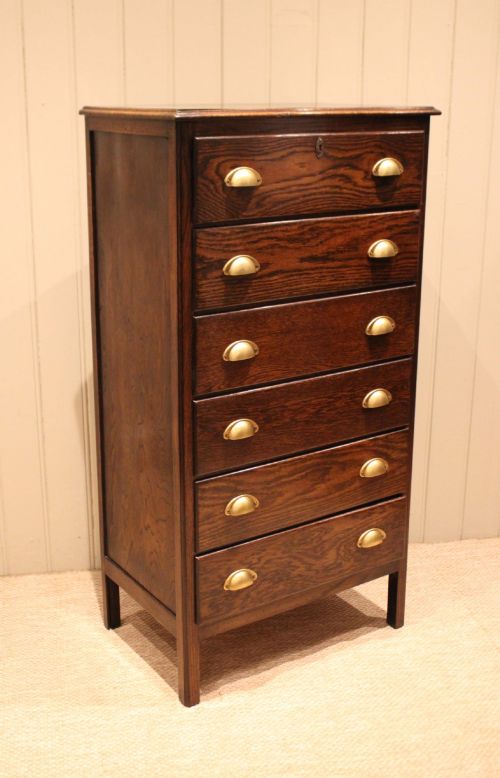
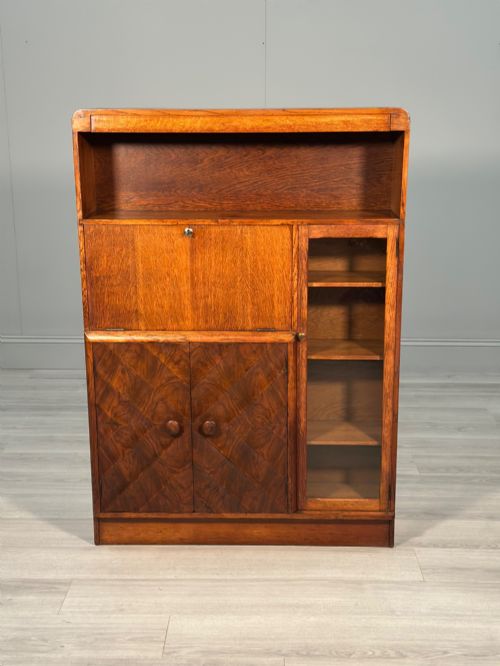
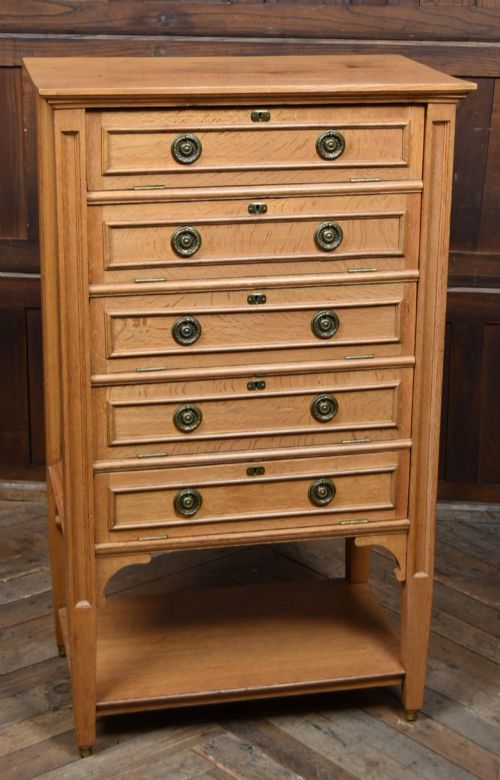
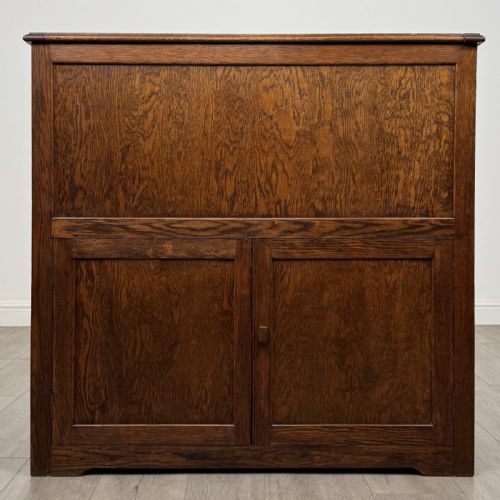
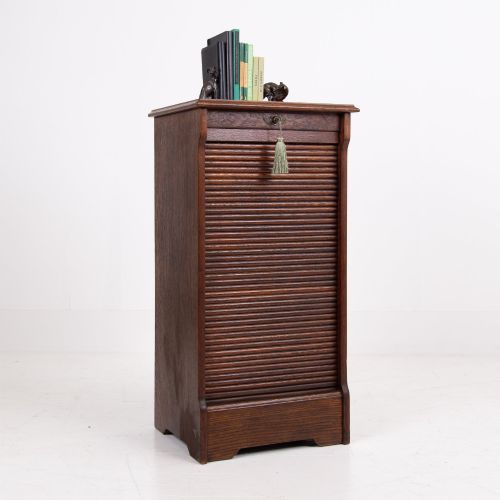
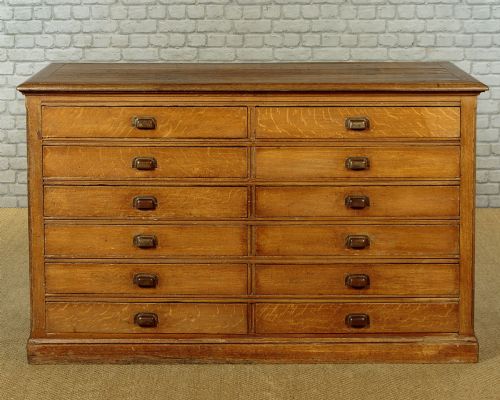
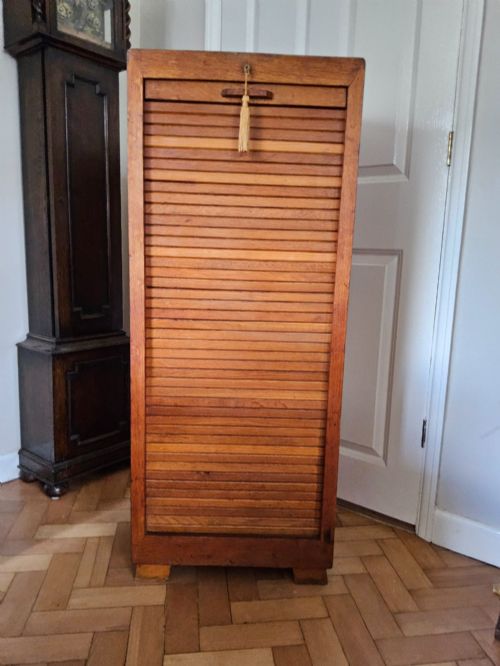
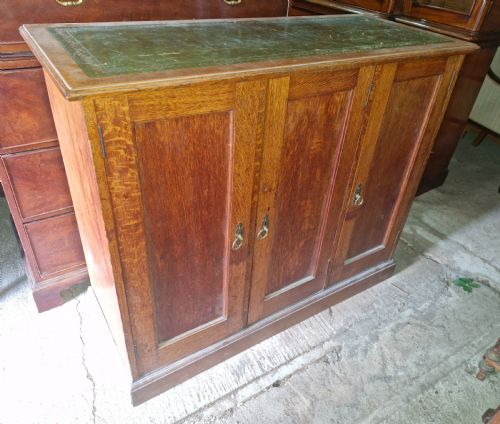
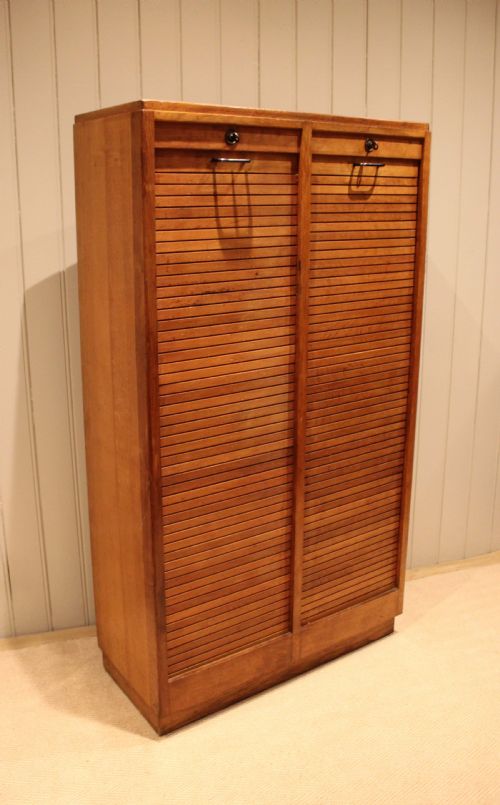
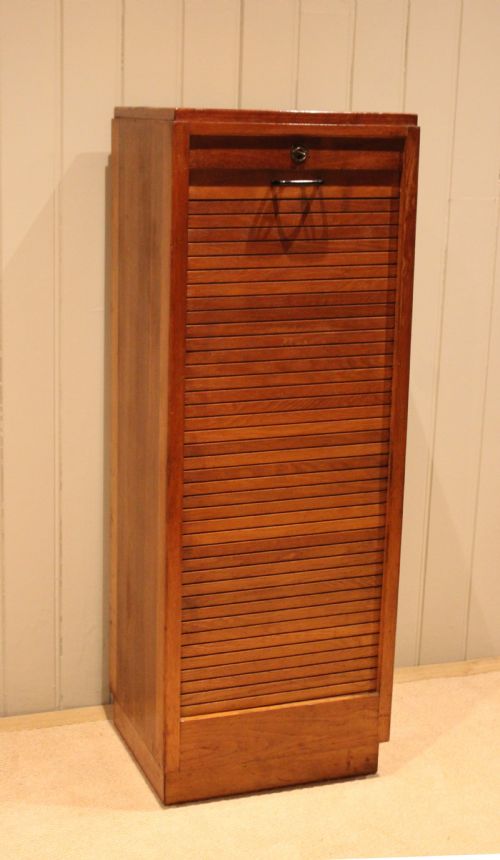
When you search for oak office storage, you encounter functional furniture designed for organisation, primarily originating from the early twentieth century, the Edwardian period, and the 1920s and 1930s. The selection spans vertical filing cabinets, banks of multiple drawers, tambour front cabinets, plan chests, and stacking bookcases.
The most common variations on this page include tambour front cabinets and multi-drawer filing units built from solid timber. These utilitarian forms reflect the commercial and domestic workspace requirements of the past, offering compartmentalised storage through pigeon holes, adjustable shelves, and modular tiers.
Evaluating quality and finish
Quality rests in the integrity of the mechanical elements, particularly the smooth operation of tambour doors, the precision of multi-drawer banks, and the tightness of modular stacking joints. Superior examples retain their original brass hardware and working internal fittings without modern replacements.
The execution of the timber work and the condition of the oak surfaces dictate the standing of a piece. Finer examples display thoughtful grain selection and robust construction designed to withstand heavy commercial use.
Oak Office Storage Retail Price Guide 2026
Typical asking prices for oak office storage among the pieces listed under this phrase on Sellingantiques today, from the lower quarter to the upper quarter. They describe what is for sale here now, not the wider market.
A towering sixty-six drawer cabinet provides enough tiny compartments to misplace your sanity sixty-six times over.
Minty of Oxford·E Gomme·Globe Wernicke·Amberg
The Oak Office Storage Glossary
- Tambour
- A door constructed from narrow strips of wood glued to a canvas backing, allowing it to slide open along a track in the cabinet frame.
- Plan chest
- A wide, shallow set of drawers specifically designed for storing large architectural plans, maps, and flat artwork safely.
- Stacking bookcase
- Modular shelving units, often associated with makers like Globe Wernicke, featuring upward-lifting glass doors that allow tiers to be piled together.
- Bank of drawers
- A multi-compartment cabinet containing numerous small drawers arranged in rows and columns for organising documents, specimens, or office supplies.
Oak Office Storage: Frequently Asked Questions
How do tambour doors operate?
Tambour doors consist of narrow wooden slats fastened to a flexible backing fabric that slides along a curved channel inside the cabinet frame. This mechanism allows the door to disappear into the sides of the unit when opened.
Such doors were particularly valued in offices with limited space where traditional hinged doors would obstruct pathways.
What are stacking bookcases used for?
Stacking bookcases provide modular shelving where individual glazed tiers sit one upon another without permanent fixings. They protect books behind rising glass doors while allowing the shelving system to grow.
Collectors utilise these modular units to house libraries in versatile arrangements that can be easily disassembled and moved.
How do I identify an Edwardian filing cabinet?
Edwardian filing cabinets typically display characteristic period joinery, warm oak tones, and traditional brass drawer pulls. They date from the reign of Edward VII and emphasise functional office organisation.
Examining the interior construction, drawer dovetails, and backboards helps confirm the period of manufacture.
Are these cabinets suitable for modern paper sizes?
Many vintage filing cabinets and drawers accommodate standard modern paperwork, though older filing systems were often designed for specific historical document formats. Plan chests and larger drawer banks easily hold contemporary large-format sheets.
Checking internal drawer dimensions ensures that modern folders and documents will fit comfortably inside the compartments.