


Oak Monk Bench Chair
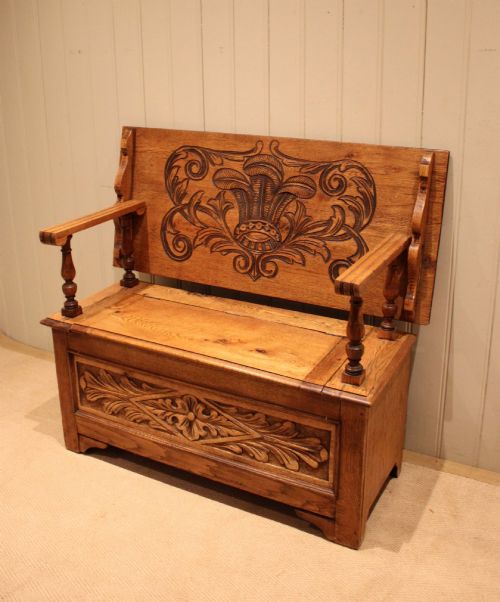
An oak monk bench chair transforms from a flat-backed seat into a table top, bringing centuries of clever domestic design into a modern hallway.
Oak Monk Bench Chair
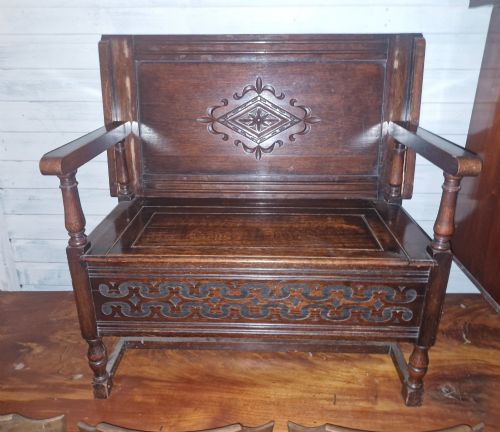
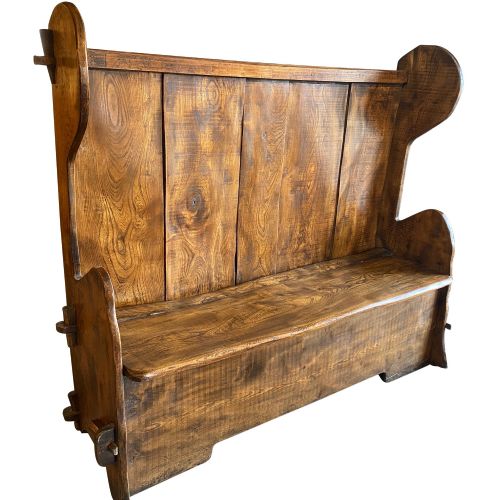
When you search for an oak monk bench chair, you encounter a versatile hybrid furniture form designed to serve as both seating and a table. The pieces available here span from the seventeenth century through to the early twentieth century, encompassing revivalist movements and rustic farmhouse styles. You will find small hall seats, large box settles with storage, chair tables, and armchairs.
Materials and construction
Solid oak provides the primary structural timber across nearly all examples, frequently paired with elm for specific seat boards or panels. Cabinet makers utilised traditional mortise and tenon joinery to ensure the framework could withstand the physical strain of converting between a chair and a table.
Surface decoration relies heavily on hand carving, panelled construction, and pegged joints rather than applied veneer. Iron hinges, catches, and pivot pins facilitate the mechanical movement of the folding back while adding robust functional detail.
Current listings feature solid oak and elm across periods spanning from the seventeenth century through to the Art Deco era of the 1930s.
Assessing quality and proportion
Quality reveals itself in the integrity of the timber selection and the precision of the pivoting mechanism. Examples fashioned from solid oak with thick, figured boards and deep hand carving stand apart from lighter, later production pieces.
Proportion and stability during conversion dictate the standing of a piece within the range. The crispness of the original panel mouldings and the smooth operation of the folding back separate standard utilitarian items from exceptional survivals.
The Oak Monk Bench Chair Glossary
- Chair table
- A convertible piece of furniture functioning as a chair or settle when the back is upright and as a table when the back folds horizontal. This form dates back to the seventeenth century.
- Settle
- A wooden bench with a high back, solid arms, and a closed base often used to block drafts in domestic halls. Many variations include box storage beneath the seat.
- Jacobean Revival
- A nineteenth and early twentieth century style copying the heavy, dark carved woodwork of the early seventeenth century. It utilises geometric mouldings and strapwork.
- Mortise and tenon
- A primary woodworking joint where a projecting tongue fits snugly into a matching cavity to lock timbers together firmly. This method underpins sturdy historic furniture.
Oak Monk Bench Chair: Frequently Asked Questions
How do I convert a monk bench into a table?
You lift the hinged back of the bench upwards and carefully pivot it forward over the arms until it rests horizontally. This creates a flat surface supported by the arms.
Ensure any retaining pins or catches are properly engaged before placing objects on the newly formed table top.
Where should I place a monk bench in my home?
These pieces traditionally sit in hallways or entrance passages where their dual function provides a seat for putting on shoes and a surface for mail.
They also work well in smaller living rooms or kitchens as accent seating that can double as a casual table when needed.
How do I tell an older monk bench from a later revival piece?
Seventeenth-century and early pieces display hand-cut joinery, pegged tenons, and distinct timber shrinkage patterns earned through centuries of use.
Revival pieces from the Victorian and Edwardian eras often show machine-sawn components, standardised hardware, and lighter internal framing.
What maintenance does solid oak furniture require?
Solid oak benefits from occasional applications of natural beeswax to nourish the wood and maintain a soft, protective sheen. Avoid placing the bench near direct heat sources to prevent the timber from splitting.
Dust regularly with a dry cloth and wipe up moisture spills immediately to protect the historic surface.