
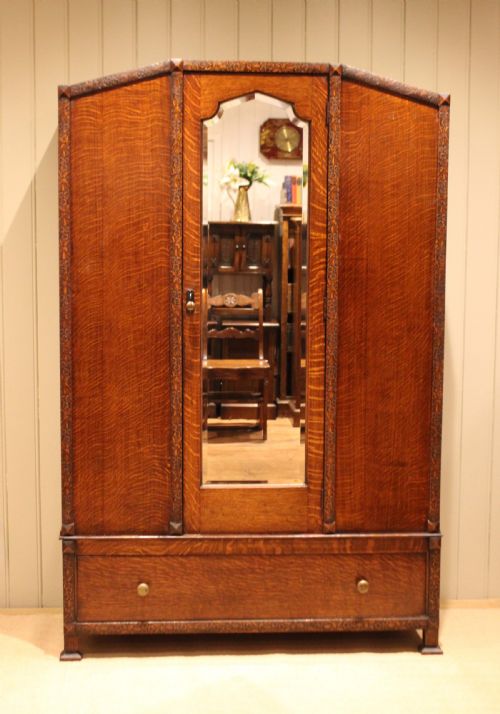


Oak Mirrored Wardrobe
An oak mirrored wardrobe is a substantial bedroom piece built for hanging garments and reflecting light, combining sturdy timber with functional glass.
Identifying an oak mirrored wardrobe
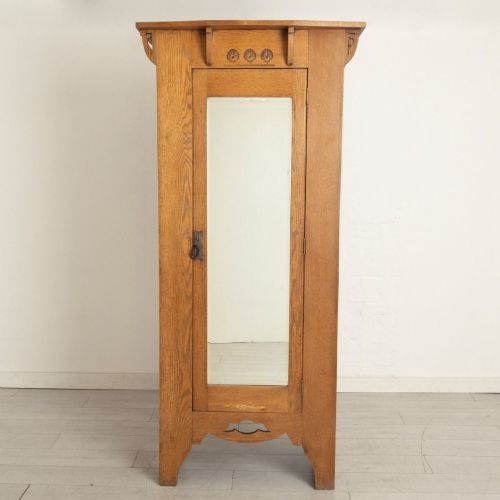
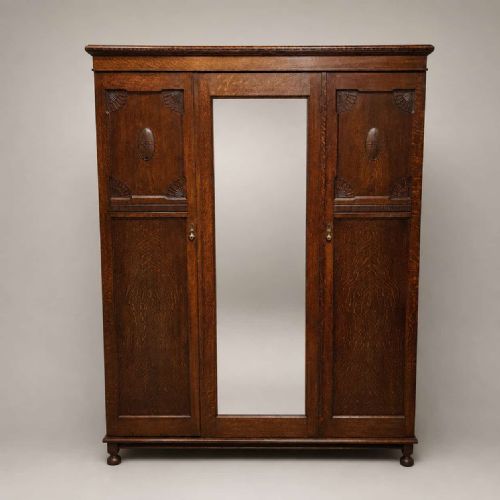
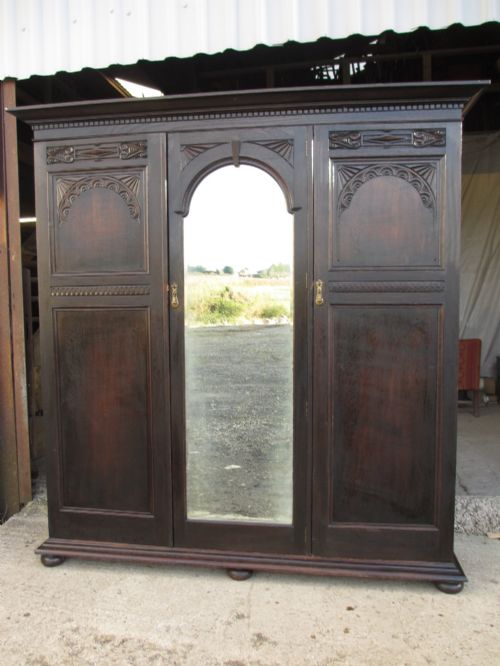
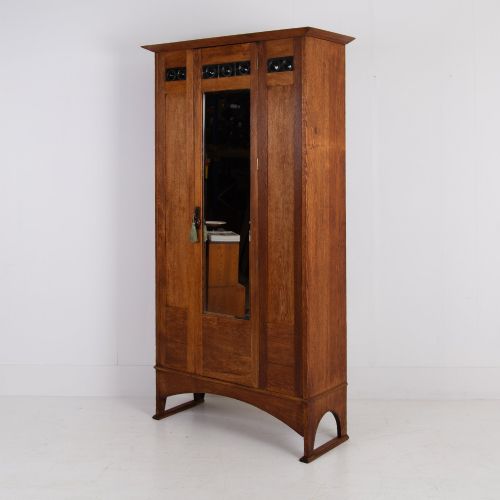
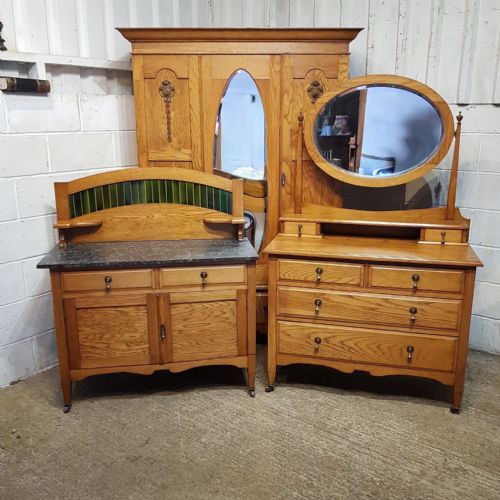
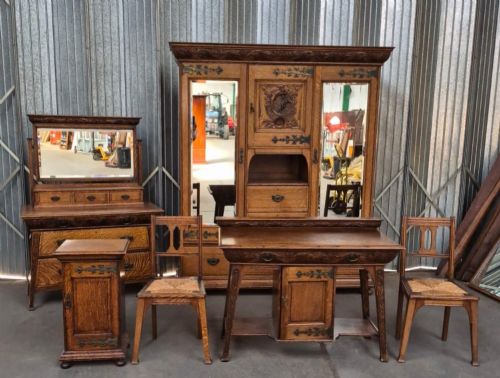
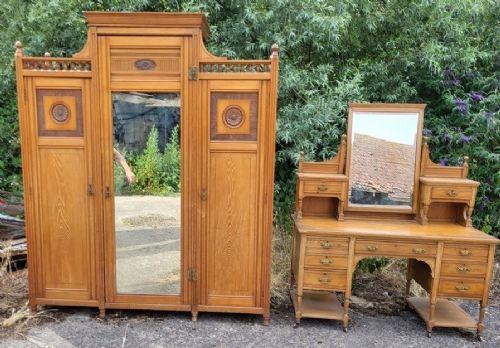
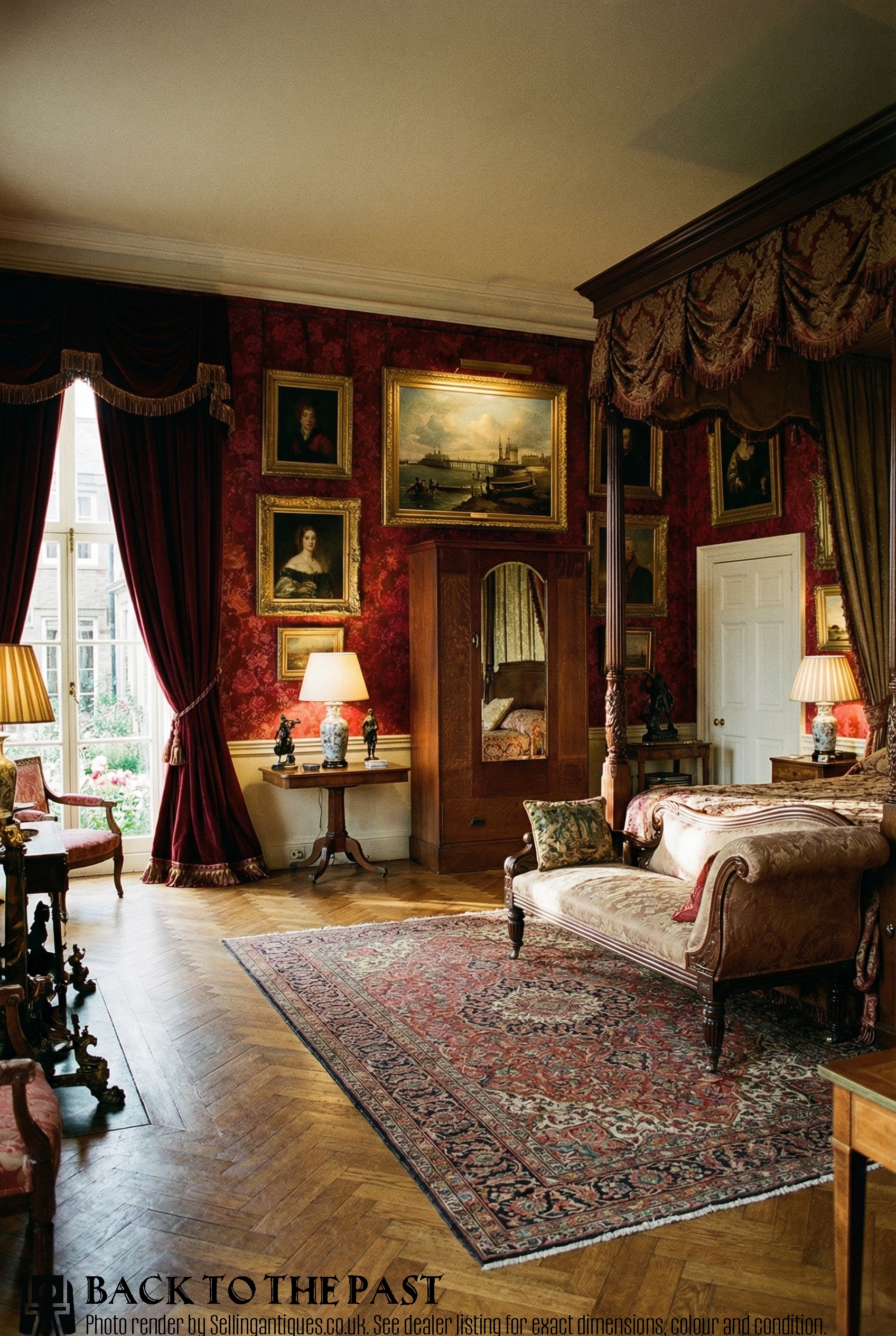
An oak mirrored wardrobe provides enclosed storage and full-length glass panels, appearing frequently across Edwardian, Victorian, and Arts & Crafts periods. These pieces range from single door cupboards to expansive triple wardrobes and complete bedroom suites.
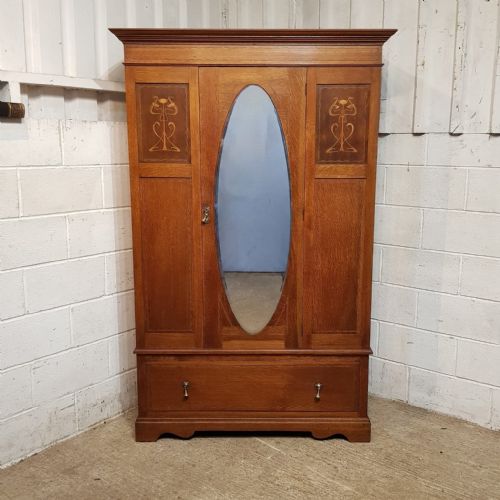
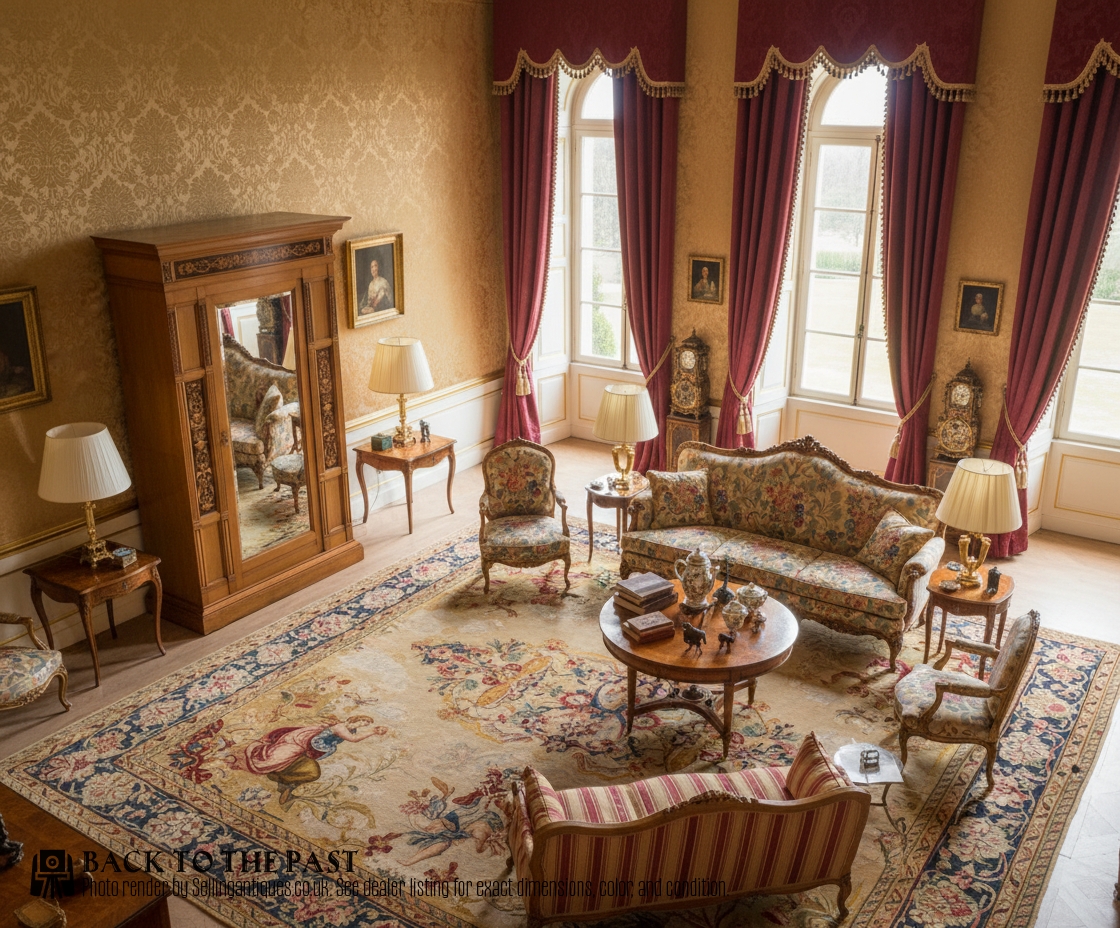
Makers utilise various regional designs, incorporating French influences alongside British workshops such as Gillows of Lancaster, Arnott & Co of Dublin, and early Heals labels. Formats include gentleman's wardrobes, combination units with drawers, and marquetry inlaid variations.
Construction and materials
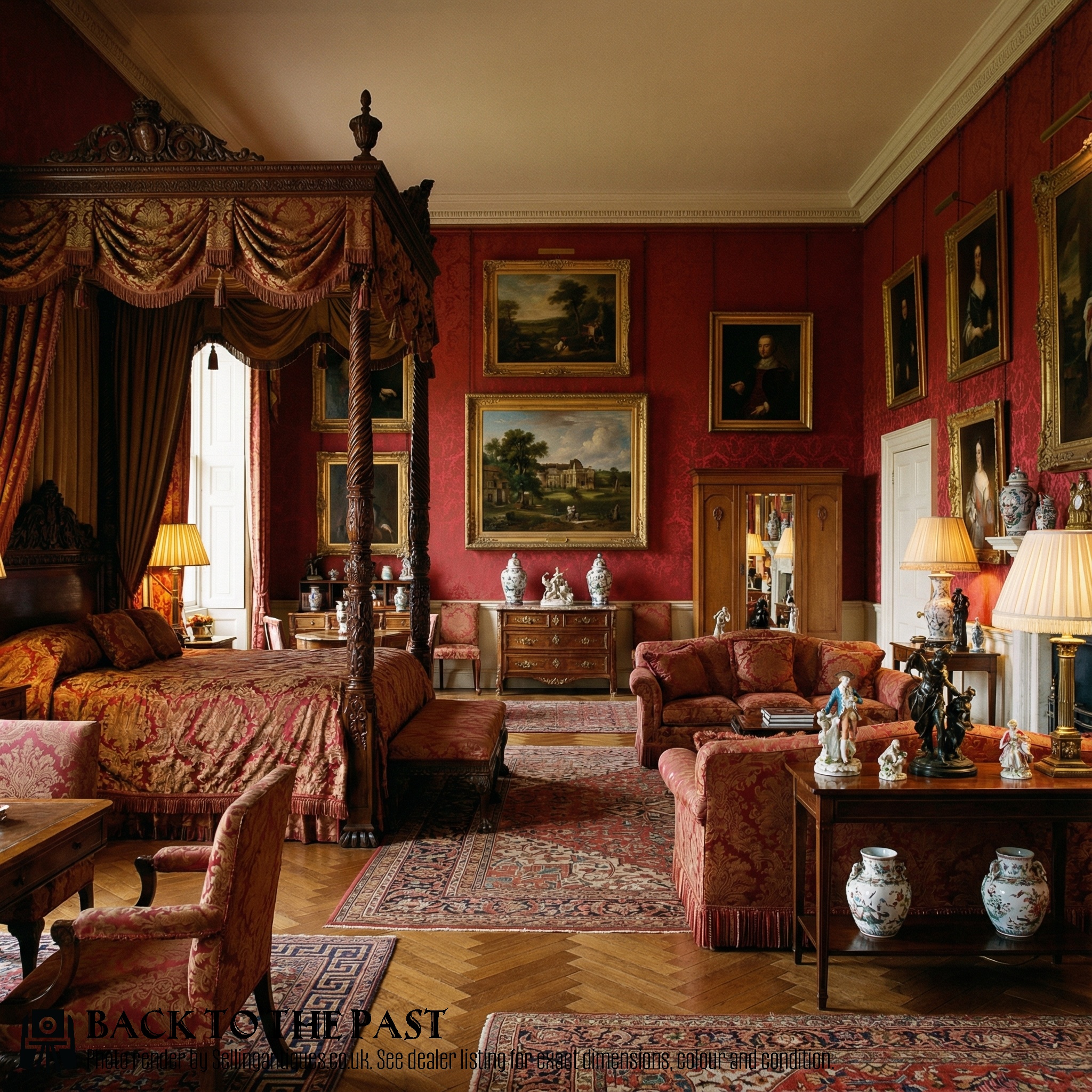
Makers constructed these pieces primarily from solid oak, burr oak, and pollard oak, often combining them with brass and iron hardware. Glass panels serve as door mirrors, whilst internal layouts utilise wooden hanging rails and hooks.
Artisans applied decorative techniques including marquetry inlay and carving to the timber frames. French examples and British workshops alike integrated bevelled mirror glass into heavy wooden doors.
Retail Price Guide 2026
Typical UK retail prices for oak mirrored wardrobe, calculated from the Sellingantiques database of over a million retail prices indexed since 2003. This retail price guide relies exclusively on Sellingantiques data; no external sources or auction records are used, so the figures do not describe the wider market.
Listings span Edwardian, Victorian, and Arts & Crafts periods, featuring materials from standard oak and brass to burr oak and marquetry inlay.
Judging quality and craftsmanship
Quality rests in the selection of timber figures, such as pollard or burr oak, and the precision of marquetry inlay rather than plain surfaces. Better examples demonstrate superior cabinet-making through tightly fitted joints and substantial brass or iron fittings.
The integration of the mirror within the door frame separates standard production from finer work. Labelled pieces from established makers like Gillows or Heals indicate higher workshop standards and documented provenance.
Gillows of Lancaster·Arnott & Co, Dublin·Heals
The Oak Mirrored Wardrobe Glossary
- Pollard oak
- Timber taken from trees that have been pollarded, producing a heavily clustered, decorative grain pattern. This wood appears on select Edwardian wardrobe panels.
- Marquetry inlay
- Decorative patterns created by fitting small pieces of contrasting veneer into the oak surface. This technique adds pictorial detail to door panels and cornices.
- Gentleman's wardrobe
- A specific form combining hanging space with linen slides and drawers behind panelled doors. These pieces date predominantly from around nineteen hundred.
- Bevelled glass
- Mirror glass with angled edges ground down to a thinner profile around the perimeter. This treatment reflects light across the bedroom whilst adding depth to the door.
- Arts & Crafts
- A design movement favouring honest construction, simple lines, and local materials over industrial ornamentation. Wardrobes from this style often display subtle metal hinges and strapwork.
Frequently Asked Questions
How do I date an oak mirrored wardrobe?
Dating relies upon stylistic markers, construction methods, and occasionally maker labels found inside the piece. Edwardian and Arts & Crafts examples typically feature specific brass hardware and distinct grain patterns.
Victorian and later pieces from the nineteen twenties introduce different decorative carvings and simpler door configurations. Comparing the mirror bevelling and internal fittings helps narrow the decade of manufacture.
Are these wardrobes easy to dismantle?
Many larger wardrobes from the Edwardian and Victorian periods were designed to be taken apart for transport and installation. They often utilise bolts and wedge systems hidden inside the main carcass.
Checking the internal corners and cornices reveals whether the timber separates into panels, a necessary feature for moving heavy oak furniture through domestic doorways.
What is pollard oak?
Pollard oak comes from trees pruned above the height that grazing animals can reach, encouraging dense branch growth and circular grain patterns. Cabinet-makers used this timber for prominent door panels to showcase its distinctive texture.
This decorative wood appears on practical Edwardian triple wardrobes alongside standard oak boards. It contrasts with plain timber to create visual depth.
How do I care for the timber and glass?
Maintaining the oak surface requires occasional application of appropriate furniture wax to nourish the grain without building up residue. Harsh chemical sprays should be avoided on both the polished wood and the brass fittings.
Glass cleaner applied to a cloth rather than directly onto the mirror prevents moisture from seeping behind the silvered backing. Keeping the wardrobe away from direct heat sources protects the solid timber from warping.