

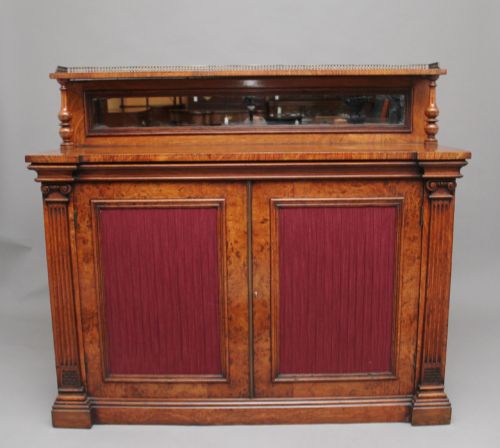


Oak Mirrored Credenza
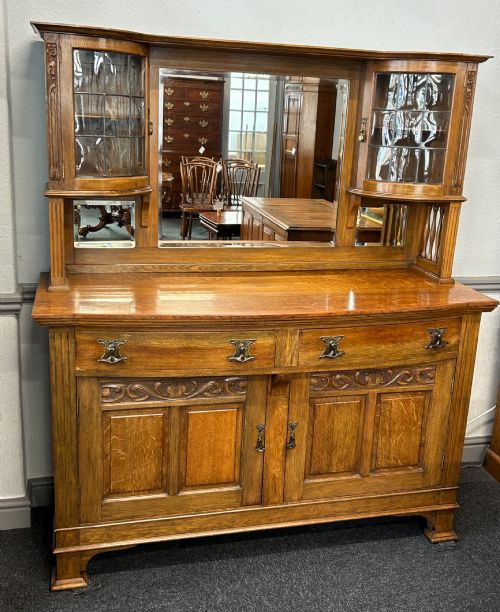
An oak mirrored credenza brings substantial presence and reflective light to a room, combining solid timber with functional glass.
Oak Mirrored Credenza
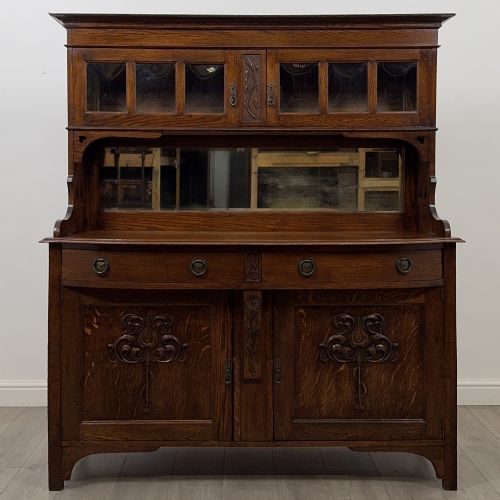
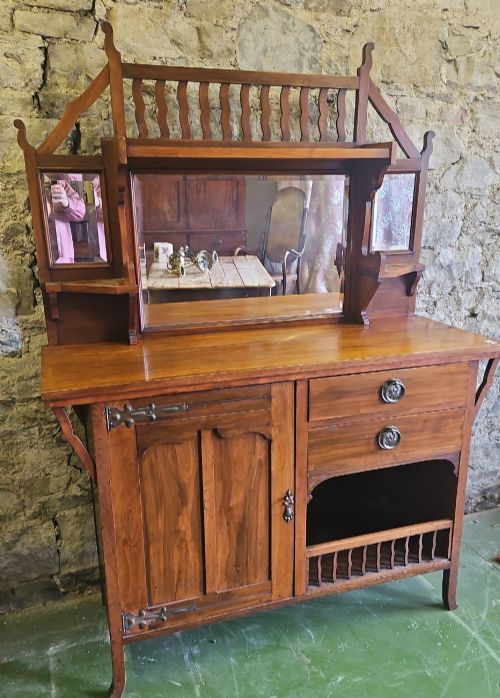
An oak mirrored credenza spans several distinct periods, with Victorian and Edwardian examples appearing most frequently on this page. These pieces serve primarily as substantial sideboards, buffets, and cabinets designed for storage and display in dining or living spaces.
The assortment includes related forms such as cocktail cabinets, dressers, and washstands. Most variations incorporate an integrated mirror back, combining timber storage bases with reflective glass upper sections.
Materials and construction methods
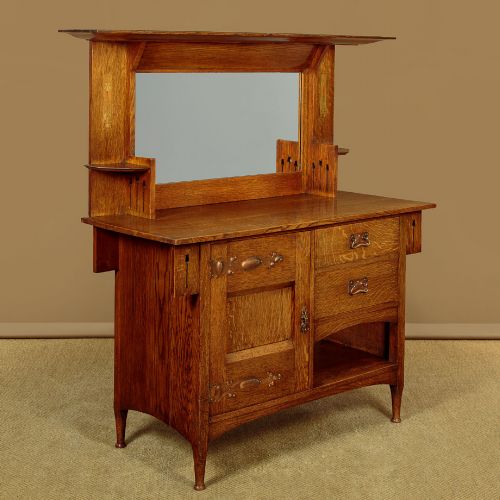
Makers utilised solid oak alongside specialised timber variants such as pollard oak, burr oak, and golden oak. Glass and mirror glass form the reflective backing components, often paired with brass or copper hardware and metal fixtures.
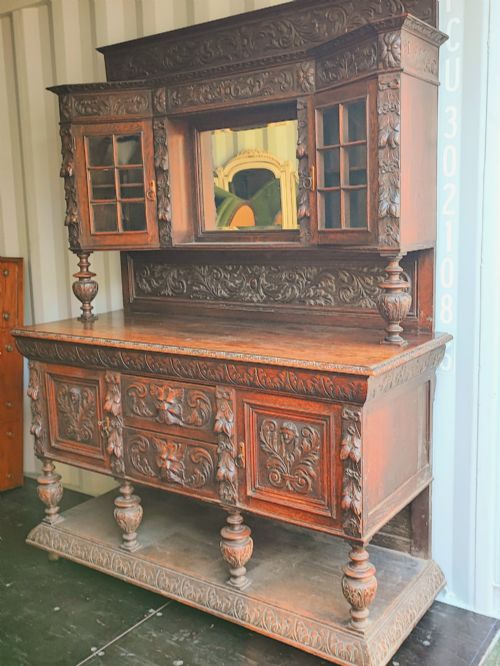
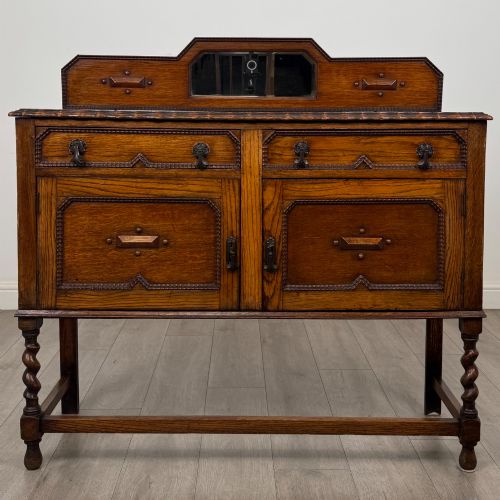
Construction relies heavily on traditional carving and joinery techniques. Surfaces frequently display elaborate carved motifs, including Green Man designs, alongside structural elements like barley twist supports and panelled cabinet doors.
Listings span from the mid-nineteenth century through the Edwardian era into the 1920s, incorporating styles from Gothic Revival to Art Deco.
Distinctions in craftsmanship and design
Quality rests upon the selection and figure of the timber, particularly where figured pollard oak or selected golden oak is employed. Superior examples demonstrate crisp, deep carving and well-proportioned mirror frames rather than repetitive machine work.
The integration of the mirror back into the main sideboard structure dictates overall refinement. Pieces that balance substantial proportions with balanced hardware and precise joinery distinguish themselves within the range.
Garnett & Sons·T Simpson and Son
The Oak Mirrored Credenza Glossary
- Pollard oak
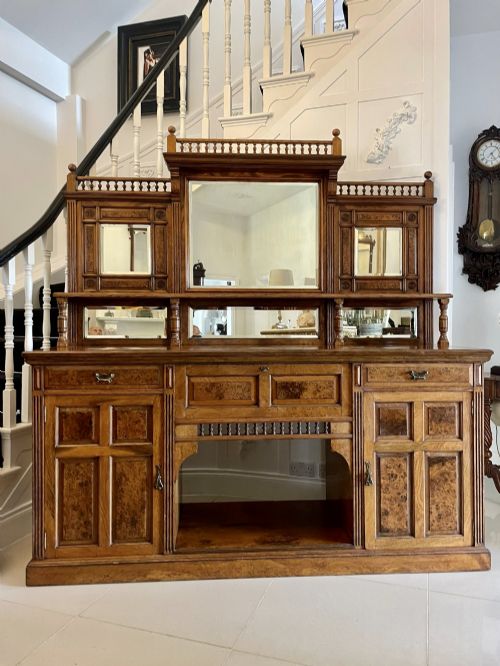
- Timber taken from trees that have been pollarded, producing a heavily figured, mottled grain pattern. This decorative wood appears frequently on finer Victorian cabinetwork.
- Mirror back
- An upright wooden superstructure containing an inset mirror, attached to the rear of a sideboard or credenza. It reflects light and displays porcelain or silver items placed on the ledge below.
- Arts and Crafts
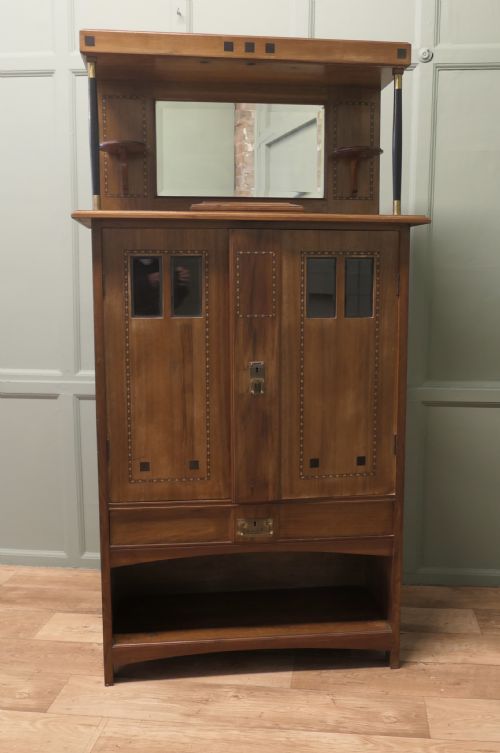
- A design movement prioritising traditional craftsmanship, visible construction, and simple forms. Pieces from this style often feature minimal carving and emphasis on natural materials.
- Green Man
- A sculptural architectural ornament depicting a human face entwined with foliage or vines. This motif appears frequently on carved Victorian and revival oak furniture.
- Barley twist
- A turning technique producing a helical, rope-like column or support. It adds vertical texture to the legs and uprights of Edwardian and later pieces.
Oak Mirrored Credenza: Frequently Asked Questions
Where should an oak mirrored credenza go?
These large cabinets suit dining rooms, large hallways, or spacious living areas where their substantial proportions and reflective glass can anchor a room.
Position them against a solid wall with adequate clearance to allow full access to cupboards and drawers.
How do I identify a Victorian oak piece?
Victorian pieces often feature heavy carved ornamentation, substantial proportions, and dark finishes. The inclusion of mirror backs and revival styles like Gothic or Renaissance is also typical.
Examine the construction methods and timber selection to confirm the period characteristics match nineteenth-century workshop practices.
What is pollard oak?
Pollard oak is a decorative timber harvested from trees that were cut back to promote dense branching, creating a distinctive, swirling grain pattern. Cabinet makers used veneers and solid cuts of this wood for feature panels.
Its mottled appearance provides high visual texture compared to plain-sawn oak.
How do Arts and Crafts sideboards differ?
Arts and Crafts sideboards emphasise honest construction, subtle hardware, and minimal ornamentation over heavy revival styles. They often showcase plain golden oak or fumed finishes with simple panel lines.
Designers of this movement focused on utility and straightforward joinery rather than ornate historicist carvings.