
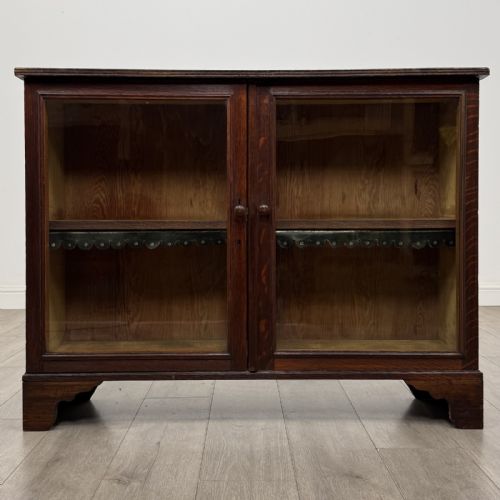
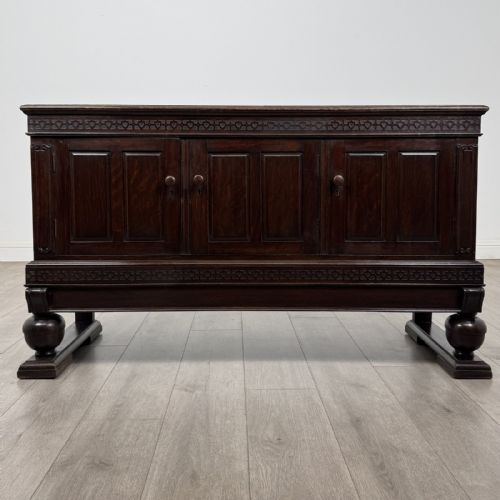
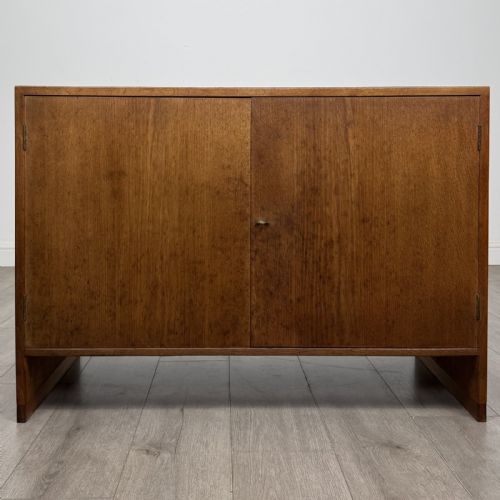
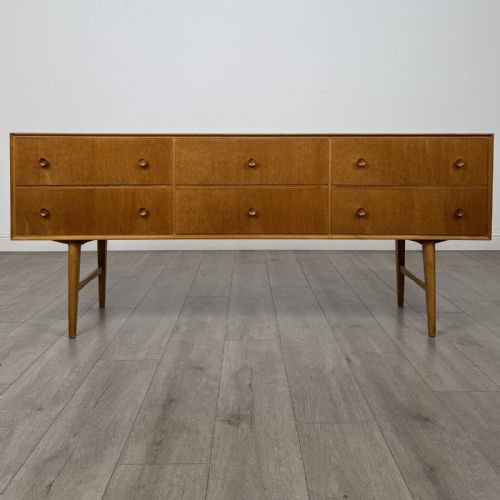
Oak Low Credenza
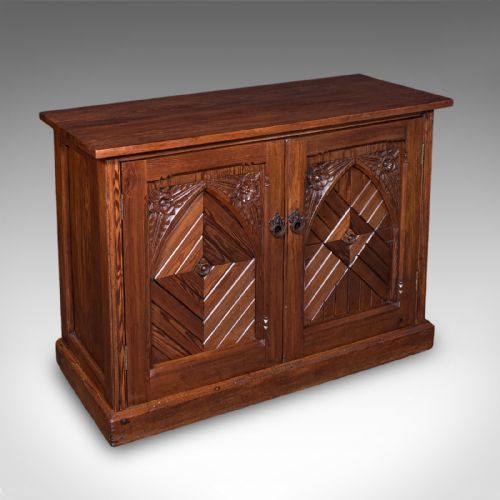
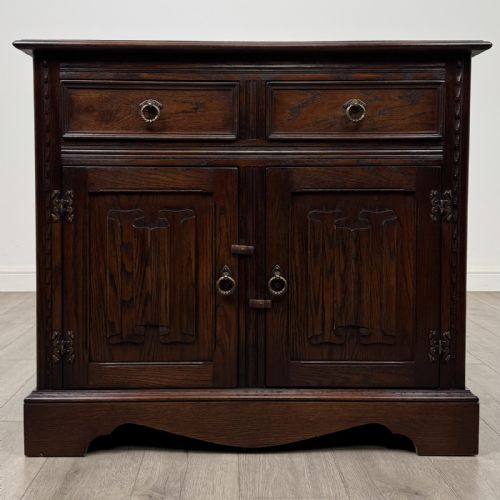
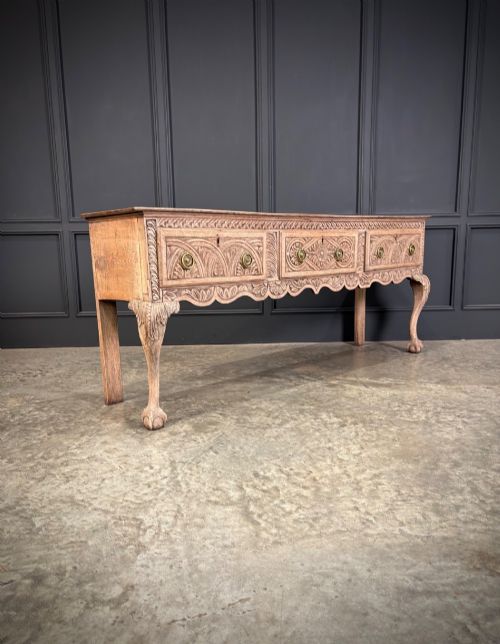
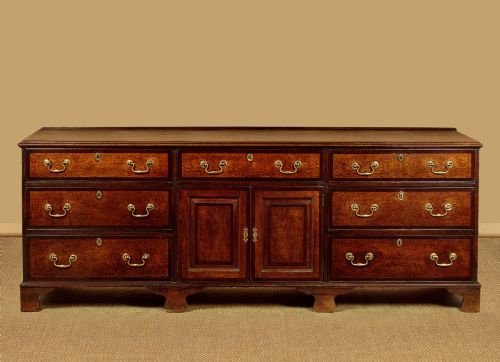
An oak low credenza brings together solid timbers and heavy storage, offering long proportions that suit modern rooms as well as historic interiors.
Oak Low Credenza
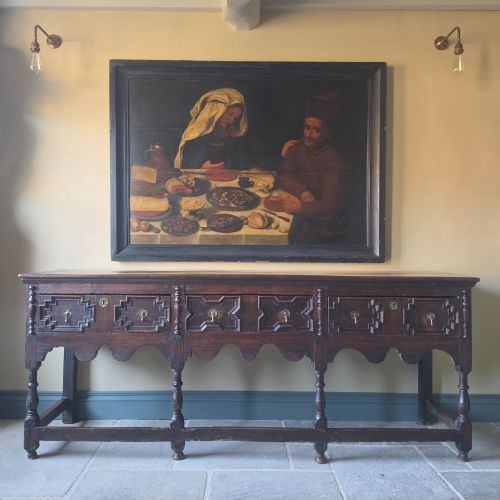
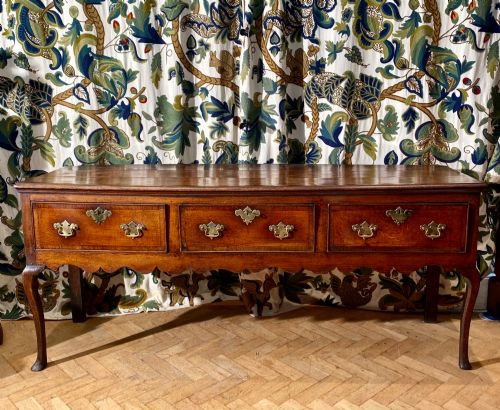
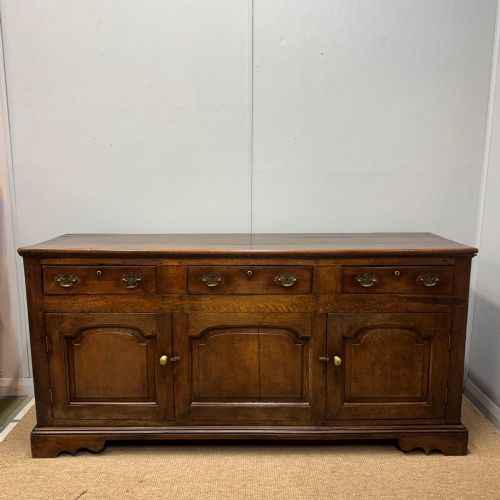
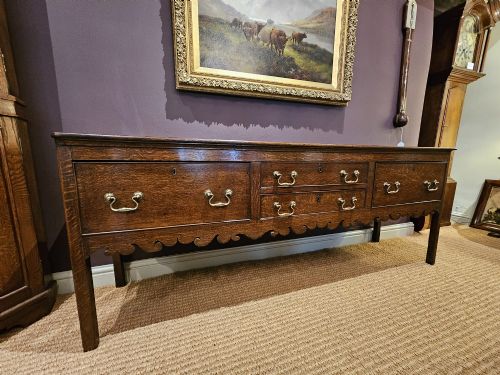
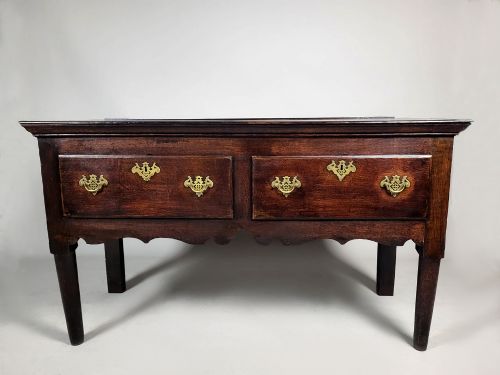
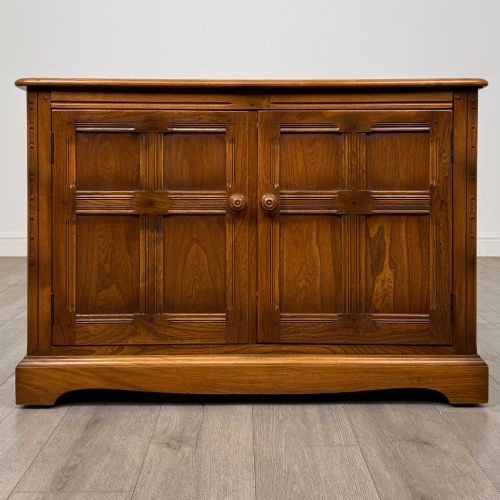
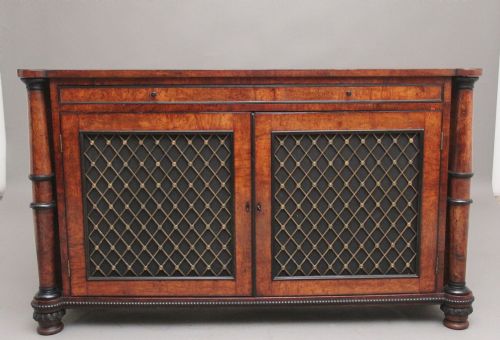
When searching for an oak low credenza, collectors encounter sturdy storage pieces that typically span the 17th century through to the Edwardian period and the 1920s. These pieces often take the form of dresser bases, sideboards, and low cupboards designed for domestic utility.
The examples most commonly met on this page combine substantial oak construction with low profiles, featuring drawers, cupboards, and occasionally potboards. Their origins range from English regional workshops to Dutch and Danish makers, reflecting diverse storage needs over several centuries.
Materials and construction
Makers relied primarily on solid oak, frequently paired with secondary timbers such as elm, fruitwood, and pine for interior linings and drawer construction. Surface decoration often involved linenfold carving, raised mouldings, and carved panels.
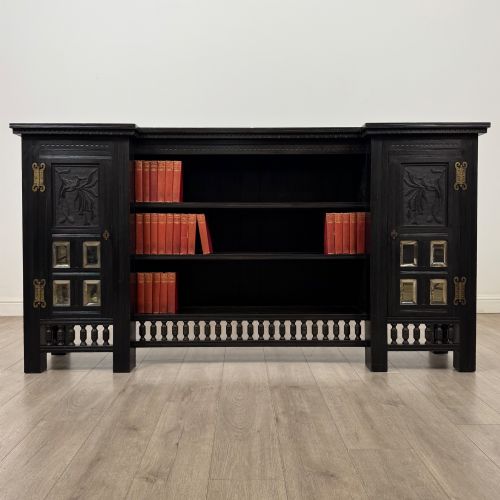
Metalwork played a functional and decorative role, with brass handles, drop brasses, and iron hinges securing doors and drawers. Ebonised wood details and wood veneers appeared on later Victorian and Edwardian interpretations.
Object forms include dresser bases, enfilades, linenfold cupboards, and tambour door sideboards originating across English, Dutch, and Danish traditions.
Assessing quality and craftsmanship
The calibre of a piece rests on the selection of timber and the integrity of the joinery, particularly in the hand-cut dovetails of the drawers and the thickness of the top boards. Original brasses and untouched surface patination elevate a piece significantly.
Proportion and decorative restraint distinguish finer examples from standard utility items. Pieces retaining their original block fronts, carved details, and potboards demonstrate superior regional or period craftsmanship.
The Oak Low Credenza Glossary
- Dresser base
- A long, low cabinet featuring drawers and sometimes a lower shelf or potboard, originally used in kitchens for food preparation and storage.
- Linenfold
- A style of wood carving that mimics folded fabric, commonly seen on Tudor and Edwardian cupboard doors.
- Potboard
- An open lower shelf beneath a dresser base designed for storing pots and heavy kitchen utensils.
- Enfilade
- A long sideboard or cabinet with multiple doors, originating in France and built for formal dining rooms.
- Ebonised wood
- Timber treated with a dark finish to imitate ebony, popular during the Victorian Arts and Crafts movement.
Oak Low Credenza: Frequently Asked Questions
What is an oak low credenza used for today?
These low storage pieces function well as sideboards in dining areas or as media consoles in living rooms. Their long surfaces and interior cupboards accommodate modern living while adding historic character.
Their sturdy construction handles everyday weight easily, making them practical for storing tableware, books, or household items out of sight.
How do I identify a 17th century piece?
Seventeenth-century pieces typically display heavy pegged joinery, deep hand-carved panels, and block fronts. The timber shows dark patination accumulated over centuries of use.
Construction methods rely heavily on mortise and tenon joints without modern metal fasteners, giving the frame a robust and uncompromising weight.
Are Edwardian oak cupboards different from Georgian ones?
Edwardian versions often feature lighter golden oak finishes, tambour doors, and decorative brass handles reflecting revival styles. They tend to be more compact and fitted for specific domestic storage tasks.
Georgian examples prioritise heavier solid timbers, deep drawers, and functional potboards designed for rural or country house domestic service.
How should I care for antique oak furniture?
Keep these items away from direct heat sources and sudden temperature shifts to prevent the solid oak panels from splitting. Natural wax polish applied sparingly maintains the timber's finish.
Avoid excessive moisture during cleaning, using only a soft, dry cloth to remove dust from carved details and hardware.