
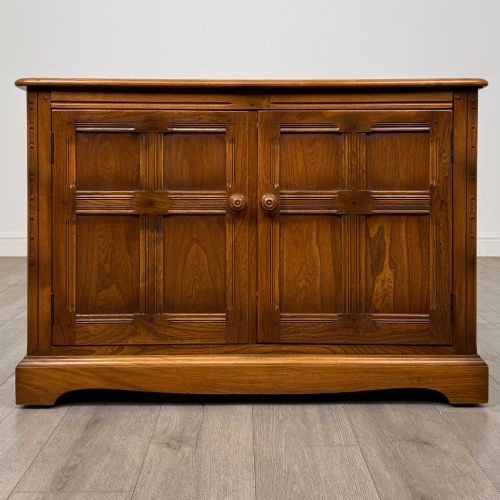

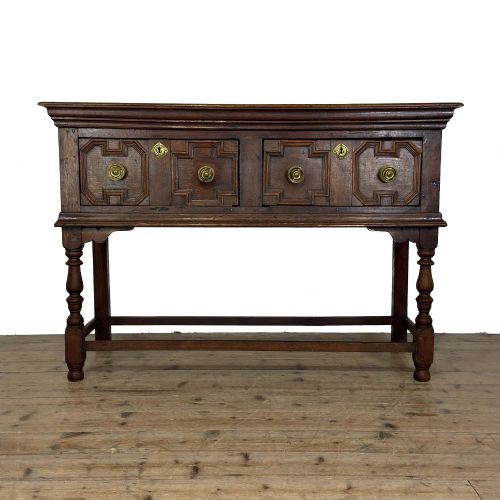
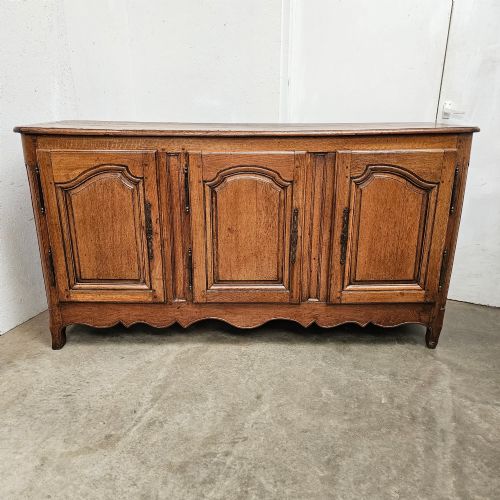
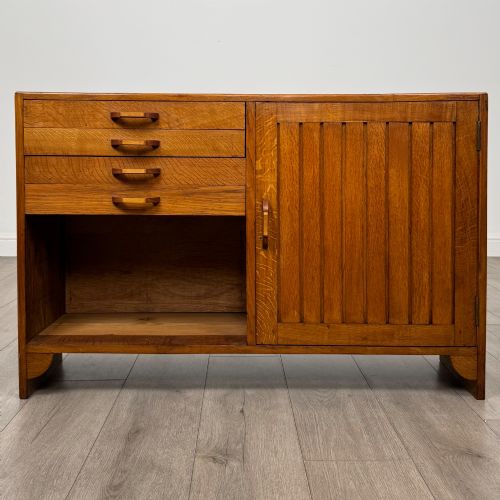
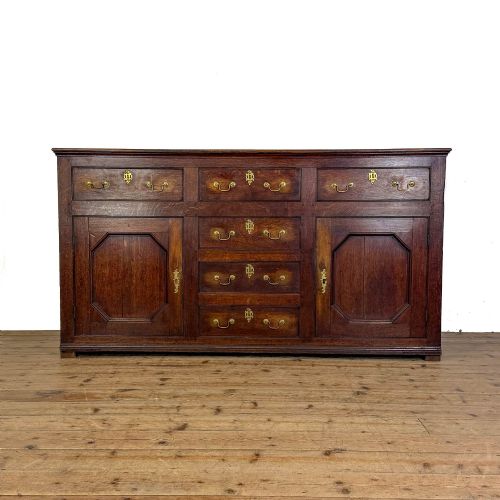

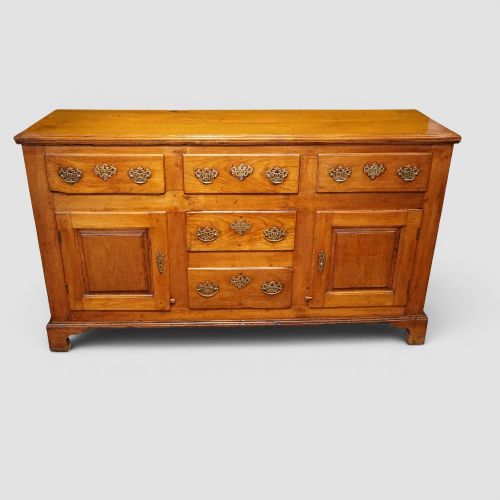
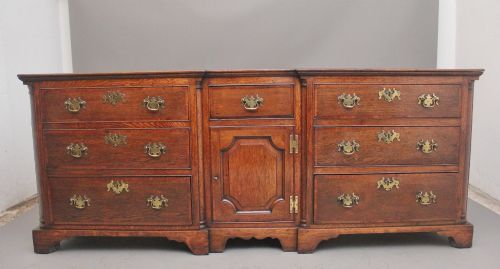
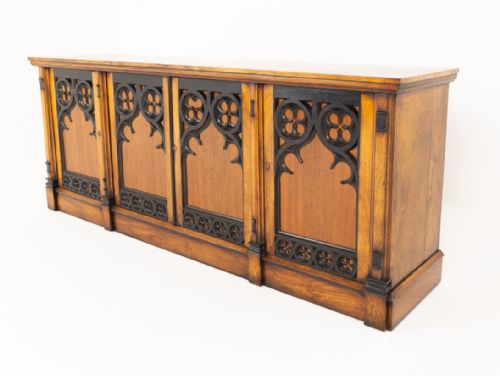


Oak Low Buffet
Oak low buffet pieces anchor a dining room or hallway with solid timber presence, bringing historic utility and grounded storage into modern spaces.
Oak Low Buffet
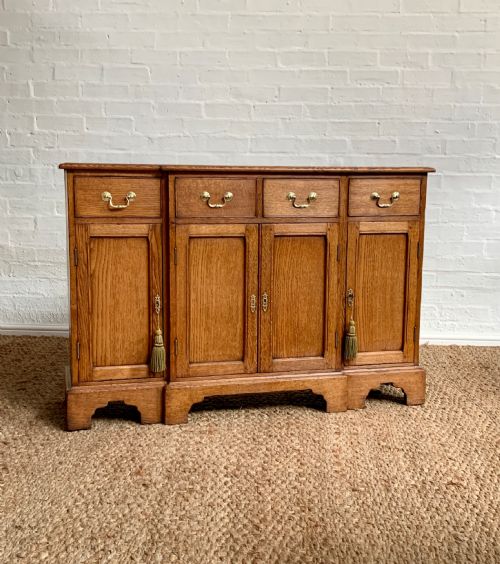
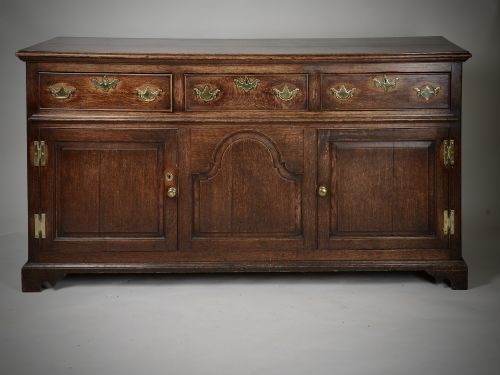
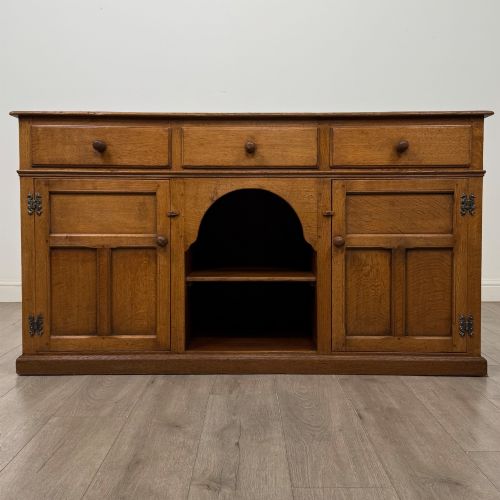
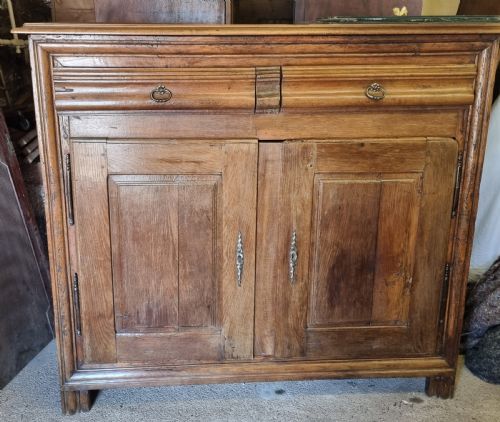
An oak low buffet functions primarily as a heavy storage cabinet or serving surface, often taking the form of a dresser base or low sideboard. These items originate from periods spanning the seventeenth century through to the twentieth century, with strong representation from the Georgian era and eighteenth century.
Buyers will encounter various regional interpretations, including English country examples, Welsh formats, French provincial cabinets, and Dutch variants. The form typically presents a low profile with a flat top surface above cupboard doors or banks of drawers.
The category overlaps closely with dresser bases and sideboards, frequently omitting the upper plate rack to maintain a low, horizontal line. Surviving examples range from plain, utilitarian kitchen pieces to carved revival items and inlaid designs.
Factors determining quality
The sophistication of the construction, such as properly fitted drawer linings and robust brass or iron fittings, distinguishes standard utility furniture from finer domestic examples. Proportions and the harmonious balance of base cabinetry also dictate the standing of an individual item.
Some provincial cupboards served to house household flour and dry goods rather than fine china.
Gillow and Co
The Oak Low Buffet Glossary
- Potboard
- An open slatted lower shelf built into the base of a dresser to store pots and heavy kitchen utensils.
- Enfilade
- A long low sideboard or cabinet featuring a series of doors along a single continuous front.
- Dresser base
- The lower section of a traditional kitchen or dining dresser, functioning independently as a sideboard.
- Breakfront
- A cabinet design where the central section projects forward from the flanking outer cupboards.
- Marquetry
- Decorative veneer work forming geometric or pictorial patterns using contrasting pieces of wood.
Oak Low Buffet: Frequently Asked Questions
What is an oak low buffet used for?
These cabinets serve as practical storage units and surface display areas in dining rooms, hallways, and kitchens. Their low height makes them suitable for holding serving dishes or supporting table lamps.
Historically, they stored tableware and foodstuffs close to the dining space. Today, they integrate easily into contemporary interiors to conceal household items.
How do I tell an 18th-century piece from a 19th-century revival?
Eighteenth-century examples display hand-cut joinery, pegged joints, and natural timber wear acquired through decades of domestic use. The construction methods and tool marks visible on interior surfaces provide clear indicators of age.
Nineteenth-century revival items often adopt seventeenth or eighteenth-century decorative styles like Jacobean carving. Machine-sawn elements and different secondary woods help separate these later interpretations from genuine period items.
Where should I place a low buffet in my home?
A low buffet fits naturally against a dining room wall to store crockery, linens, and cutlery. They also work effectively in entrance halls to provide a surface for keys and post.
Ensure you measure the available floor space and clearance for opening doors or pulling out drawers. Their shallow depth allows them to sit comfortably in narrow passageways without blocking thoroughfares.
How do I care for antique oak furniture?
Maintain the timber by dusting with a dry cloth and applying natural beeswax occasionally to nourish the grain. Avoid placing the cabinet near direct heat sources or in strong sunlight, which can dry out the wood.
Keep humidity levels in the room stable to prevent timber movement or splitting. Gentle care preserves the historical surface patination built up over centuries.