


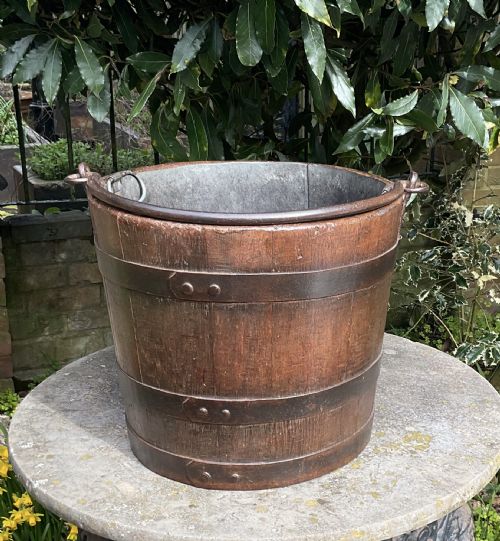


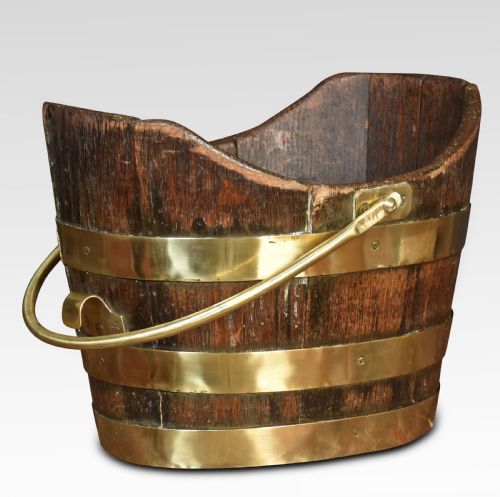


Oak Log Bucket
An oak log bucket brings solid grain and sturdy metal bands right to the hearth, holding fuel with quiet, enduring utility.
Oak Log Bucket
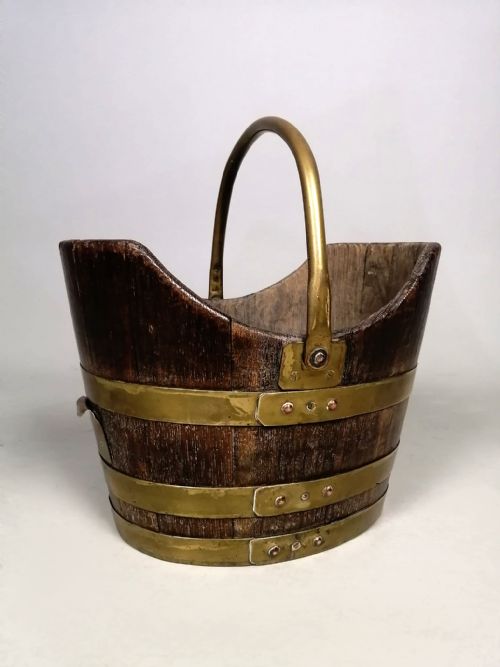
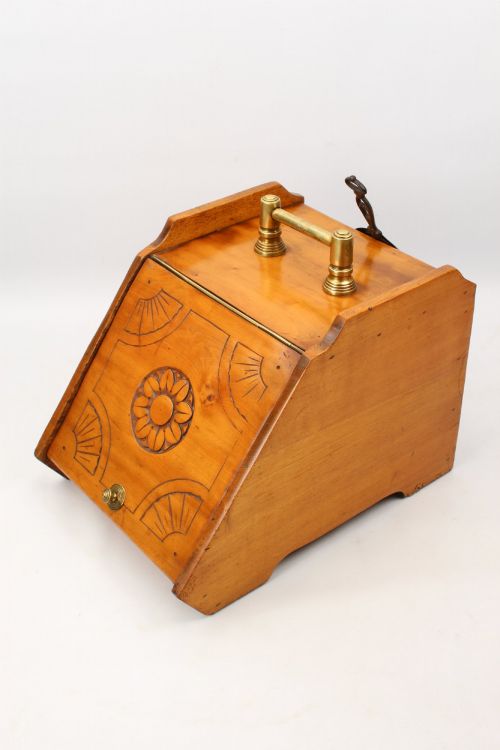
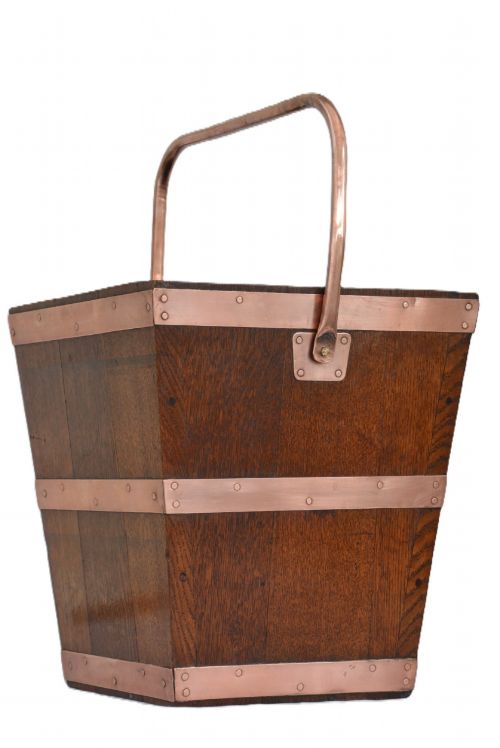
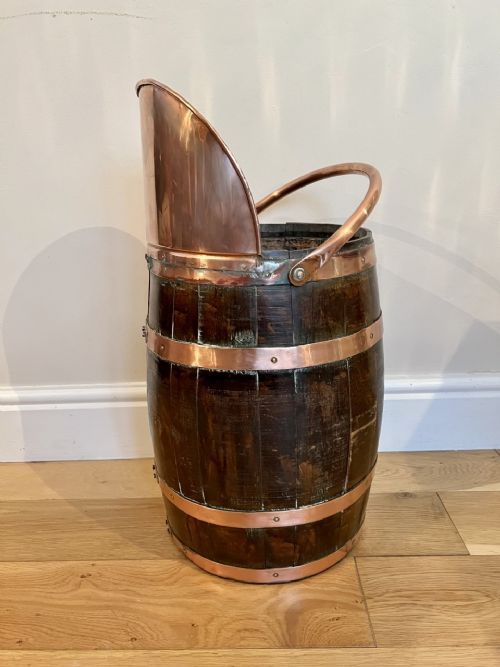
An oak log bucket serves as a substantial fireside store, designed to hold wood, peat, or coal near the hearth. When searching for an oak log bucket, buyers encounter various forms including coopered barrels, brass-banded vessels, and carved boxes spanning the Georgian and Victorian eras.
The pieces on this page range from rustic country examples to refined brass-bound designs originating in England, Scotland, and the Netherlands. These vessels often double as planters or garden well buckets, reflecting their robust construction and adaptability across different rooms.
How they were made
The construction relies heavily on traditional cooperage, joining shaped oak staves together to form watertight or durable vessels. Metal components such as brass, copper, iron, and wrought iron are formed into tight bands, hoops, and swing handles to secure the wooden staves.
Makers occasionally incorporate zinc liners to protect the interior wood from moisture and damp fuel. Surface details range from plain coopered staves to carved panels and swing ring handles secured by lion masks.
Lion masks stare out from the side handles, holding heavy brass rings in their jaws as if guarding the coal supply.
What varies in quality
Quality rests upon the crispness of the cooperage, the weight and finish of the metal banding, and the preservation of the original timber. Strong grain patterns in the oak combined with well-fitted, heavy brass or iron mounts elevate a piece above simpler utility items.
The Oak Log Bucket Glossary
- Coopered
- Constructed from curved wooden staves bound together with hoops, similar to barrel-making. This technique provides the structural strength needed for heavy loads of logs or coal.
- Purdonium
- A specific type of coal box or scuttle designed for household fireside use. These often feature hinged lids and drop-down fronts to facilitate easy fuel retrieval.
- Peat bucket
- A vessel traditionally used for holding dried peat turf for fuel, common in Scottish and Irish hearths. They share a similar coopered construction to log buckets but are proportioned for lighter material.
- Well bucket
- A deep wooden vessel fitted with a strong handle, originally designed for drawing water from a well. Many survive as repurposed garden planters or fireside storage bins.
- Fruitwood
- Dense timber used alongside oak in certain Georgian vessels for decorative contrast or banding. It adds warmth and tonal variation to the finished piece.
Oak Log Bucket: Frequently Asked Questions
How do I clean an oak log bucket?
Dust the exterior wood gently with a dry cloth and nourish the oak occasionally with a traditional wax. Avoid harsh chemical cleaners that might strip the historic finish from the surface.
Keep the interior free from heavy moisture and ash residue. If the piece includes a metal or zinc liner, remove it for cleaning to protect the surrounding wood staves.
Can I use these buckets for real logs?
These vessels were built for hearthside fuel storage and handle logs, kindling, and coal effectively. Ensure the internal base and staves remain dry to prevent any strain on the historic joints.
Heavier logs can be placed carefully inside without issue, particularly in robust coopered or brass-banded examples. Lined pieces offer extra protection against bark debris and dirt.
How do I date an oak log bucket?
Examine the construction methods, nail types, and metal banding style to estimate the period. Georgian and Victorian pieces often feature hand-forged iron or heavy brass bands with distinct patination.
Stylistic cues such as carved panels, brass lion-mask handles, or Dutch influence point towards specific decades. Comparing the timber grain and wear patterns helps confirm the age of the piece.
Are all these buckets watertight?
Coopered vessels were originally designed to hold materials securely, but age naturally affects the tightness of the wood. Some retain their watertight properties, especially those equipped with fitted metal or zinc liners.
Pieces used primarily for dry logs or coal may have gaps between dried staves over time. Check for a liner if you intend to use the vessel as a planter.