

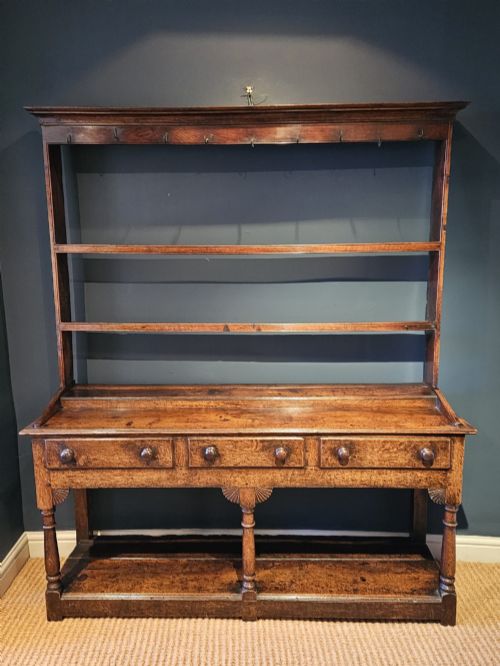
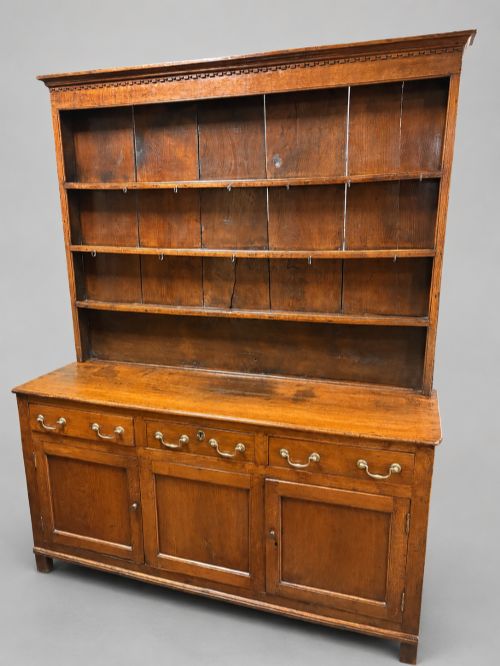
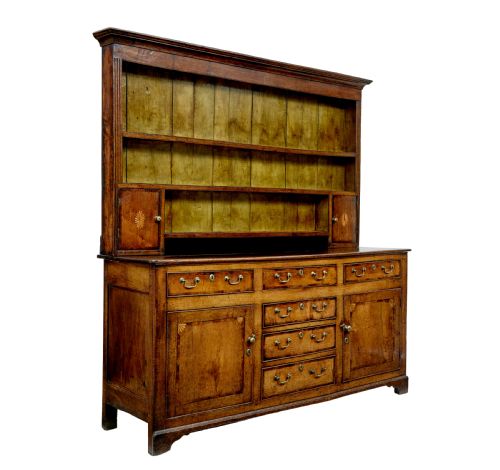
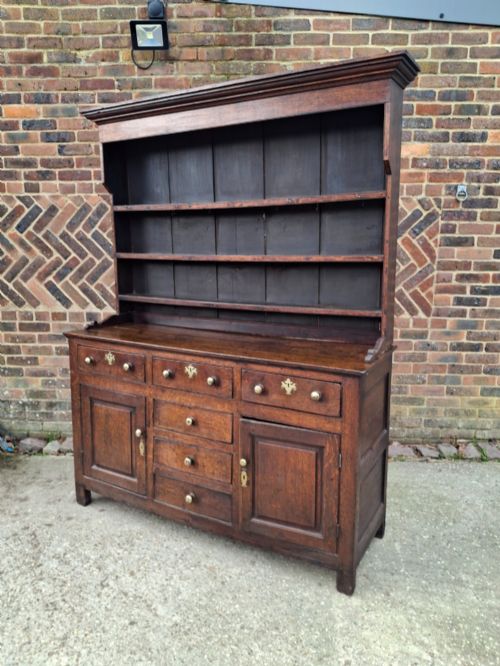

Oak Kitchen Rack
An oak kitchen rack organises domestic plates and platters while grounding a room in solid country utility.
Oak Kitchen Rack
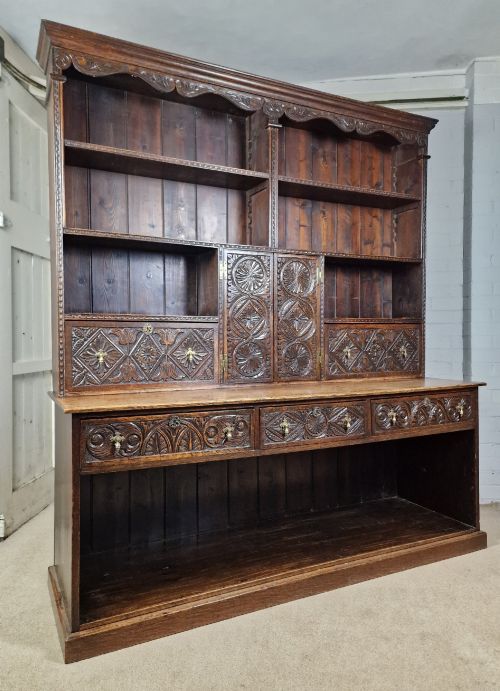
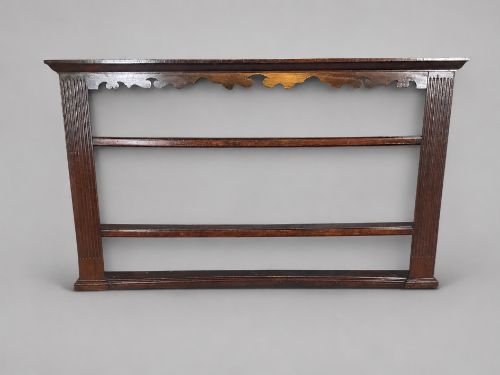
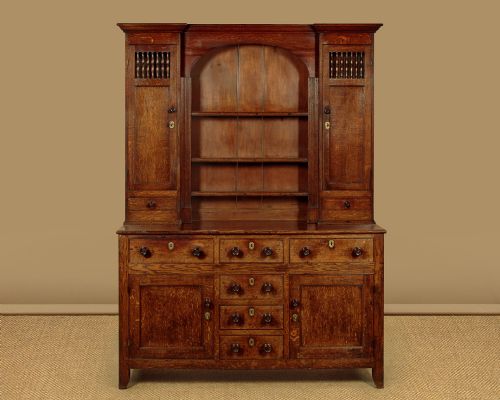
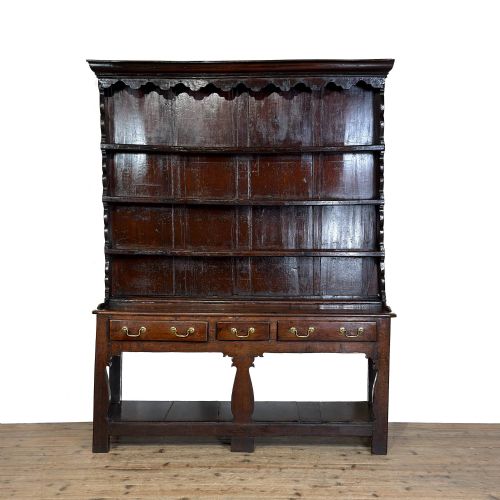
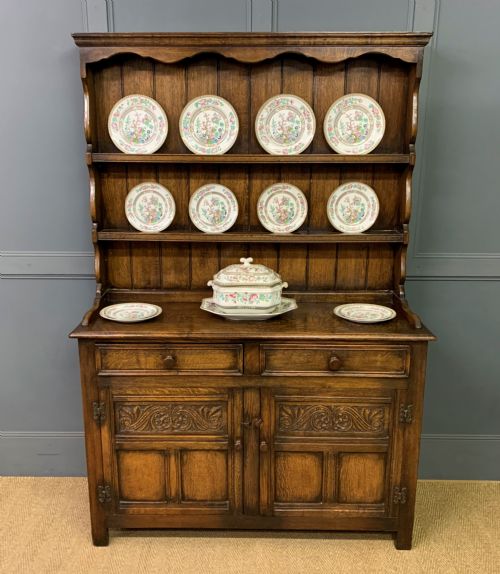
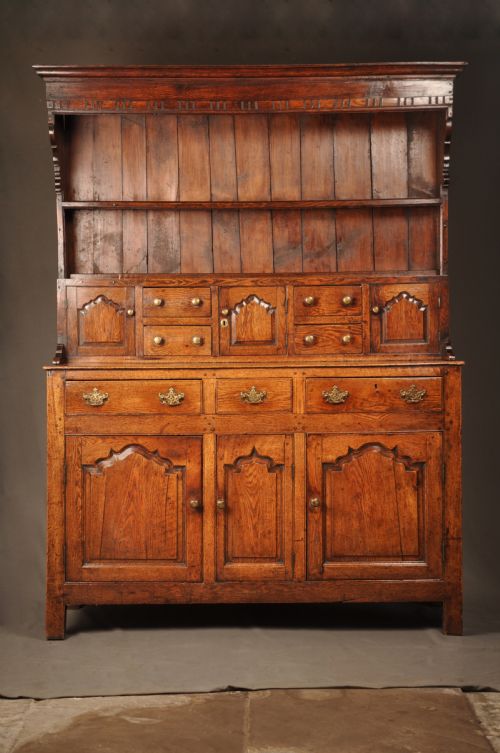
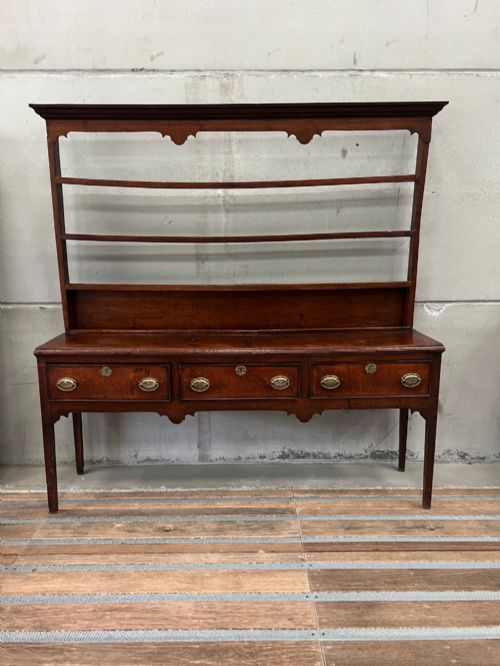
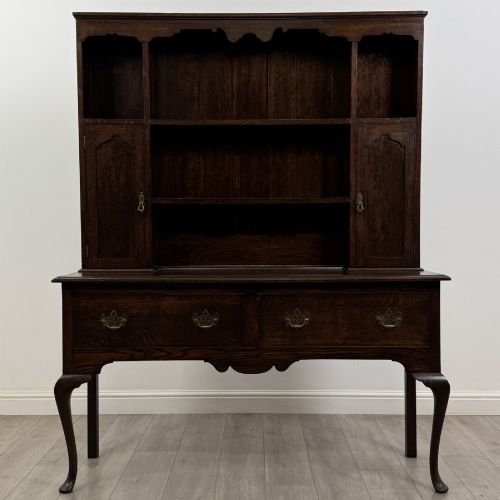
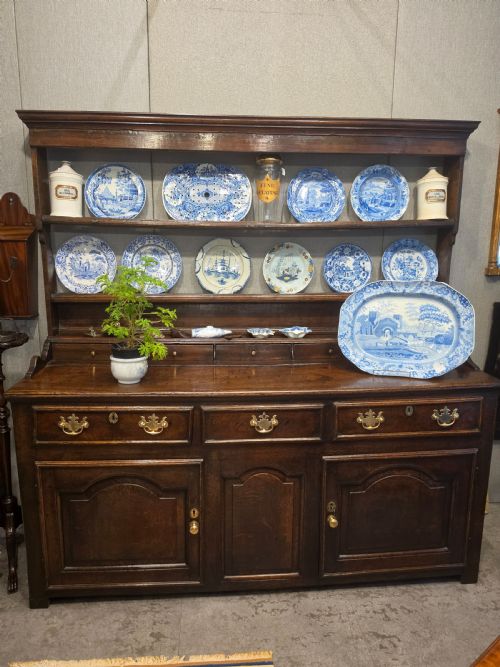
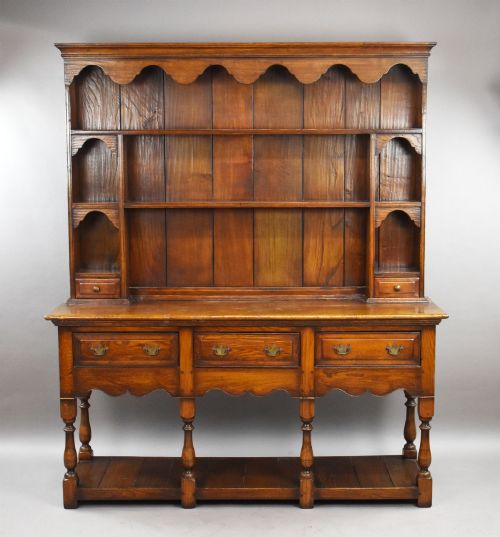
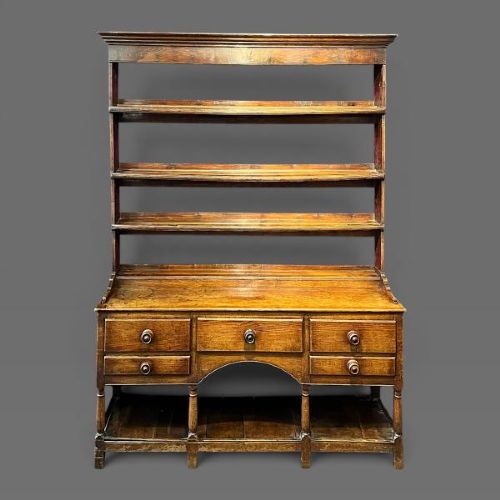
An oak kitchen rack forms the upper plate display or combines with a lower dresser base to hold everyday earthenware and display serving pieces. When you search for an oak kitchen rack, you encounter hanging wall racks alongside large Welsh and Lancashire dressers fitted with open shelves.
The material spans centuries of vernacular woodworking, predominantly dating from the eighteenth and nineteenth centuries with Georgian and Edwardian examples. Regional forms include pieces from Snowdonia, West Country workshops, and Shropshire.
Most pieces pair solid timber construction with open display tiers, sometimes incorporating potboards, cupboards, or bread and cheese compartments beneath the display surface.
How they were made
Joiners built these racks using solid oak boards, frequently supported by pine, iron, or mahogany elements and fitted with brass or iron metalwork. Timbers were hand-planed and assembled using traditional pegged joints and housing grooves to support the plate rails.
Surfaces display the natural grain of country oak, occasionally enhanced by crossbanding in mahogany or subtle inlay work. Structural hardware consists of wrought iron hooks, hinges, and brass fittings appropriate to the period.
Oak Kitchen Rack Retail Price Guide 2026
Typical asking prices for oak kitchen rack among the pieces listed under this phrase on Sellingantiques today, from the lower quarter to the upper quarter. They describe what is for sale here now, not the wider market.
Current listings feature oak kitchen racks and dressers spanning the Georgian, Victorian, and Edwardian eras, incorporating materials like brass, pine, and mahogany.
What varies in quality
The standard of an oak kitchen rack depends on the harmony of its proportions and the integrity of its timber. Superior examples exhibit crisp moulding profiles on the rack cornices and original timber patination developed through centuries of domestic use.
Regional variations also influence character, with specific cabinetry details distinguishing North Wales and Lancashire workshops from later Edwardian reproductions. The survival of original backboards and undisturbed hanging mechanisms elevates the integrity of the piece.
The Oak Kitchen Rack Glossary
- Plate rack
- A wall-mounted or dresser-integrated tier of open wooden shelves designed to display ceramic plates on edge. The front rails keep crockery secure during daily kitchen activity.
- Potboard
- A lower open shelf positioned near the floor on traditional dressers, originally utilised for storing heavy pots and pans. This platform sits directly above the feet or plinth.
- Welsh dresser
- A multipurpose dining room or kitchen storage unit combining a base cupboard or drawer section with an upper open plate rack. These items form a cornerstone of vernacular country furniture.
- Crossbanding
- A decorative border technique where thin strips of veneer are laid across the grain of the primary timber. This method frequently pairs oak with contrasting mahogany on finer Georgian pieces.
- Delft rack
- An alternative term for an open plate rack intended for the display of imported tin-glazed earthenware. The shelves often feature grooves to prevent round plates from slipping forward.
Oak Kitchen Rack: Frequently Asked Questions
How do I hang a wall rack safely?
Heavy oak wall racks require secure fixing directly into masonry or robust wall studs using appropriate steel brackets. Distribute the weight evenly across multiple points to support the combined load of the timber and heavy ceramic plates.
Because antique oak carries considerable mass, professional installation ensures the piece remains stable against the wall under daily use.
Can I store heavy everyday ceramics here?
Traditional oak racks were constructed precisely to hold heavy earthenware, stoneware, and ironstone platters used in busy kitchens. The timber frame and retaining rails manage substantial weights when the piece is properly fixed.
Spread heavier serving platters across the lower tiers while reserving upper shelves for lighter dinner plates and bowls.
How do I clean and maintain antique oak?
Dust the timber regularly with a dry, soft lint-free cloth to prevent particulate buildup in the grain and mouldings. Avoid silicone sprays or modern household polishes that can degrade the historic wax finish over time.
Apply a traditional beeswax sparingly once or twice a year to nourish the dry wood and maintain its natural lustre.
How do I tell an 18th-century rack from a later copy?
Examine the construction methods, tool marks on the hidden surfaces, and the nature of the timber shrinkage. Eighteenth-century examples show hand-cut joinery, pegged joints, and surface patination that modern reproductions cannot replicate.
Ironwork, screw types, and the method of board sawn preparation also provide clear indicators of period authenticity.