

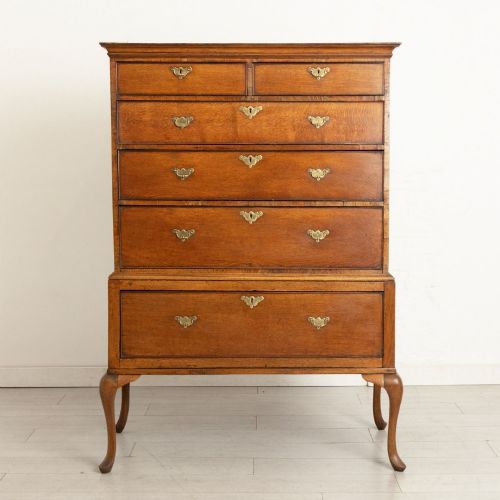
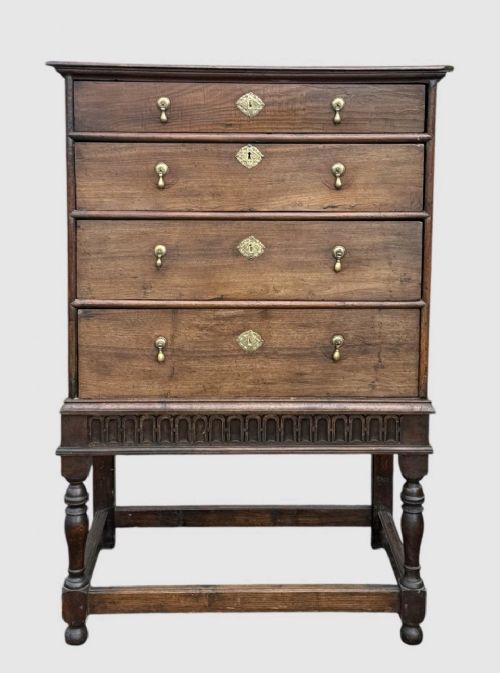


Oak Highboy Chest
An oak highboy chest brings vertical storage and strong timber character to a room, uniting multiple stacked drawers in one stately silhouette.
Oak Highboy Chest
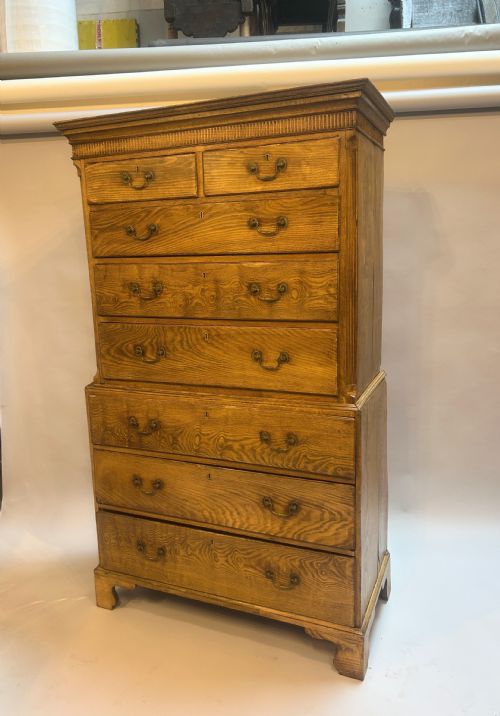
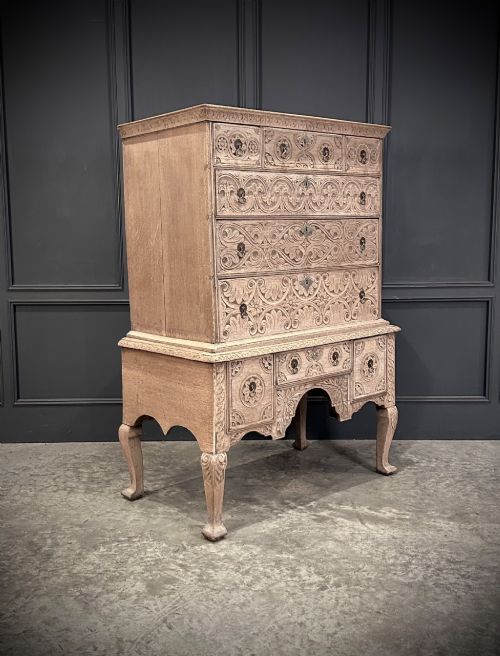
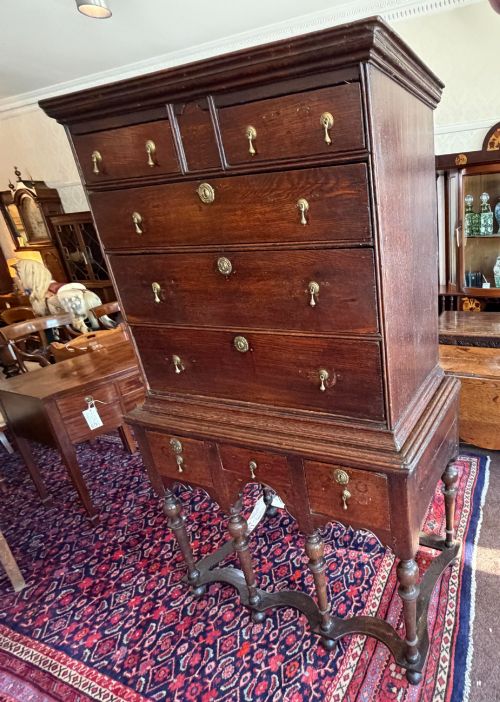
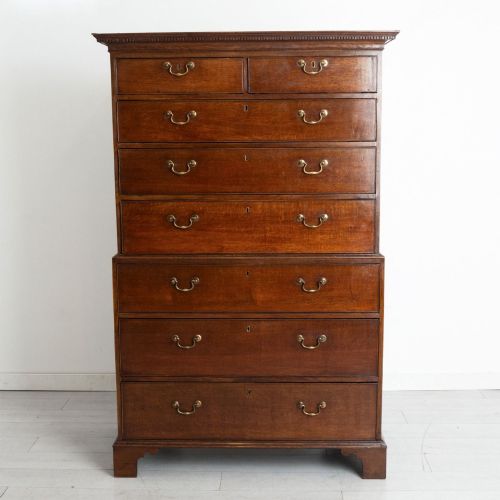
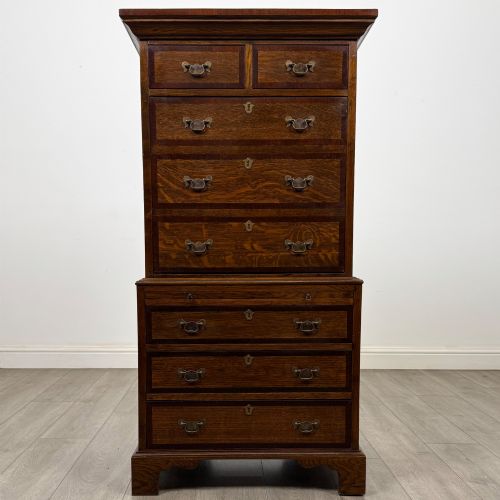
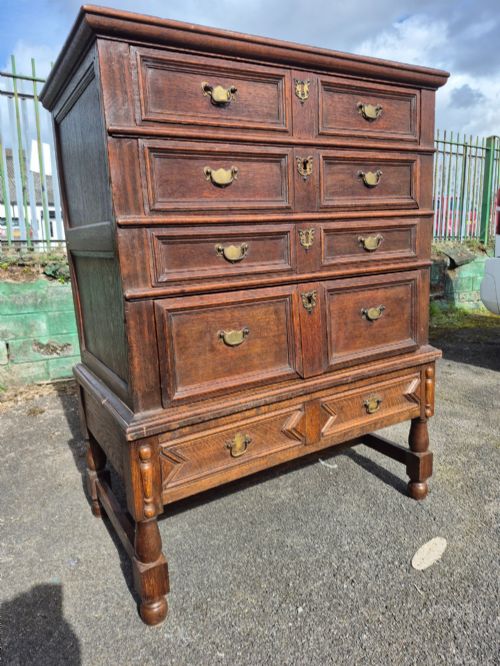
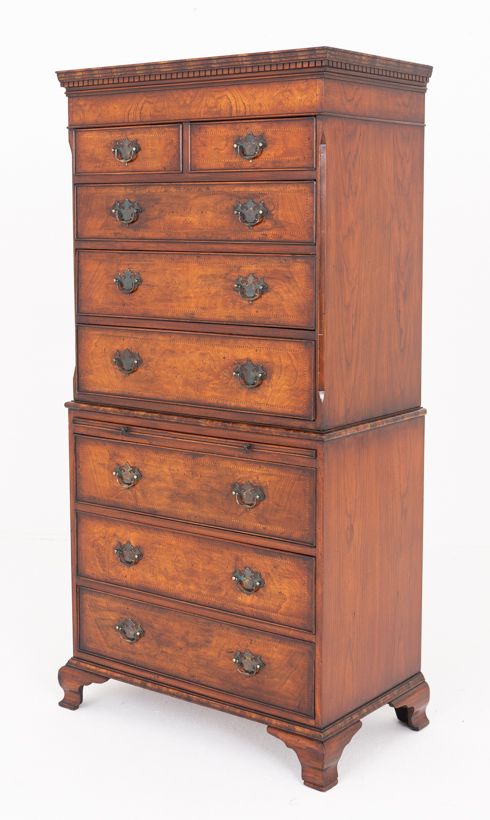
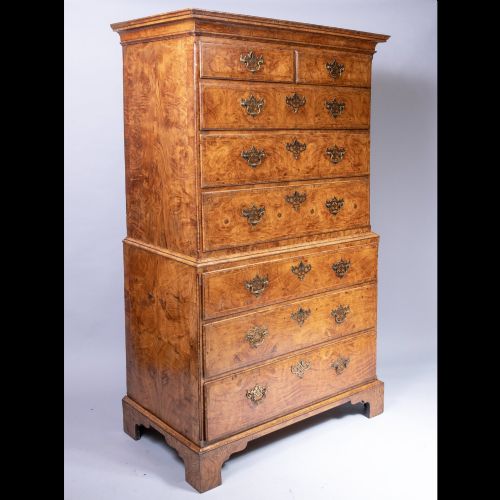
An oak highboy chest primarily manifests as a chest on stand or a taller chest on chest configuration designed to maximise capacity while keeping a modest footprint. You will frequently encounter pieces combining a lower support stand with upper drawers, or traditional two-part vertical chests.
The selections span from the late seventeenth century through the Georgian era, with walnut and elm timbers occasionally appearing alongside the predominant oak. These varied forms provide distinct tiered storage for textiles and valuables across domestic spaces.
Materials and construction
Joiners built these pieces using solid oak, often incorporating burr elm or walnut for figured panels and banding details. Timber boards were joined with traditional framing methods to accommodate natural wood movement over centuries.
Brass handles and escutcheons punctuate the drawer fronts, secured with original or period-appropriate fixings. Surface finishes range from stripped and bleached oak to painted treatments.
Listings feature oak highboy chests spanning from the 17th century through the Edwardian era, incorporating walnut, elm, and painted finishes.
Distinctions in standard
The harmony of proportions between the upper chest and its supporting stand or lower section dictates the visual success of the piece. Crisp drawer moulding details and the retention of original brass hardware elevate certain examples.
Timber selection plays a major role, where finely figured grain patterns or exceptional colouration distinguish standard workshop production from finer cabinet work.
The Oak Highboy Chest Glossary
- Highboy
- A tall chest of drawers raised on a leg stand or built as a chest on chest. The form lifts storage off the floor to save space.
- Chest on stand
- An upper drawer section resting on a low framed base with legs. This form appeared widely in the seventeenth and eighteenth centuries.
- Tallboy
- A tall vertical chest comprising two stacked sections of drawers. It offers substantial capacity within a narrow floor plan.
- Escutcheon
- A protective plate surrounding a keyhole. It is commonly cast in brass to match the drawer pulls.
Oak Highboy Chest: Frequently Asked Questions
What is an oak highboy chest?
An oak highboy chest is a tall piece of furniture designed for storage, featuring multiple stacked drawers arranged either as a chest on stand or a double-tier chest on chest.
These pieces use vertical space efficiently, providing deep capacity for linens and clothing while maintaining a relatively narrow footprint in a room.
How were highboy chests used?
Historically, these tall chests served in bedchambers and parlours to store folded garments, textiles, and personal valuables.
The elevated design kept contents away from damp floor levels while placing the upper drawers at a convenient height for daily use.
How do I style one at home?
Place the chest against a sturdy wall in a bedroom, hallway, or living area where its vertical lines can anchor the space.
Allow enough clearance around the piece to let the timber character and brass hardware stand out without feeling crowded by surrounding furniture.
How do I identify the period?
Examine the construction methods, drawer linings, and hardware styles to align the piece with documented eras like the Georgian period or seventeenth century.
Turned legs, bracket feet, and specific timber grain patterns offer reliable clues to the date of manufacture.