


Oak Hanging Wall Cabinet
An oak hanging wall cabinet offers practical wall storage imbued with the rich grain and warm tones of traditional timber.
Oak Hanging Wall Cabinet
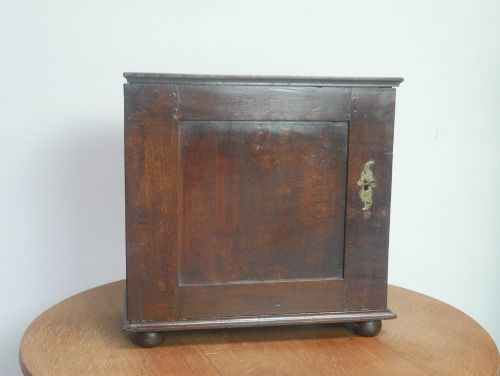
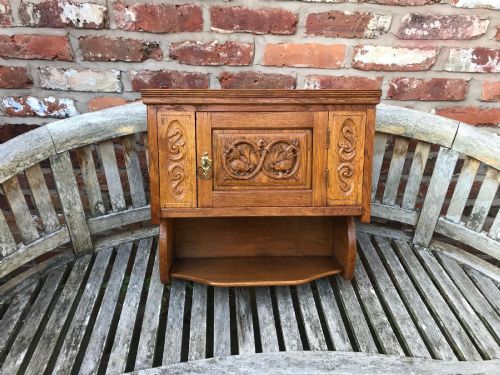
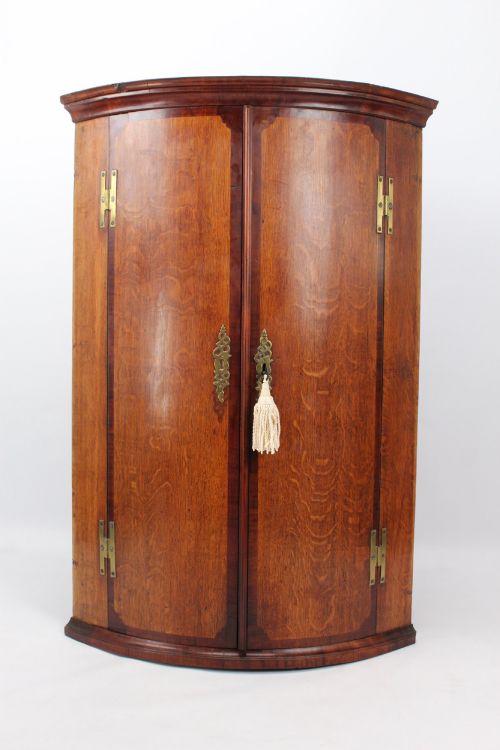
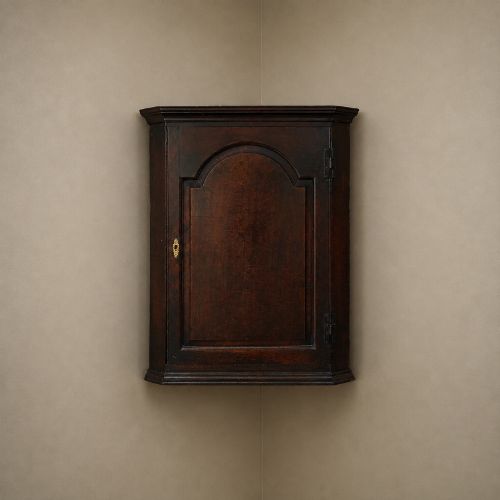
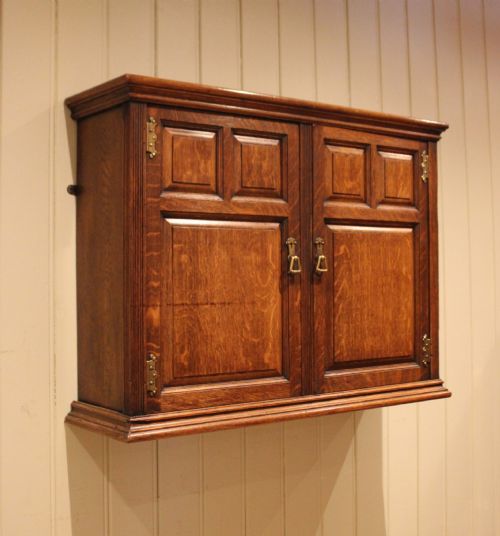
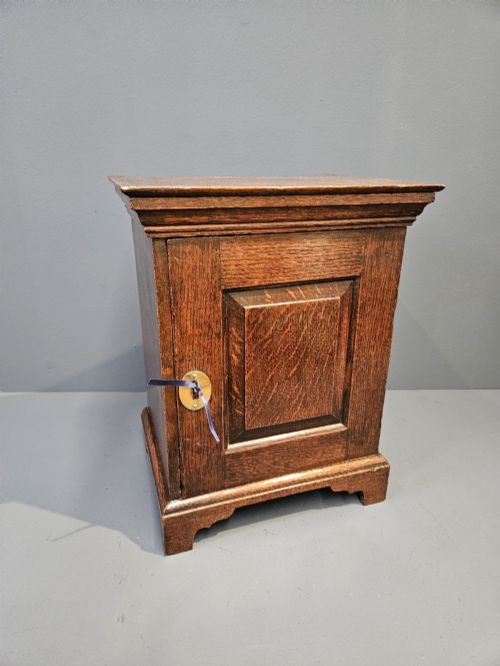
An oak hanging wall cabinet is a compact storage piece designed to be fixed securely to a wall rather than resting upon the floor. These pieces frequently appear as flat-backed wall cupboards or space-saving corner units suited for domestic rooms.
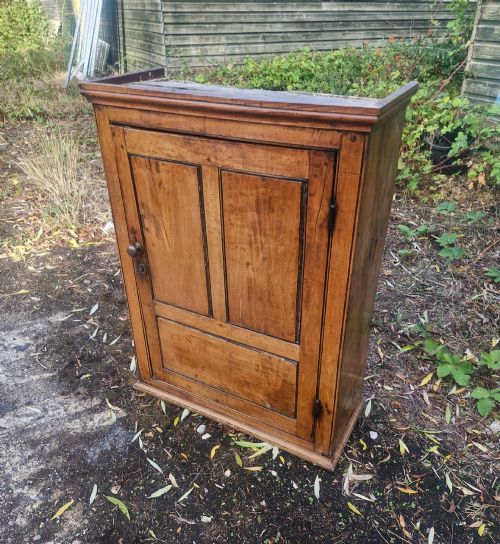
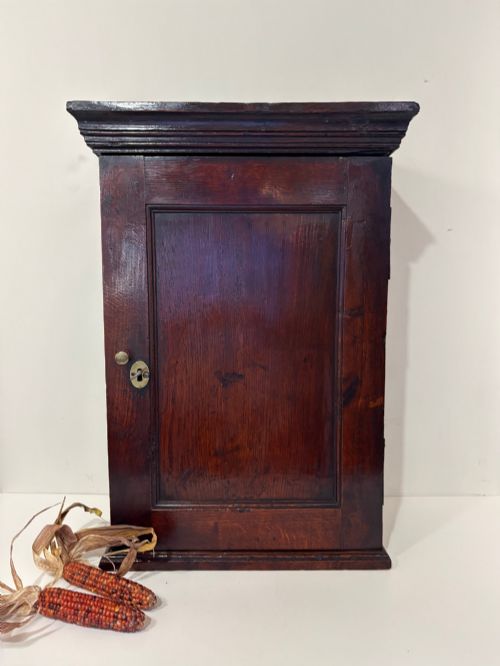
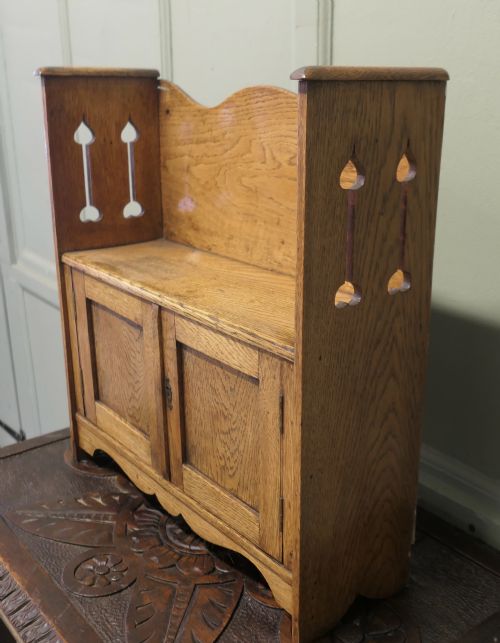
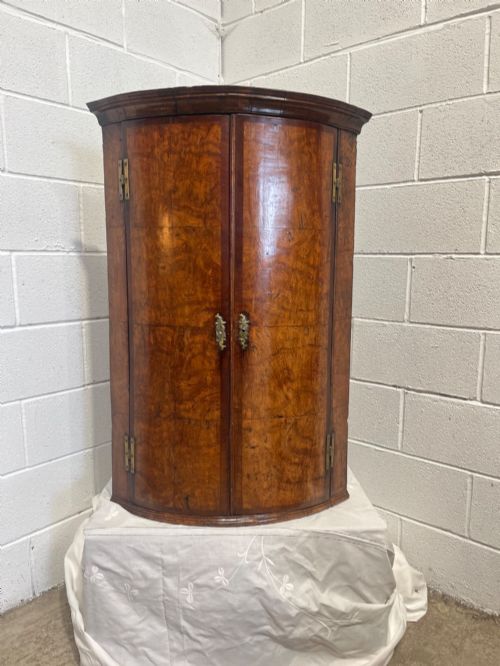
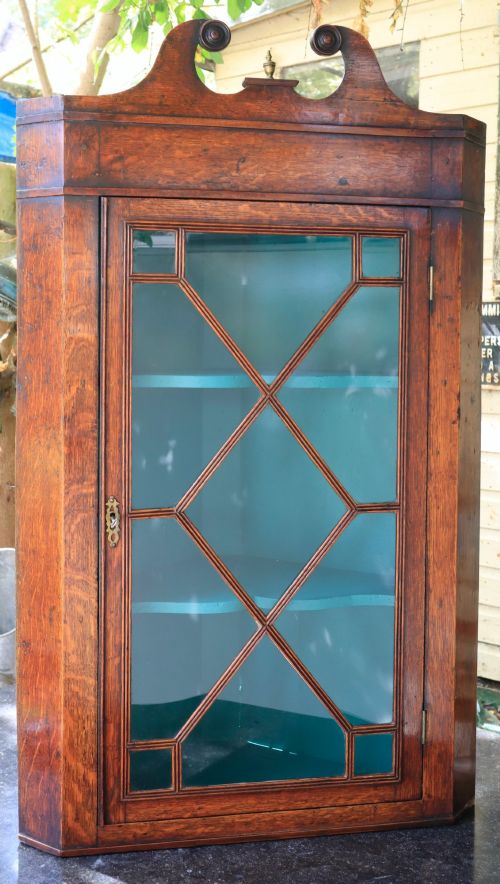
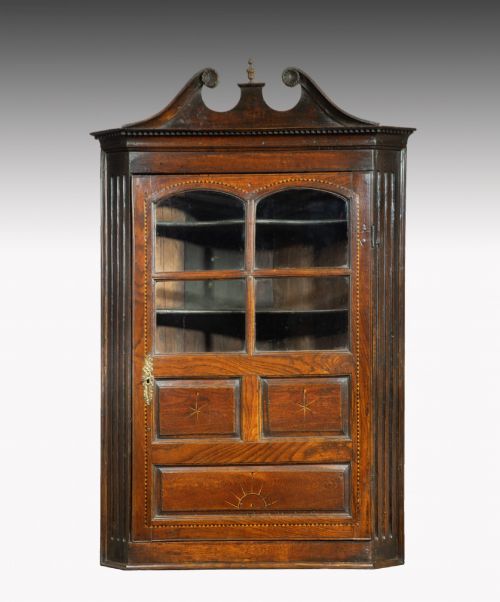
The pieces on this page span several centuries, with the Georgian period heavily represented alongside later Arts and Crafts and Victorian interpretations. Buyers will frequently encounter functional spice cupboards, glazed display cabinets and panelled corner units.
Originating primarily from British workshops, these cabinets served practical daily purposes in kitchens, parlours and hallways. They combine sturdy construction with compact footprints, making them adaptable for modern interior display.
How They Were Made
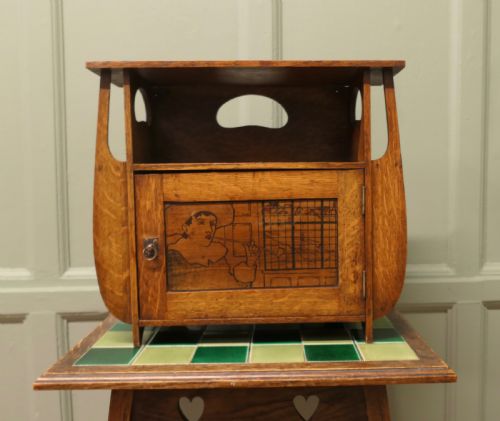
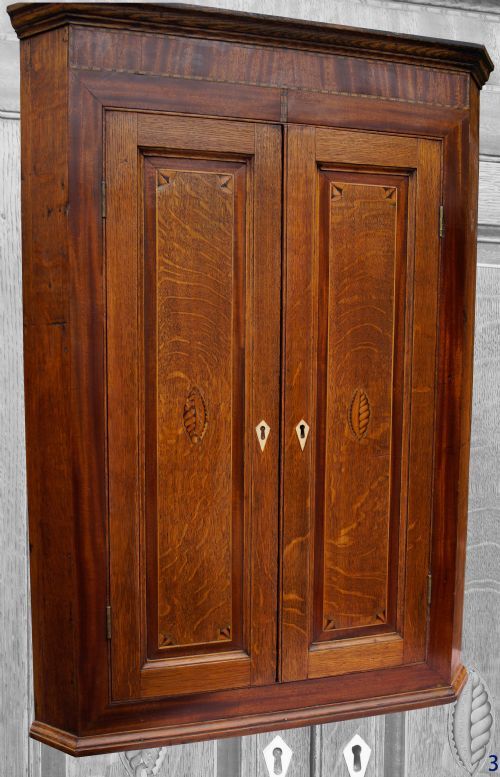
Cabinet makers utilised solid oak as the primary timber, often complemented by secondary woods such as pine or mahogany for internal framing and shelving. Selected pieces incorporate subtle wood inlay, carved ornamentation or pokerwork details to enhance the exterior surfaces.
Construction methods rely upon traditional joinery, including pegged mortise and tenon joints for doors and frames, alongside dovetail joints utilised in smaller drawer compartments. Brass hinges, latches and wrought iron hardware provide both structural security and functional closure.
Glazing techniques range from simple leaded or clear glass panes to fine astragal bars dividing display doors. Surfaces were traditionally finished with wax or oil to nourish the timber grain rather than heavy modern varnishes.
Some industrious 18th-century cooks kept their most precious nutmegs locked away from light-fingered servants in miniature oak spice cupboards.
What Varies in Quality
The distinction between standard utility cupboards and finer examples lies in the selection of the timber and the refinement of the carved details. Superior pieces display carefully matched oak boards with lively medullary rays, whereas simpler vernacular items utilise plain, utilitarian planking.
Originality of hardware and glass contributes significantly to a piece's integrity, with hand-blown panes and period brass hinges elevating the overall standard. The precision of the joinery, particularly in curved bow-front corner units, demonstrates the maker's technical capability.
John Moyr Smith
The Oak Hanging Wall Cabinet Glossary
- Astragal glazed
- A method where slender wooden mouldings divide a glass window into smaller panes. This technique is frequently seen on Georgian display cabinets.
- Bow front
- A convex curved cabinet front that projects outwards from the corners. It requires skilled carpentry to shape the timber accurately.
- Spice cupboard
- A small, shallow wall-mounted cabinet traditionally fitted with internal drawers for storing culinary herbs and spices. These date predominantly from the seventeenth and eighteenth centuries.
- Inlay
- The technique of embedding contrasting woods or materials into the surface of the oak to create decorative patterns. Mahogany is commonly utilised for this contrasting effect.
- Corner cupboard
- A triangular storage unit specifically engineered to fit snugly into the internal corner of a room. This form maximises spatial efficiency in smaller chambers.
Oak Hanging Wall Cabinet: Frequently Asked Questions
How were oak hanging wall cabinets used originally?
These cabinets provided secure storage for household valuables, dried foods, spices or everyday tableware within easy reach. Corner variants utilised otherwise neglected room angles to keep floors clear.
Smaller spice cupboards and key cabinets kept domestic essentials organised in busy hallways or kitchens. Their elevated position protected contents from damp floors and household pests.
How do I hang a heavy antique wall cabinet safely?
Secure installation requires locating solid wall studs or masonry rather than relying solely on plasterboard fixings. Professional installers often utilise heavy-duty battens or internal bracket systems to distribute the weight evenly.
Consider the loaded weight of the timber and stored items before final placement. Ensuring the unit is level prevents the doors from warping or swinging open unexpectedly.
Can I use an antique wall cabinet in a modern bathroom?
These cabinets work well in modern spaces if protected from excessive moisture and direct water splashes. Natural oak timber benefits from stable humidity levels to prevent the wood from expanding or splitting.
Ensure adequate room ventilation to preserve the historic finish and internal glue joints. Placing the cabinet away from unshielded showers keeps the antique structure intact.