





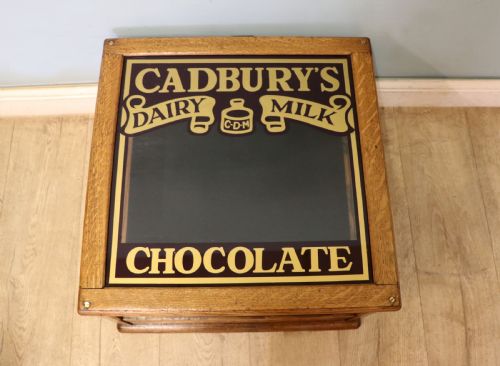


Oak Haberdashery Counter
An oak haberdashery counter serves as a substantial commercial anchor, bringing utilitarian display space and heavy timber construction into domestic interiors.
Oak Haberdashery Counter
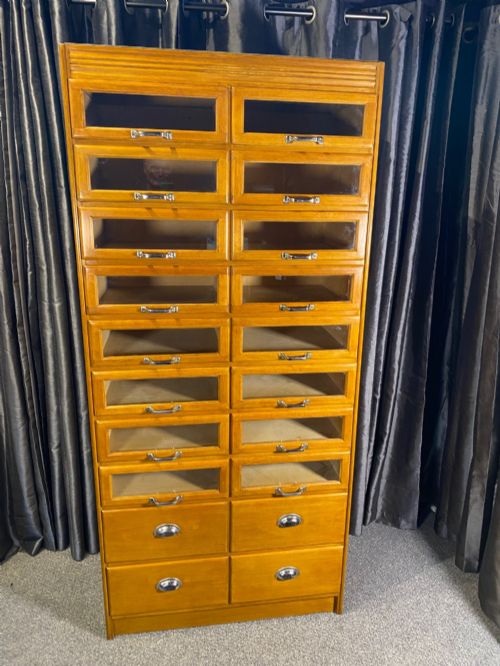
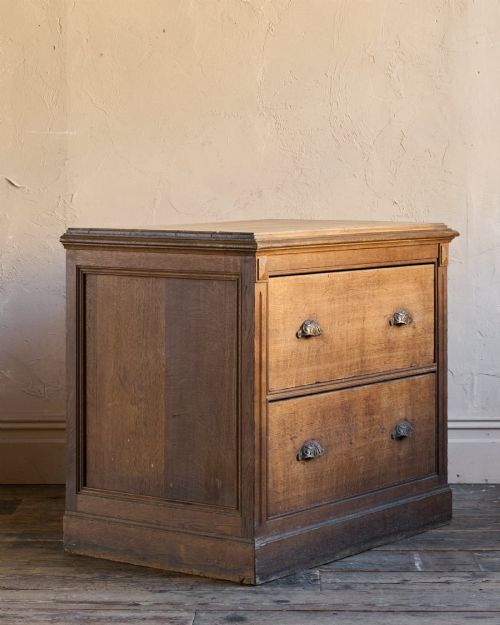
When searching for an oak haberdashery counter, buyers encounter heavy commercial shop fittings, display tables, and drapers tables originating from the Victorian period through to the nineteen thirties. These pieces emerge from commercial settings like tailors and drapers, manifesting primarily as large counters, countertop display cabinets, and tall cabinetry designed for merchandise.
The inventory on this page spans distinct eras including Edwardian, Art Deco, and late nineteenth century French provincial styles. Buyers meet pieces constructed with glazed panels for visibility alongside robust wooden frameworks intended to withstand heavy retail daily use.
Materials and construction
Makers built these commercial fixtures predominantly using solid oak, frequently augmented by bleached oak finishes or French country treatments. Structural integrity relied on this dense hardwood to support heavy glass viewing areas and frequent customer interaction.
Metal elements such as brass, chrome, and bronze appear as hardware, framing, or structural reinforcement alongside velvet linings and glass panes. This combination of timber and glass created secure, transparent compartments suited to displaying small goods.
Oak Haberdashery Counter Retail Price Guide 2026
Typical asking prices for oak haberdashery counter among the pieces listed under this phrase on Sellingantiques today, from the lower quarter to the upper quarter. They describe what is for sale here now, not the wider market.
Listings feature oak, bleached oak, and glass combined with chrome, bronze, and brass across Edwardian and Art Deco commercial furniture.
Judging quality in commercial shop fittings
Quality differentiates itself through the integration of original hardware, such as brass or bronze handles, and the clarity and thickness of the glass panels. Superior examples retain their original factory signage and proprietary maker details rather than later adaptations.
The refinement of the timber finishing, whether a natural oak surface or a bleached French provincial treatment, dictates the tier of the piece. Untouched commercial joinery with patinated surfaces commands greater interest than heavily restored structures.
F Sage And Co·Dudley And Co
The Oak Haberdashery Counter Glossary
- Haberdashery counter
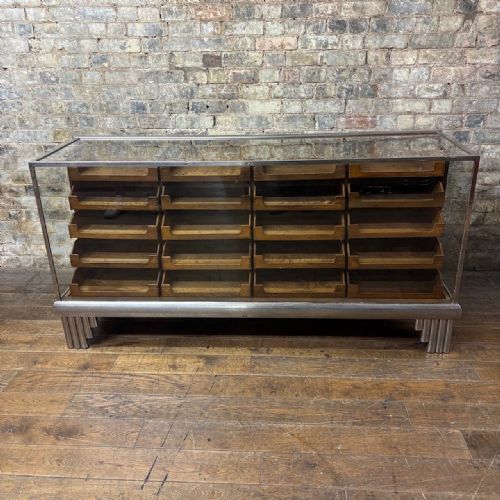
- A commercial shop fixture featuring glazed sections and drawers or shelving designed originally to display small sewing goods and textiles. These tables formed the centrepiece of traditional drapery shops.
- Drapers table
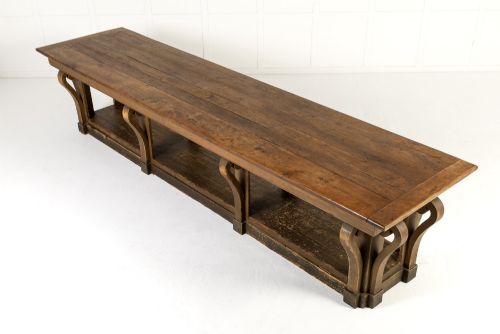
- A long wooden display table utilised in fabric shops for measuring and folding textiles before sale. They often feature lower shelves or open bases for stock storage.
- Bleached oak
- Timber treated to lighten the natural dark brown tone of oak, achieving a pale, neutral finish common in French country furniture. This process highlights the grain while modernising the overall appearance.
- Countertop display cabinet
- A smaller glazed case designed to sit upon a larger shop counter to showcase high-value items securely. These portable cabinets generally feature hinged or sliding rear doors for staff access.
- Shop fitting
- Custom-built furniture and fixtures manufactured specifically for retail premises during the nineteenth and early twentieth centuries. These pieces prioritised robust utility and clear merchandise presentation.
Oak Haberdashery Counter: Frequently Asked Questions
What were haberdashery counters used for?
Haberdashery counters functioned as retail sales desks and display units in nineteenth and twentieth century drapers shops. Merchants used the glass tops and deep drawers to organise and showcase ribbons, buttons, threads, and small garments to customers.
In modern interiors, these sturdy surfaces serve as kitchen islands, console tables, or retail display units. Their combination of drawers and glass provides practical storage alongside visual depth.
How do I date an oak shop counter?
Dating relies on examining the timber preparation, hardware materials, and stylistic markers such as Art Deco geometric lines or Victorian mouldings. Dudley and Co and F. Sage & Co pieces often carry specific period signatures or manufacturing traits from the nineteen tens and thirties.
Construction methods also guide the timeline, as machine-sawn oak and chrome hardware point toward later twentieth century production. Earlier Victorian examples display hand-cut joinery and heavier brass fixtures.
Are these counters suitable for kitchens?
These counters integrate well into domestic kitchens due to their generous timber worktops and substantial storage capacity. The original configuration of drawers accommodates kitchen utensils while glass compartments display crockery.
Buyers should measure floor space carefully, as commercial shop fittings are generally deeper and longer than standard domestic cabinetry. Adequate clearance is necessary to open doors and drawers fully.
What is the difference between drapers tables and counters?
Drapers tables are open-frame wooden tables primarily designed for folding and measuring cloth, featuring open underspaces or lower shelves. Haberdashery counters are enclosed structures containing multiple drawers and glazed display compartments for smaller wares.
While both originated in nineteenth century textile shops, counters offer secure storage behind glass whereas drapers tables provide accessible flat surfaces for general display.