


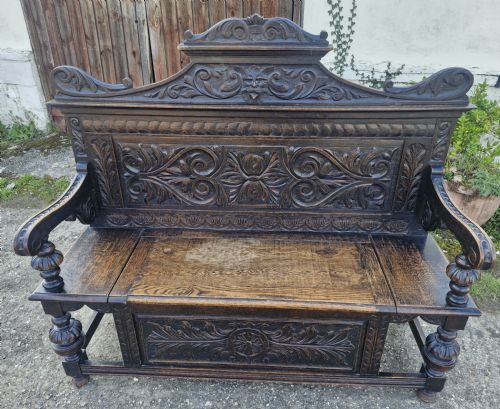


Oak Entryway Storage Bench
An oak entryway storage bench combines practical seating with concealed storage, grounding a hallway with substantial timber and centuries of craft.
Oak Entryway Storage Bench
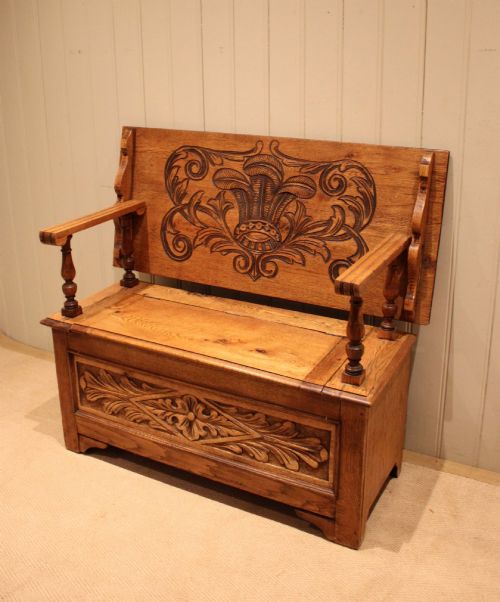
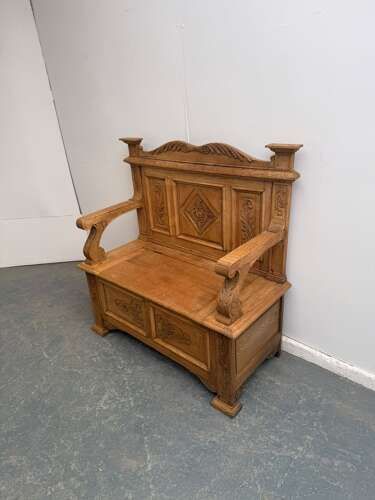
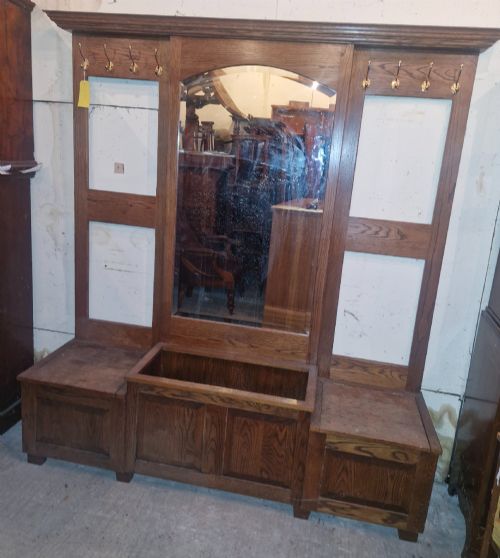
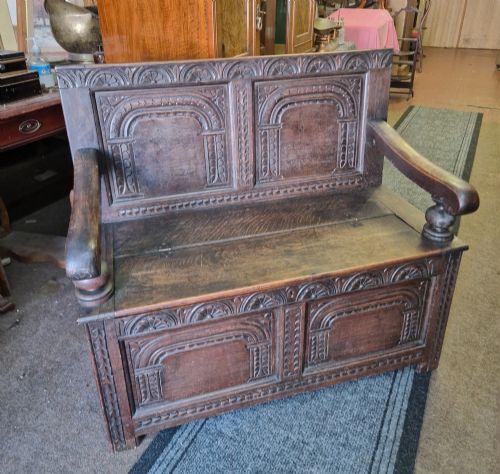
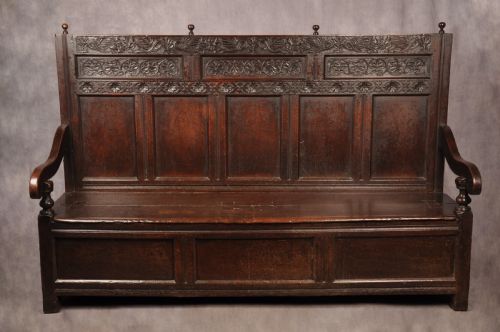
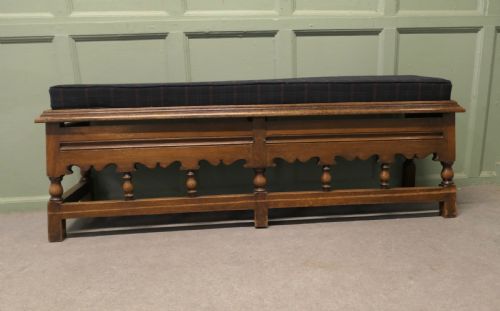
When searching for an oak entryway storage bench, collectors and homeowners encounter a variety of forms designed to hold boots, coats and everyday paraphernalia. These pieces span centuries, appearing as heavy box settles, panelled hall seats, and multi-functional stands with lift-up lids.
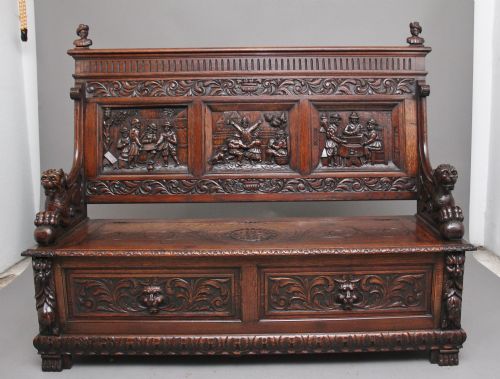
The most common examples on this page date from the Victorian era and the early twentieth century, alongside earlier Georgian and seventeenth-century country pieces. Styles range from plain English country vernacular to ornate Jacobean Revival, Renaissance Revival, and Gothic Revival carvings.
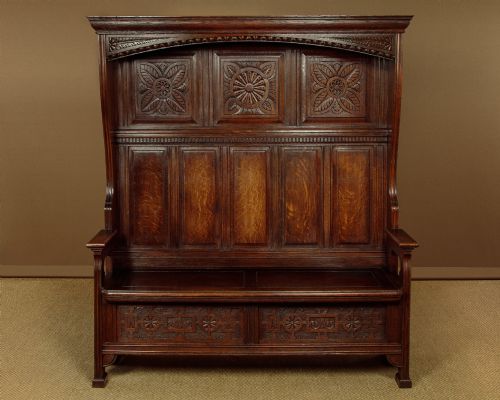
Many items feature high panelled backs, integrated arms, and deep compartments beneath the seat, while others incorporate canopy tops or coat hooks. The wood varies in tone from stripped golden oak to deep, wax-polished dark timber.
Judging the quality
Quality rests in the weight of the timber, the depth and crispness of the hand-carving, and the integrity of the original joints. Pieces constructed from solid oak with thick seat boards and well-fitted box storage sit at the higher end of the range.
Proportion and surface finish also dictate value; examples that retain a warm, waxed patina or a clean stripped golden finish command attention over poorly altered or heavily restored timber.
Listings span the seventeenth to the twentieth centuries, with Victorian and 1920s examples appearing most frequently alongside solid oak and brass hardware.
The Oak Entryway Storage Bench Glossary
- Settle
- A wooden bench with a high back, solid arms, and a box seat compartment underneath. This traditional form kept draughts away from the user in cold hallways.
- Box Settle
- A seat featuring a hinged lid that opens to reveal deep storage space for boots and blankets. It serves a dual purpose as both furniture and chest.
- Jacobean Revival
- A nineteenth-century style imitating seventeenth-century English design. It typically employs dark oak, heavy turning, and deep geometric panel carving.
- Green Man
- A sculptural architectural motif depicting a face carved from or entwined with leaves and vines. It appears frequently on revivalist oak carvings.
- Canopy Top
- An overhead wooden projection or roof attached to the upper back of a hall seat. This architectural feature often frames the sitter.
Oak Entryway Storage Bench: Frequently Asked Questions
How do I use a hall settle today?
These benches fit naturally into hallways, boot rooms, and large kitchens where practical storage is essential. The internal compartment holds shoes, boots, and winter accessories out of sight.
The flat seat provides a sturdy place to sit while putting on footwear, while the high back protects walls from scuffs and coats.
How do I date an oak bench?
Dating relies on examining the joinery marks, wood grain, and decorative style of the carving. Seventeenth and eighteenth-century pieces often display hand-pegged joints and simpler, heavier panel construction.
Victorian and Edwardian pieces frequently show machine-sawn timber elements combined with revivalist motifs like Gothic or Jacobean carving styles.
Is the oak always solid?
Most traditional pieces listed here are constructed from solid oak throughout the frame, panels, and seat boards. Heavier pieces utilise thick timber planks to support daily use.
Revival pieces from the nineteenth and twentieth centuries also rely on solid oak, though interior bases may occasionally incorporate secondary hardwoods.
How do I care for waxed oak furniture?
Maintaining waxed oak requires regular dusting with a soft, dry cloth to prevent grit accumulation. Applying a quality beeswax occasionally nourishes the grain and preserves the patina.
Keep these heavy timber pieces away from direct heat sources and radiators to prevent the wood from splitting or warping.