

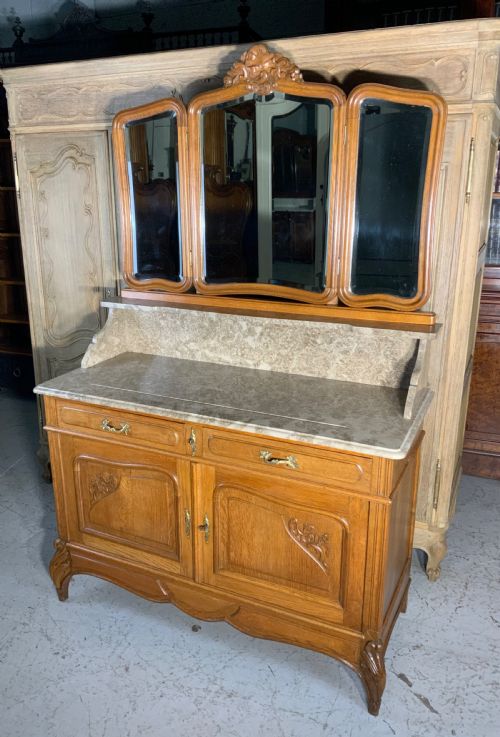
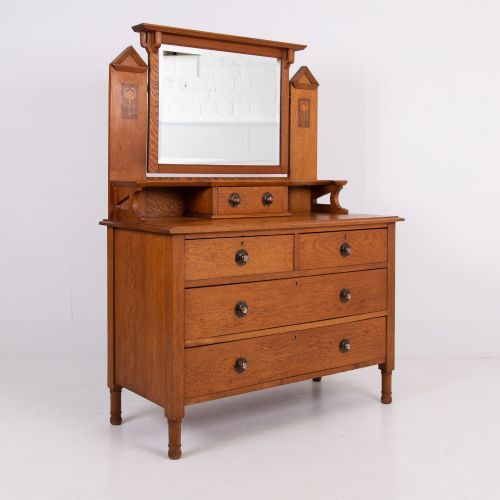

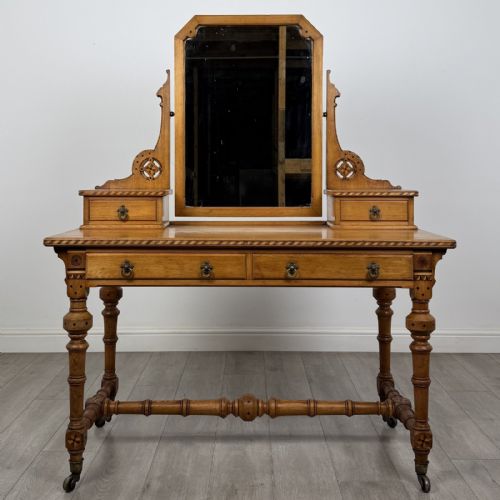
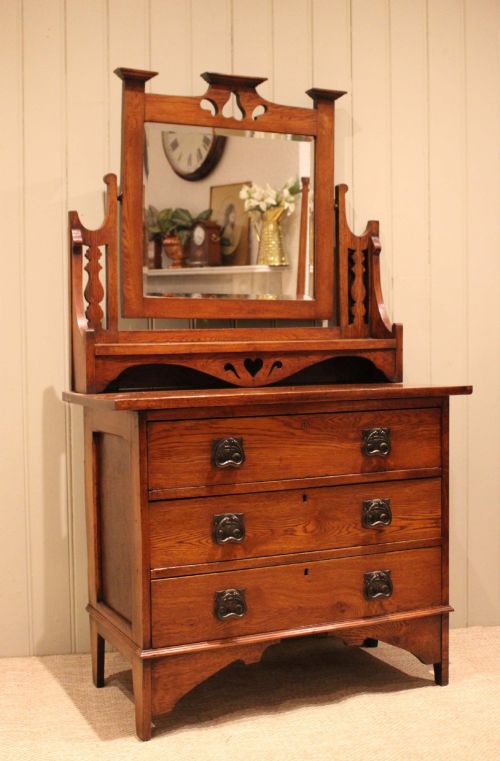

Oak Dressing Table Mirror
An oak dressing table mirror is a sturdy bedroom essential that brings warm timber tones and practical reflection to a traditional space.
Oak Dressing Table Mirror
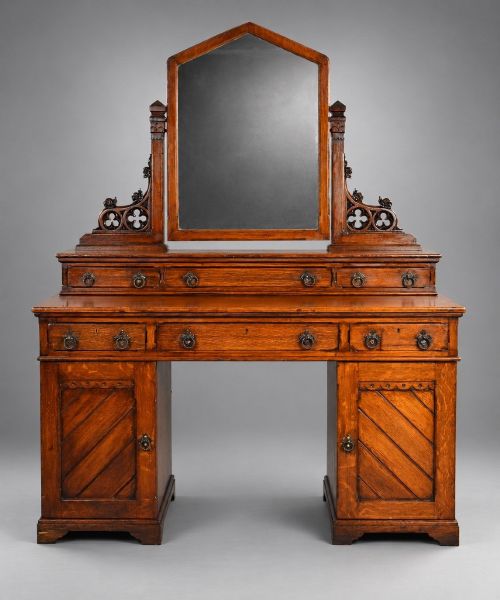
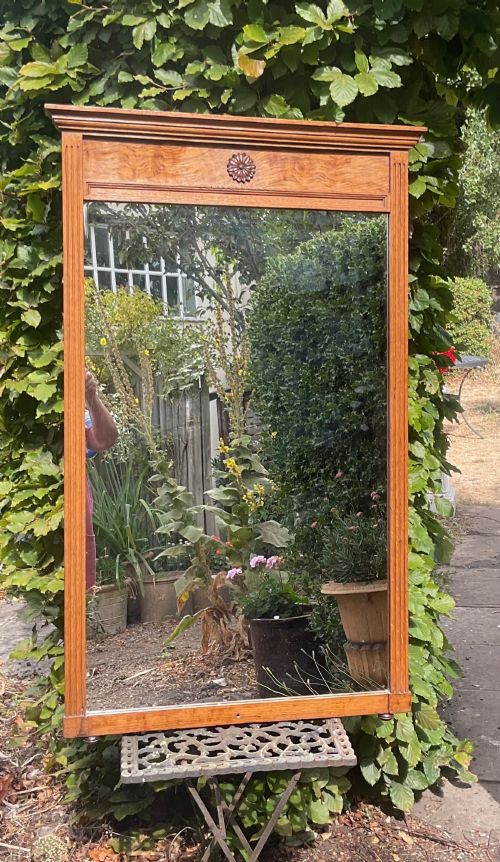
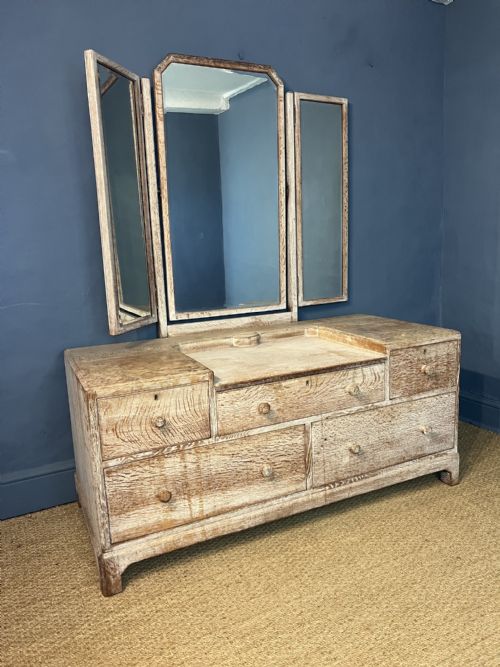
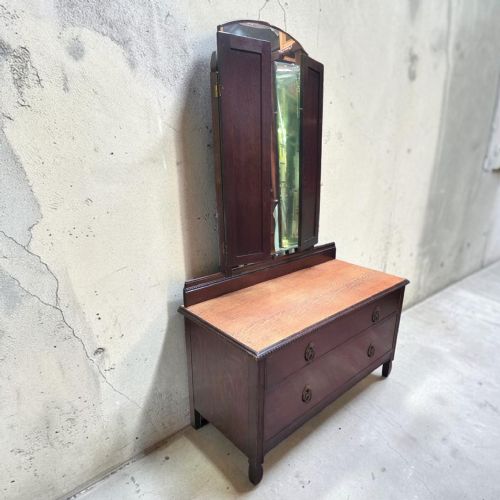
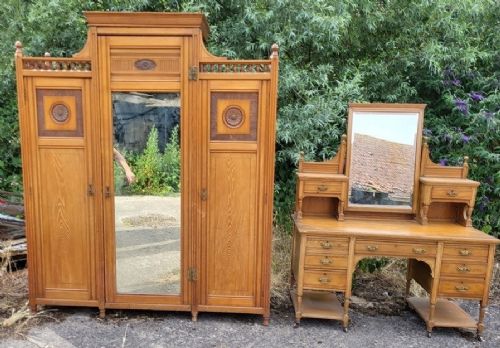
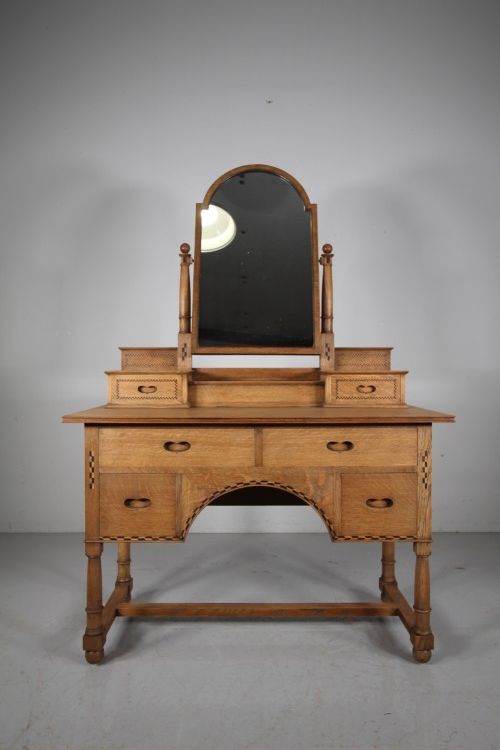
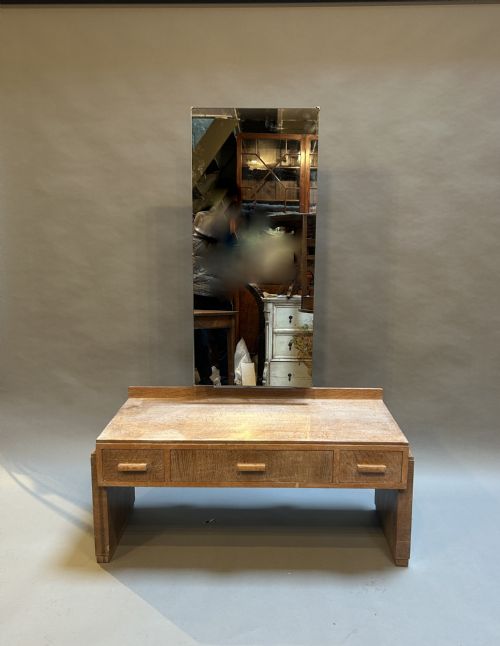
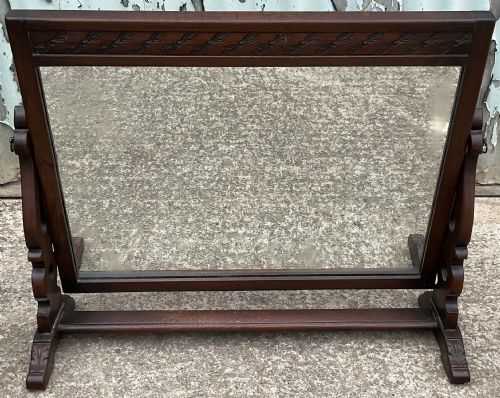
An oak dressing table mirror combines solid timber frames with pivoting glass plates designed for bedroom use. The pieces appearing here span the Victorian, Edwardian, and nineteen-thirties periods.
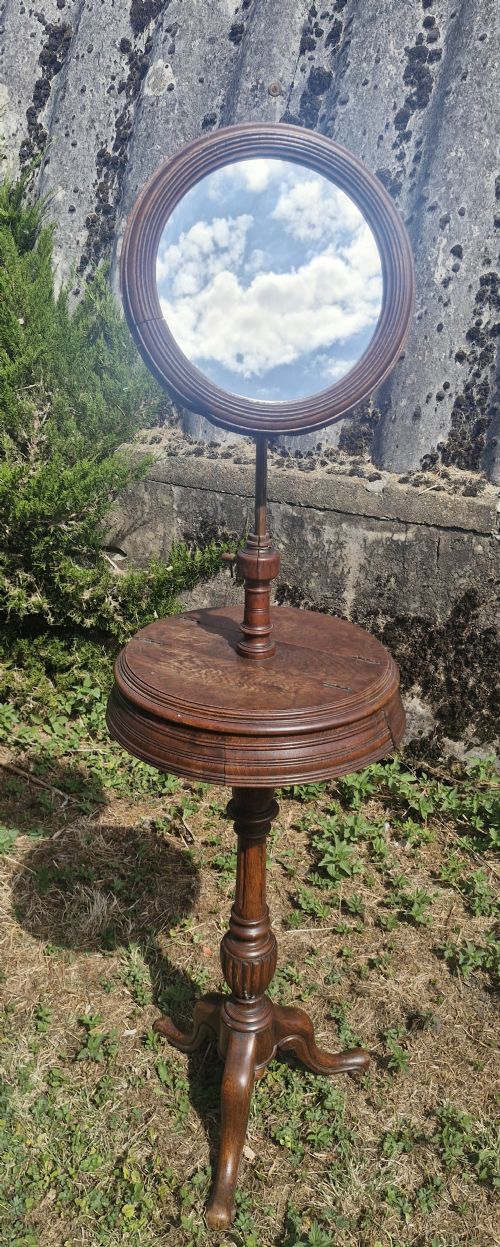
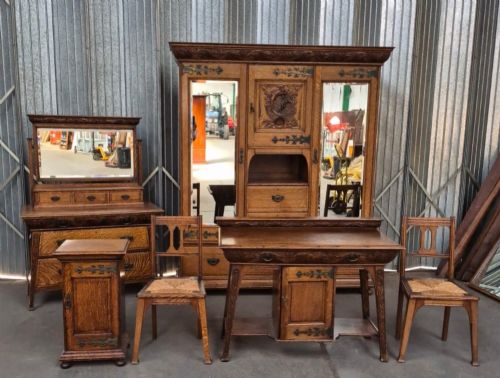
Most examples take the form of swing mirrors mounted on upright supports, ranging from standalone table pieces to integrated dressing chest attachments. Surviving pieces frequently display Arts and Crafts, Art Deco, or Gothic Revival influences.
Makers utilised various oak cuts, incorporating bevel-edged glass and occasional brass fittings. Buyers encounter both compact toilet mirrors and large architectural dresser attachments.
How they were made
Joiners constructed these frames using solid oak and oak veneers, often selecting figured timber or burr oak for decorative impact. Workshops applied wood inlay, marquetry, and ebony stringing to enhance the visual depth of the woodwork.
Mirror plates were bevel-edged and held within adjustable swing frames supported by upright arms. Metal components such as brass screws, steel fixings, and leather straps provided functional movement.
Oak Dressing Table Mirror Retail Price Guide 2026
Typical asking prices for oak dressing table mirror among the pieces listed under this phrase on Sellingantiques today, from the lower quarter to the upper quarter. They describe what is for sale here now, not the wider market.
Current listings and archive records feature oak dressing table mirrors spanning the Victorian, Edwardian, and nineteen-thirties eras.
What varies in quality
The standard of craftsmanship shows in the selection of timber, where figured grain and precise marquetry distinguish finer workshops from standard production. Construction methods, such as pegged joints and solid framing rather than simple veneer work, separate robust examples from simpler items.
Design ambition dictates the upper tier, with carved ornamentation, Gothic Revival details, and integrated drawer bases demonstrating superior execution. Maker attribution and original branded labels further elevate the standing of individual mirrors.
Heals·Gaylayde·B Cohen and Sons·Richard Bridgens
The Oak Dressing Table Mirror Glossary
- Swing mirror
- A glass plate mounted on pivots between two upright supports allowing the angle of reflection to change. This mechanism allows the user to tilt the glass as needed.
- Bevel edge
- A glass edge angled and polished down to a thinner perimeter. This decorative treatment catches the light and adds depth to the plate.
- Marquetry
- Fitted pieces of wood veneer arranged on a structure to form decorative patterns. Craftsmen use contrasting timbers to create pictorial designs.
- Burr oak
- Timber taken from tree growths containing distorted grain patterns that produce rich figuring. Cabinet makers prize this wood for its decorative surface movement.
- Gothic Revival
- A nineteenth-century style drawing on medieval architectural motifs such as pointed arches and heavy carving. Pieces in this idiom display robust proportions and architectural lines.
Oak Dressing Table Mirror: Frequently Asked Questions
How do I date an oak dressing table mirror?
Dating relies on stylistic clues, construction techniques, and materials found across the frame. Victorian and Edwardian examples often feature hand-carved motifs or Arts and Crafts simplicity, while nineteen-thirties pieces tend toward geometric Art Deco lines.
Examining the fixings, wood types, and mirror backing provides further chronological context. Original labels or stamps offer the most direct evidence of a piece's age and origin.
Were these mirrors always part of a larger set?
Many dressing mirrors were originally manufactured as components of larger bedroom suites or dressing chests. Some sat directly upon partner desks or washstands rather than dedicated dressing tables.
Standalone table mirrors were also produced independently for smaller dressing surfaces. Surviving pieces often show evidence of their original mounting configurations on the base supports.
What is the difference between Arts and Crafts and Art Deco styles here?
Arts and Crafts mirrors emphasise honest construction, visible joinery, and natural oak textures often enhanced by hand carving. These pieces reflect a nineteenth-century philosophy valuing traditional craftsmanship over mass production.
Art Deco examples embrace streamlined geometry, smooth polished surfaces, and minimal ornamentation. They frequently incorporate contrasting veneers or marquetry to achieve a modern aesthetic.
How do I maintain the wood and glass?
Maintaining these mirrors involves protecting the timber with suitable wax polishes to preserve the finish and prevent drying. Regular dusting keeps the carved details and veneers clean without moisture damage.
Glass plates require standard cleaning solutions applied carefully to avoid seepage behind the silvering. Checking the pivot screws periodically ensures the swing mechanism remains secure.