

Oak Dresser with Plates
An oak dresser with plates brings centuries of rustic storage and display into a room, combining a sturdy base for daily provisions with open shelving for pottery.
Oak Dresser with Plates
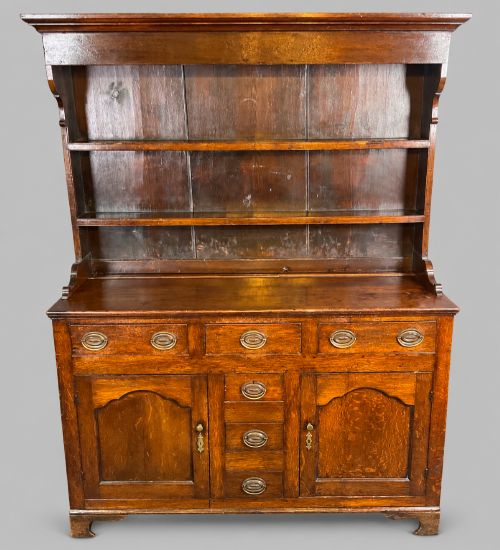
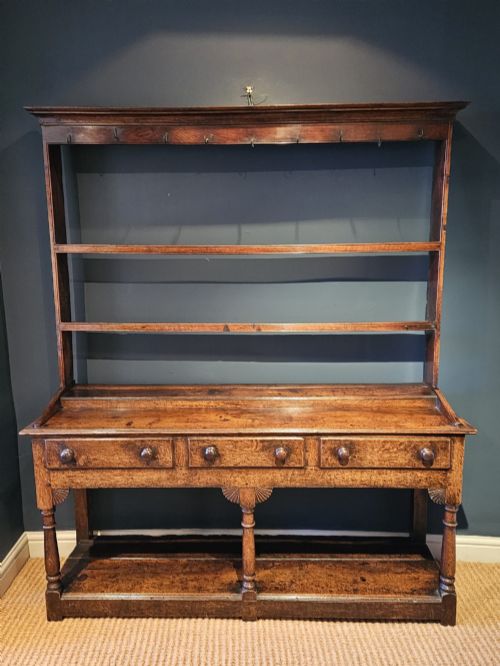
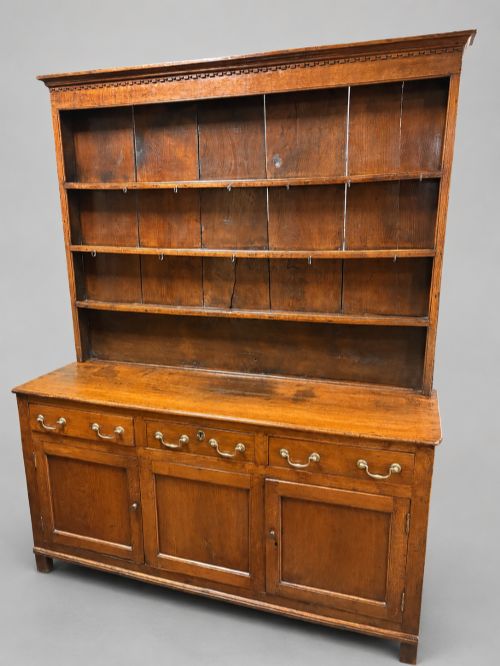
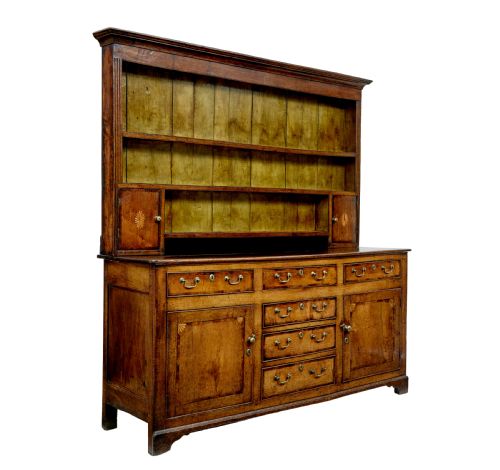
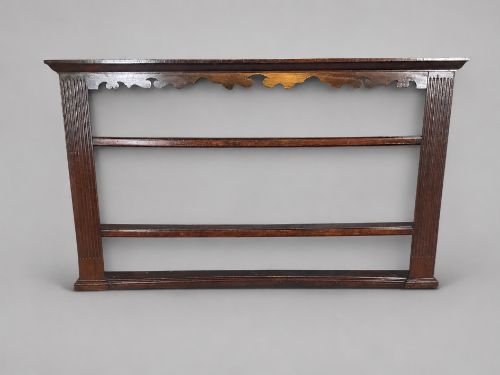
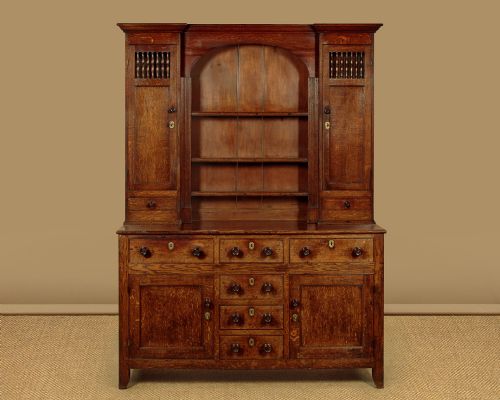
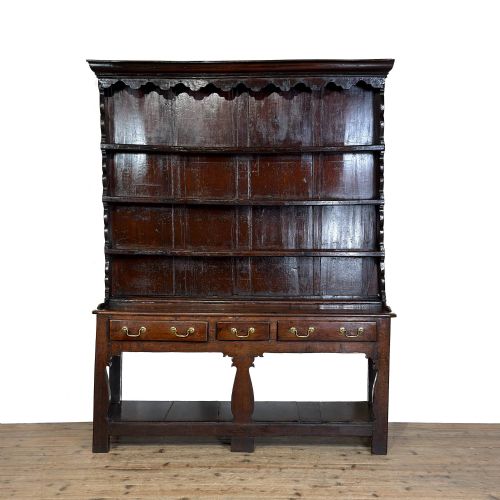
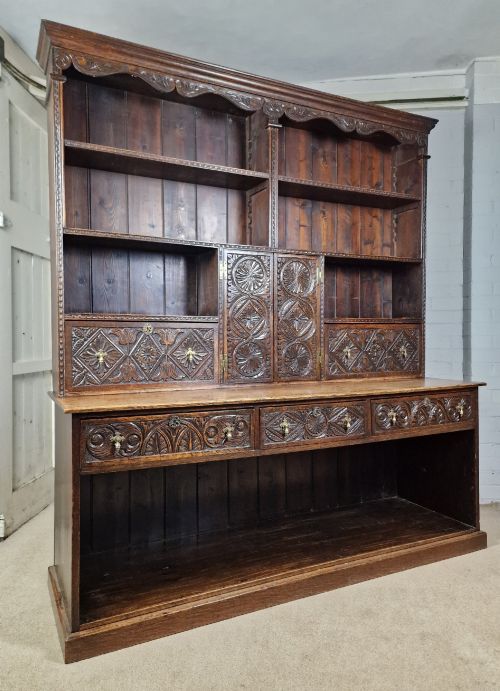
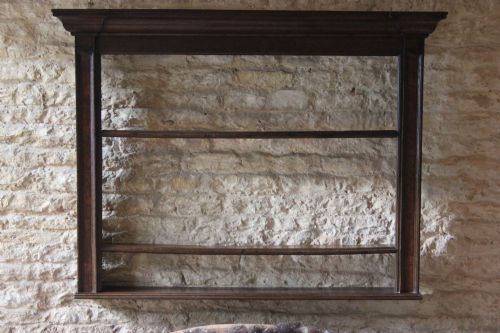
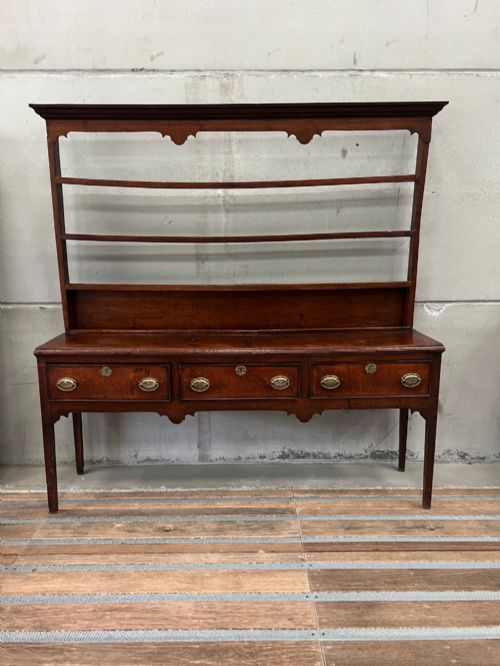
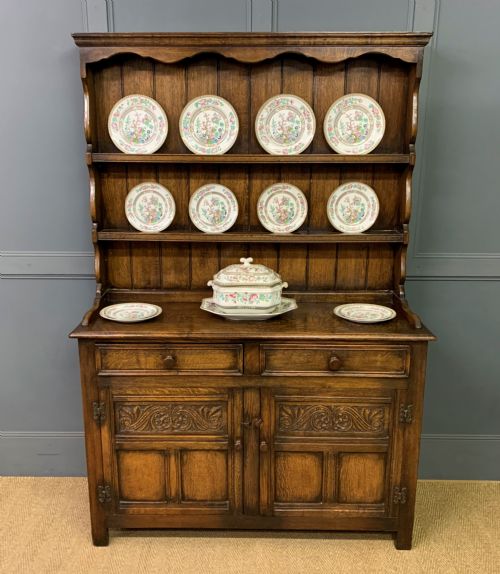
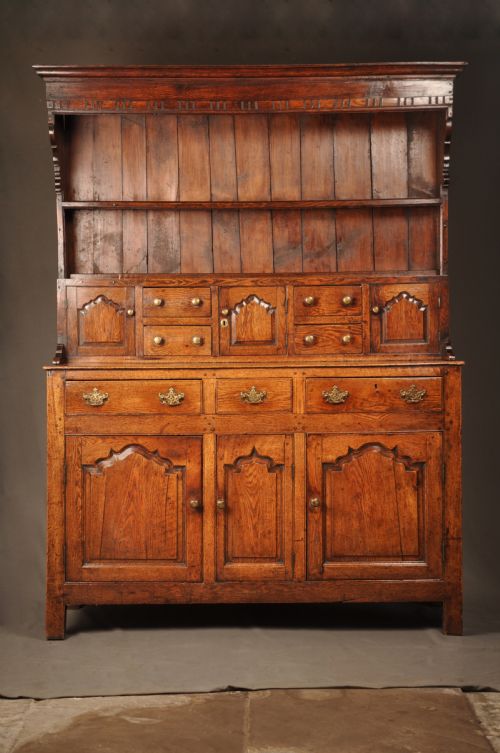
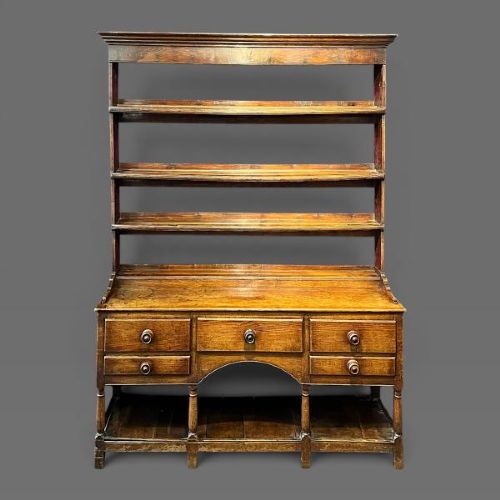
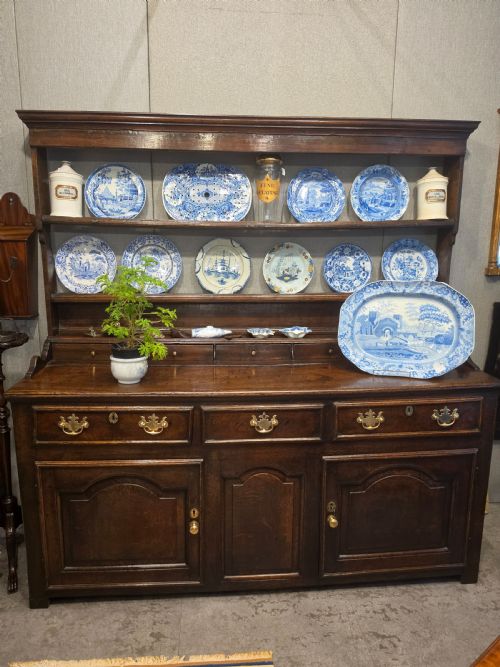
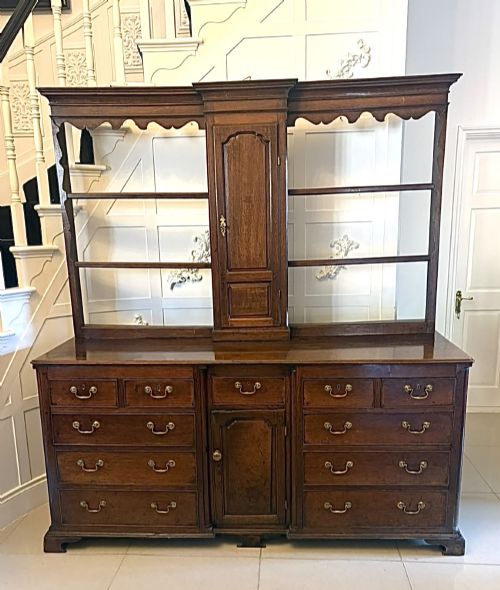
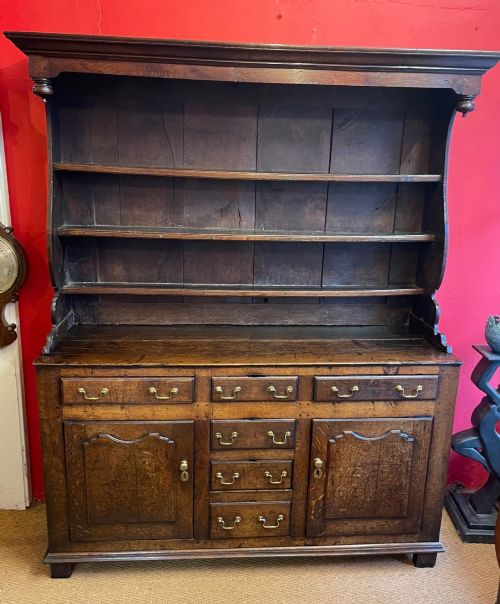
When you search for an oak dresser with plates, you are looking at substantial utilitarian furniture designed for domestic storage and display. The form typically combines a lower section of drawers and cupboards with an upper plate rack featuring open shelves.
The versions you are most likely to meet on this page span the 18th century through the Edwardian period, drawing on Georgian, Welsh vernacular, and country farmhouse traditions. Regional variations appear in names like Shropshire, West Country, and Snowdonia.
These pieces function as both practical storage units and focal points in domestic interiors, holding plates and ceramic displays securely on their open shelves while concealing larger items below.
How they were made
Cabinetmakers built these pieces primarily using solid native timber, selecting oak for its durability alongside supporting secondary woods like pine, elm, and mahogany. Crossbanding and inlay work added subtle decorative detail to drawer fronts and cornices.
Hardware played an essential functional role, incorporating brass pulls and escutcheons alongside hand-forged iron fittings. Racks were constructed to support heavy ceramics safely, often integrating plate grooves and vertical supports into the open shelving.
Oak Dresser with Plates Retail Price Guide 2026
Typical asking prices for oak dresser with plates among the pieces listed under this phrase on Sellingantiques today, from the lower quarter to the upper quarter. They describe what is for sale here now, not the wider market.
Early plate racks were built with deep grooves so enthusiastic family dinners would not dislodge the Sunday best china during a lively conversation.
What varies in quality
The integrity of construction distinguishes different examples, particularly the survival of the original plate rack with the base. Proportion and the balance between the heavy lower storage and the lighter upper display shelves define the aesthetic success of the piece.
The character of the timber surface and the depth of natural patina accumulated through generations of domestic use separate standard examples from finer country pieces. Original brass hardware and untouched structural joinery also elevate the standing of a dresser.
The Oak Dresser with Plates Glossary
- Potboard
- A lower open shelf positioned near the floor between the legs of a dresser base. Originally used for storing heavy pots and pans off the damp flagstone floors.
- Delft rack
- An upper set of open shelves designed specifically for displaying ceramic plates and platters. The shelves often feature a narrow groove to keep plates leaning safely at an angle.
- Crossbanding
- A narrow strip of veneer applied to the edges of drawer fronts or tabletops with the grain running perpendicular to the main panel. This technique created a neat decorative border on formal pieces.
- Vernacular furniture
- Domestic pieces made by local regional cabinetmakers following traditional local patterns rather than metropolitan high styles. These items reflect the specific materials and needs of their geographic area.
- Breakfront
- A piece of furniture where the central section projects forward from the flanking outer sections. This architectural arrangement adds depth and shadow lines to the elevation of the base.
Oak Dresser with Plates: Frequently Asked Questions
What is the difference between a Welsh dresser and an English dresser?
Welsh dressers traditionally emphasise open plate racks and potboard bases rooted in regional vernacular woodworking. English versions frequently incorporate enclosed cupboard space in the upper section alongside standard shelving.
Regional differences also appear in the layout of drawers and the choice of secondary woods like pine or elm alongside the main oak structure.
How do I care for an antique oak surface?
Maintain the timber by applying traditional beeswax sparingly and buffing it gently with a soft cloth. Avoid modern liquid polishes that build up artificial residues over time.
Keep the piece away from direct heat sources and dramatic humidity fluctuations to prevent the solid oak panels from splitting.
Can the plate rack be separated from the base?
Most traditional dressers feature a two-part construction where the upper rack simply rests upon or fixes lightly to the top of the base. This allowed easier transport through narrow cottage doorways.
When positioning the furniture, ensure the rack is securely anchored to the wall to prevent tipping during everyday use.
How do I identify a Georgian oak dresser?
Examine the drawer construction for hand-cut dovetails and inspect the timber for the dense grain and medullary rays characteristic of native oak. Hardware such as brass drop handles or batwing plates often dates the piece to the 18th century.
Proportions tend to be robust and functional, reflecting the domestic requirements of country houses and farmhouses of the period.