
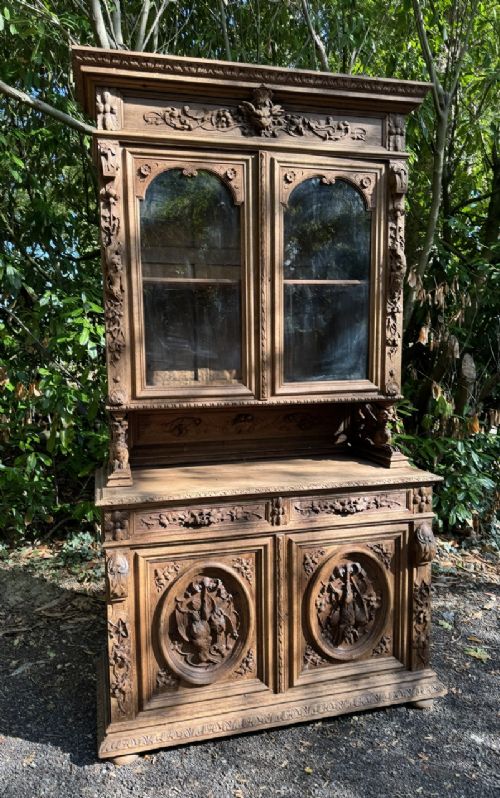
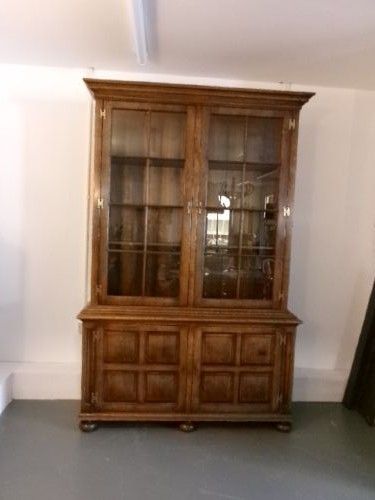
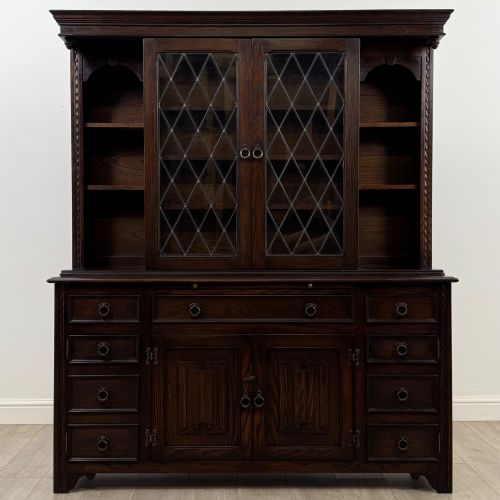
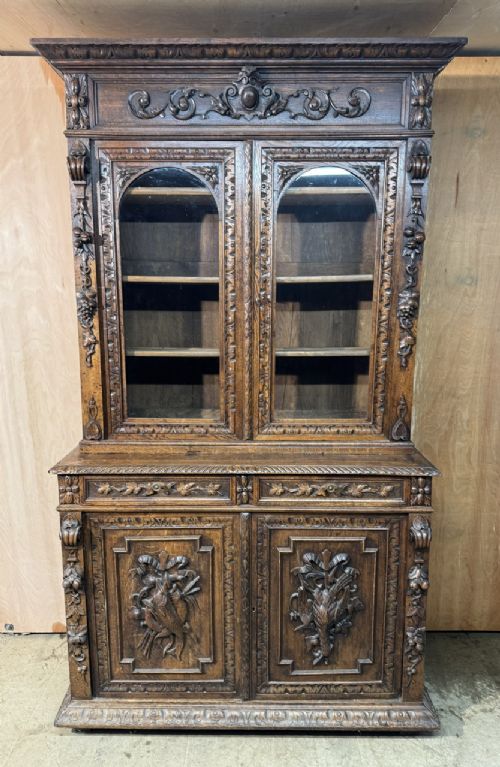
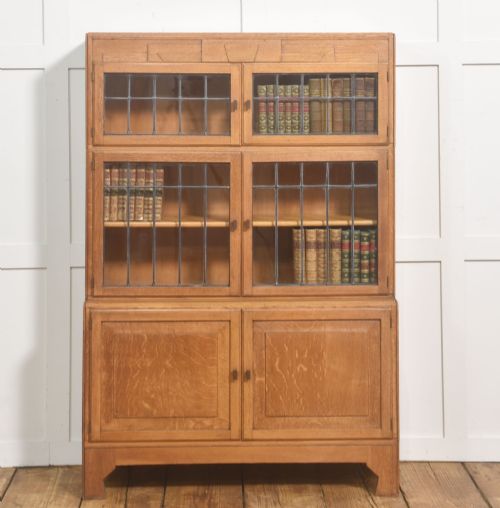
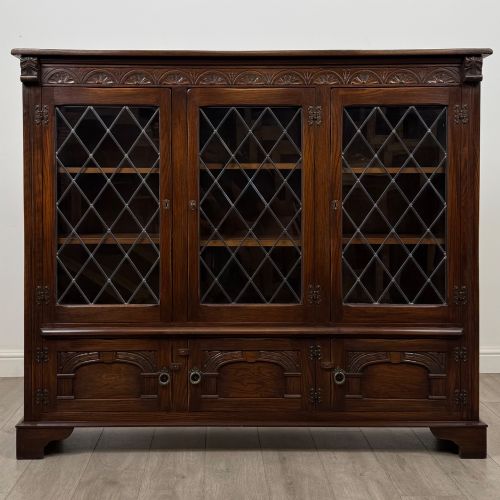
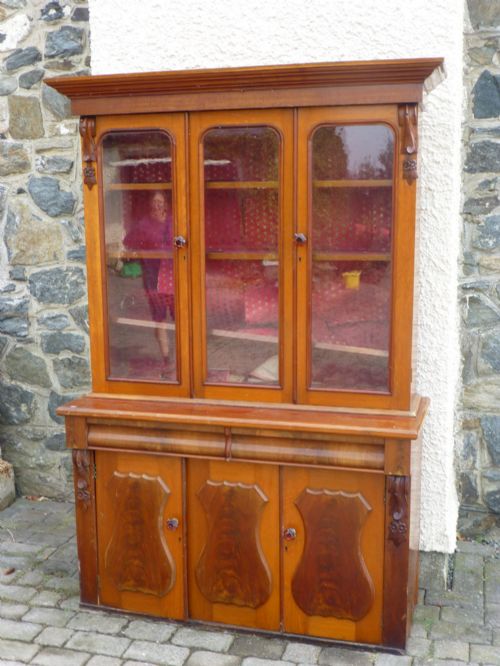
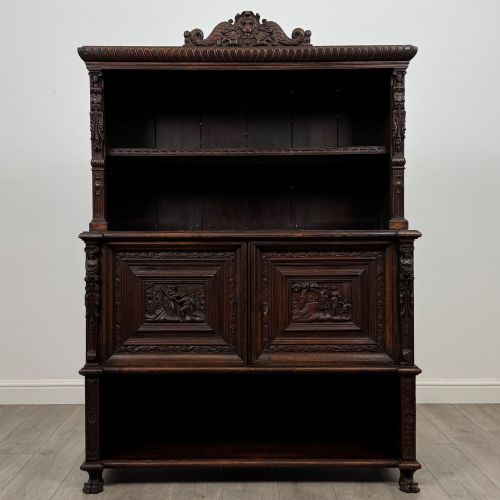


Oak Dresser Bookcase
An oak dresser bookcase combines display space and deep storage, bringing robust timber construction and regional vernacular charm into the home.
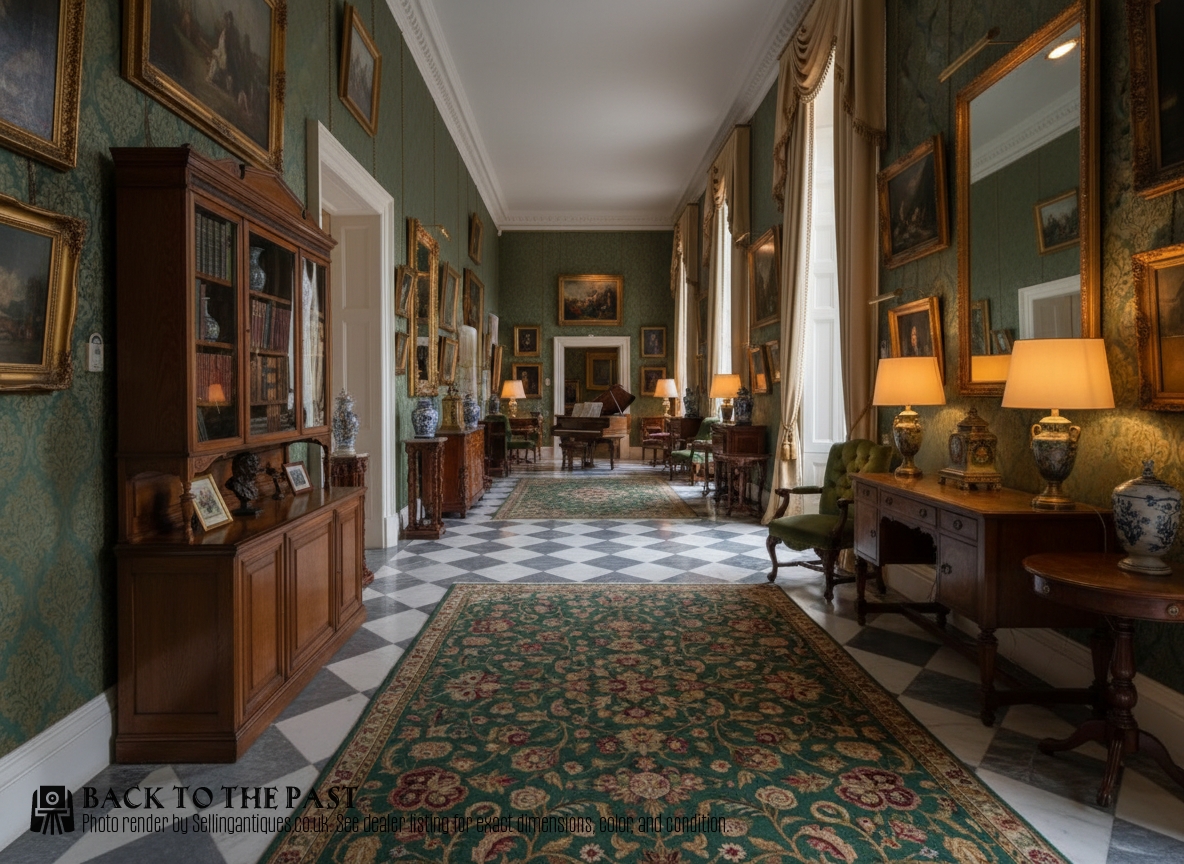
Oak Dresser Bookcase
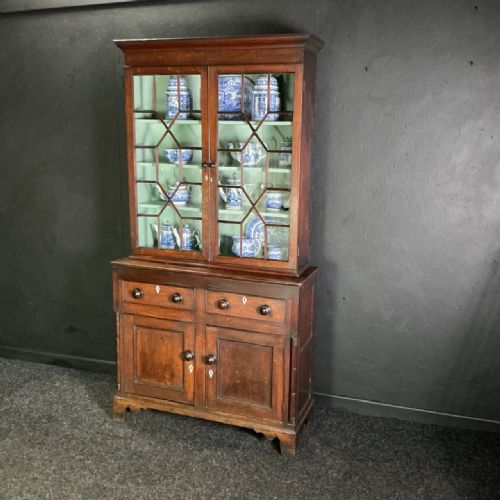
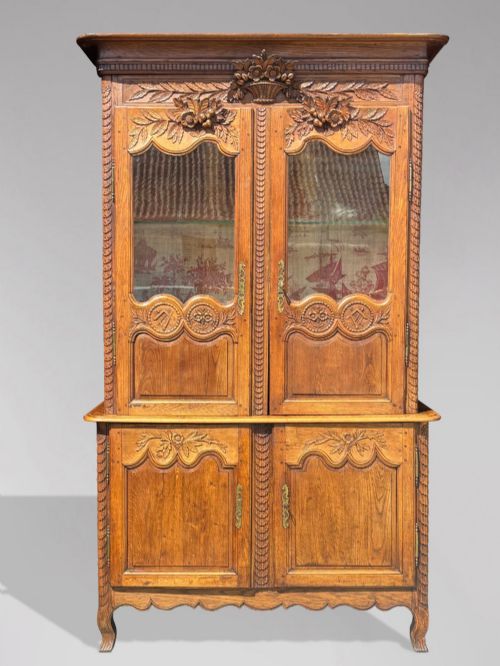
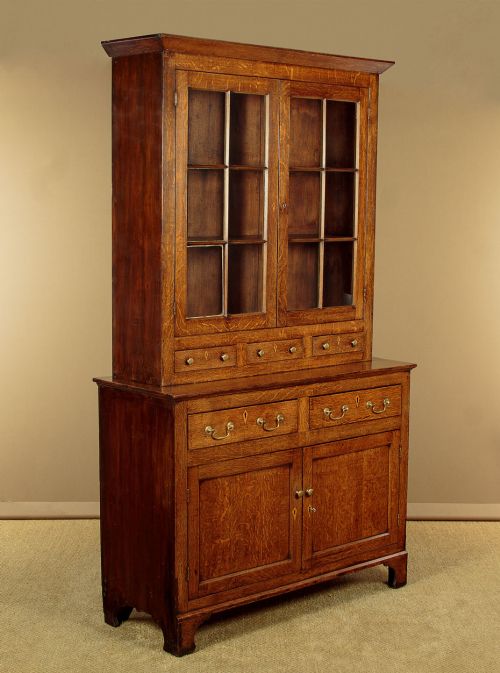
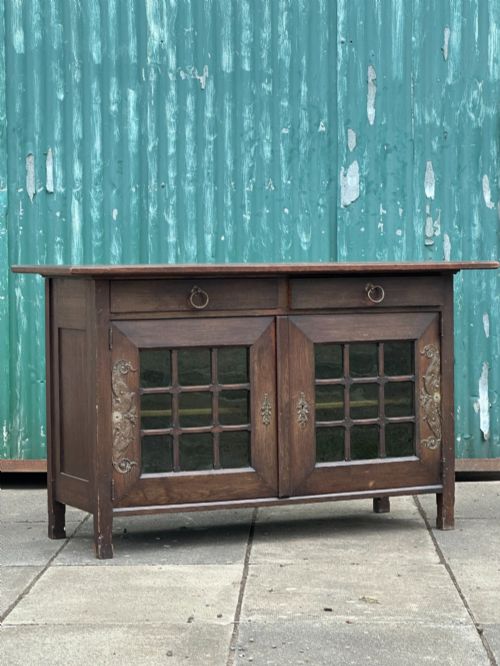
An oak dresser bookcase brings together lower storage cupboards or drawers and upper display shelving, often enclosed by glazed doors. When you search for oak dresser bookcase, you encounter utilitarian country furniture alongside heavily carved Revival and Arts and Crafts examples.
The pieces on this page span the eighteenth through the early twentieth centuries, encompassing Victorian, Edwardian, and regional vernacular traditions. Welsh, English, and French origins predominate, each bringing distinct proportions and timber selections to the form.
Materials and Construction
Solid oak provides the primary structural framework, frequently complemented by mahogany in secondary elements or decorative banding. Glazing utilises clear, leaded, or stained glass panels set within timber framing to protect the contents of the upper section.
Joinery relies on traditional pegged mortise and tenon joints, panelled doors, and hand-cut dovetails within drawer construction. Brass and iron hardware, including hinges, drop handles, and escutcheons, secure the doors and drawers while marking the period of manufacture.
Listings feature oak, mahogany, glass, brass, lead, and iron across Victorian, Edwardian, and eighteenth-century periods.
Assessing Quality and Execution
The calibre of a piece depends heavily on the crispness of the hand-carving and the integration of the upper and lower sections. Finer examples display thoughtful timber selection, where quartersawn oak reveals striking medullary rays across the primary surfaces.
Proportion and regional authenticity distinguish superior items from standard utility pieces. Original glass, hardware, and consistent patination on the timber elevate the standing of a cabinet significantly.
Liberty And Co·John Moyr Smith
The Oak Dresser Bookcase Glossary
- Buffet deux corps
- A two-part storage cabinet featuring an upper cupboard stacked upon a larger lower base. This traditional form originated in France and offers substantial capacity.
- Cwpwrdd Gwydr
- A traditional Welsh glazed cabinet used for storing and displaying household provisions and china. These regional pieces often exhibit vernacular charm and local timber variations.
- Quartersawn
- A method of milling logs that produces planks with parallel growth rings and distinctive decorative grain patterns. This cut provides enhanced dimensional stability to large panels.
- Leaded glass
- Individual panes of glass held together by narrow strips of lead came to form geometric or decorative patterns. This technique is particularly prevalent in Arts and Crafts design.
- Cornice
- The ornamental moulding that crowns the top of a tall piece of furniture. It visually caps the structure and balances the heavy base below.
Oak Dresser Bookcase: Frequently Asked Questions
How do I use an oak dresser bookcase?
These cabinets serve as practical storage solutions and display areas for books, ceramics, and collections. The lower cupboards conceal larger items while the upper glazed shelves keep display items dust-free.
Position them in dining rooms, kitchens, or libraries where their substantial presence anchors the room's layout.
What is the difference between a dresser and a bookcase?
A traditional dresser incorporates a base of drawers or cupboards, often topped by open plate racks or enclosed shelving. A bookcase focuses primarily on shelving for volumes.
Combined forms unite both concepts, providing closed storage below and display space above.
How do I date an oak bookcase?
Dating relies on examining construction techniques, hardware, and stylistic revival influences. Hand-cut dovetails, pegged joints, and secondary timbers like mahogany point toward specific centuries and regional traditions.
Revival styles such as Jacobean or Gothic often incorporate earlier decorative motifs while retaining nineteenth-century or twentieth-century assembly methods.
Are these pieces made of solid oak?
Most examples utilise solid oak for the primary framework, doors, and structural panels. Secondary timbers such as pine or mahogany may appear in drawer linings or backboards.
Regional variations and later nineteenth-century pieces occasionally blend solid construction with veneered surfaces on larger panels.