
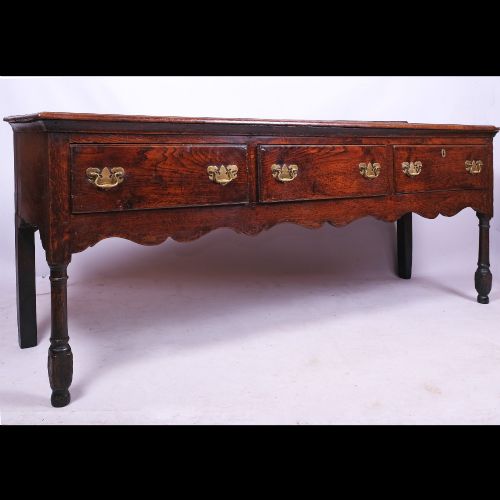


Oak Dining Room Furniture
Oak dining room furniture brings substantial presence to a meal, uniting families around robust tables, sideboards and dressers.
Oak Dining Room Furniture
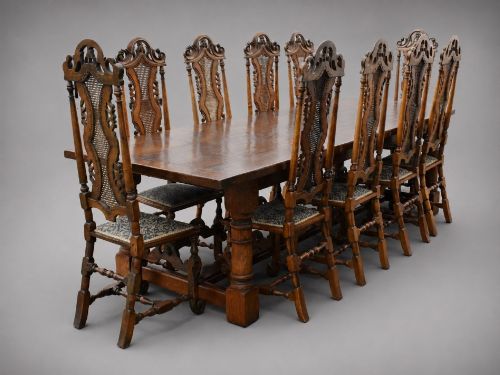
When you search for oak dining room furniture, you encounter a robust collection of utilitarian and display pieces designed to serve meals and store household provisions. The selection ranges from 18th century dresser bases to Edwardian dining suites complete with matching tables and chairs.
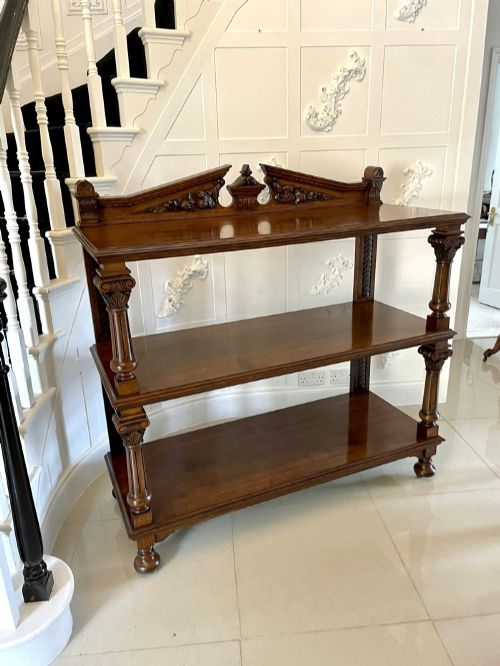
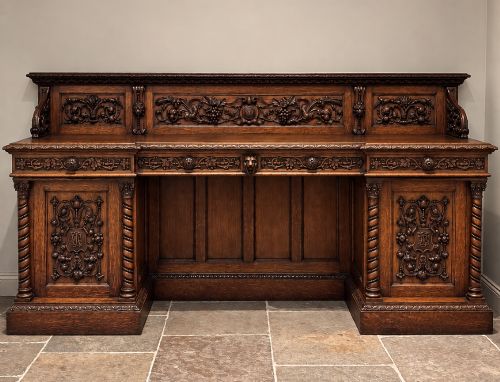
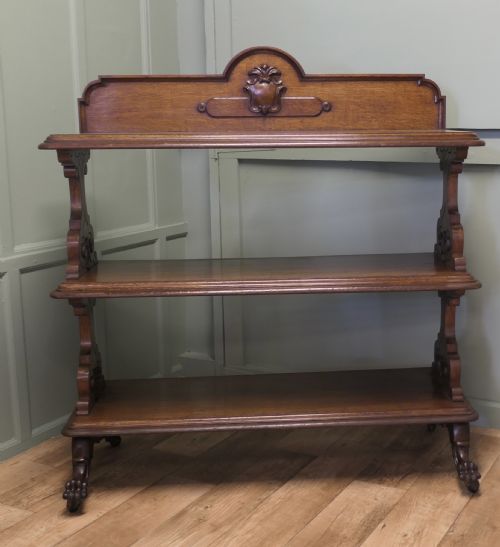
Sideboards, dumbwaiters and buffets dominate the forms, offering practical storage alongside carved panels and mirror backs. Pieces span various revivalist movements, including Jacobean, Gothic and Queen Anne styles, reflecting changing domestic tastes across the nineteenth and early twentieth centuries.
How they were made
Makers utilised solid oak, often selecting pollard oak for decorative grain patterns, alongside supporting elements in brass and glass. Carving defines the surface ornamentation, appearing on high-back chairs, sideboard doors and the tiered shelves of dumbwaiters.
Construction methods rely on traditional joinery to support heavy timber tops and extensive storage cabinetry. Additional materials such as cane, fabric and mirror glass appear within chair seats, upholstery and upper sideboard structures.
The listings span periods from the 18th century through to 1930, featuring materials such as pollard oak, brass and mirror glass.
What varies in quality
Quality rests in the depth and crispness of the carved ornamentation, distinguishing heavy-handed work from finely detailed panels on sideboards and buffet cabinets. The choice of timber also shifts the character, where standard oak meets the intricate burl figures of pollard oak.
Structural integrity and the preservation of original hardware, such as brass pulls and rising mechanisms on dumbwaiters, separate standard utilitarian items from exceptional dining suites.
The Oak Dining Room Furniture Glossary
- Pollard oak
- Timber taken from trees that were pollarded, producing dense, highly figured grain patterns utilised for decorative veneer and panels.
- Dumbwaiter
- A tiered serving table or stand utilised for holding dishes and utensils near the dining table without requiring servant attendance.
- Dresser base
- A low wooden sideboard featuring drawers and cupboards, originating before the upper shelving superstructure became common.
- Revival
- A design style that resurrects historic aesthetics, such as Jacobean, Gothic or Queen Anne, adapted for Victorian and Edwardian interiors.
Oak Dining Room Furniture: Frequently Asked Questions
How do I clean oak furniture?
Dust surfaces regularly with a dry, soft cloth to prevent grime accumulation.
Apply a traditional beeswax polish occasionally to nourish the timber and maintain its natural lustre without modern chemical sprays.
Can I mix different oak styles?
Mixing pieces from different eras is common because the shared timber unifies varied designs.
An 18th century dresser base pairs naturally with Edwardian dining chairs when tones and finishes share a common warmth.
How were dumbwaiters used?
Dumbwaiters held extra courses, wine bottles and tableware beside the dining table during meals.
Some designs featured rise and fall mechanisms to adjust shelf heights according to the service needs.
What defines Arts and Crafts oak?
Arts and Crafts pieces emphasise visible construction methods and honest materials rather than heavy historical revival carving.
This aesthetic values functional simplicity and the natural grain of the oak over applied ornamentation.