




Oak Desk Chair Castors
These oak desk chair castors support heavy timber office and library seating built to last generations.
Oak Desk Chair Castors
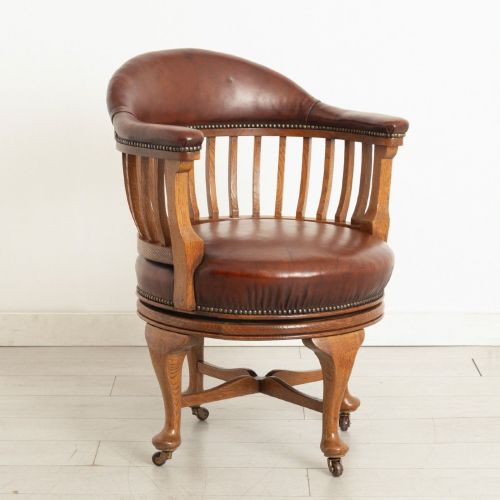
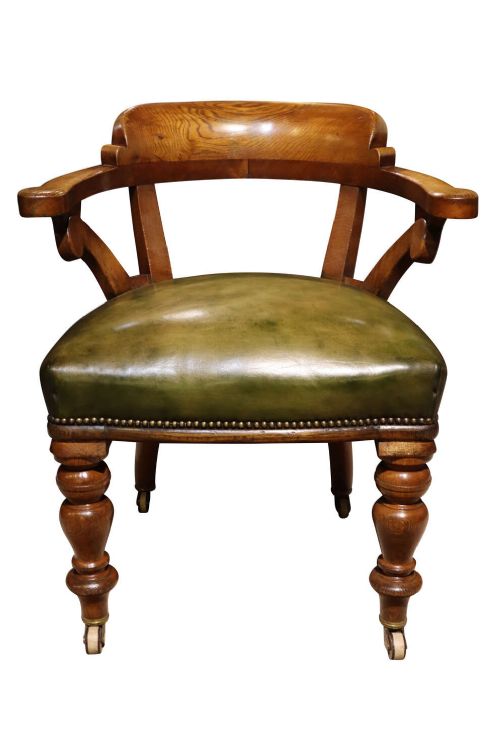
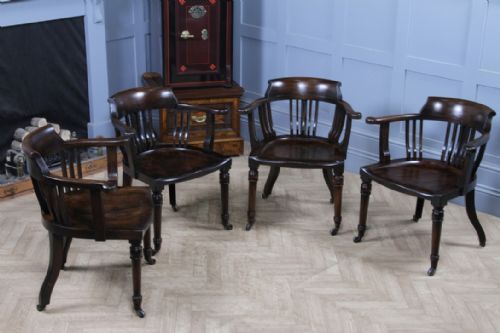
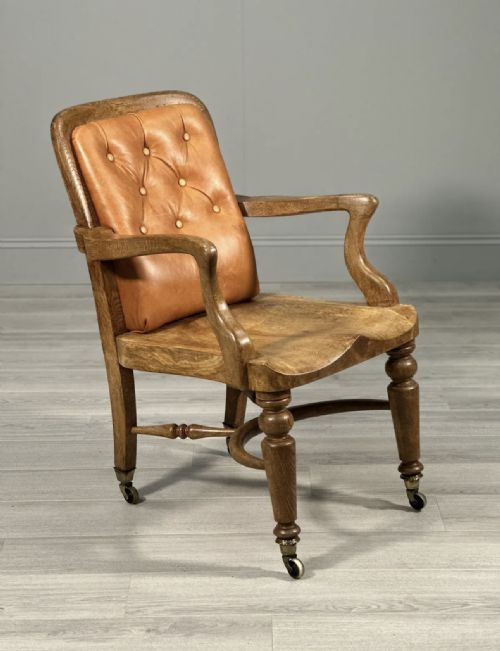
When you search for oak desk chair castors, you find the robust fittings that carry Victorian, Edwardian, and Arts and Crafts seating. The pieces appearing here span swivel library chairs, captains chairs, and revolving office forms.
You are most likely to meet solid oak frames upholstered in leather, supported by metal or brass wheels beneath. These sturdy chairs originate from the nineteenth and early twentieth centuries, reflecting the heavy utilitarian demands of period studies and offices.
How they were made
Makers fashioned these frames from solid oak, sometimes golden or polished, pairing the timber with brass or cast iron wheels to handle daily movement. Leather upholstery appears frequently, secured to the timber seat bases with traditional studwork.
Construction methods range from turned spindles on captains chairs to swivel and revolving mechanisms integrated directly beneath the wooden seats. Craftsmen also employed carving in Gothic Revival and Arts and Crafts styles to ornament the structural woodwork.
Listings feature oak furniture combined with leather, brass, iron, and cane across nineteenth and early twentieth-century periods.
What varies in quality
The distinction between standard commercial seating and finer workshop pieces lies in the articulation of the timber and the robustness of the swivel mechanisms. Heavier golden oak frames with integrated revolving actions and intact leather upholstery sit firmly at the upper end.
The refinement of the carving and the presence of named maker attribution separate ordinary utilitarian workshop output from exceptional examples. Subtleties in the turning of arm supports and the proportion of the wooden frame dictate the overall visual balance.
W.Williamson & Sons·Kendrick & Jefferson
The Oak Desk Chair Castors Glossary
- Castor
- A small wheel mounted on a swivel at the base of a chair leg to allow easy movement across a floor.
- Captains chair
- A rounded wooden armchair with a low back, often featuring spindle rails and a solid timber seat.
- Swivel chair
- A seating form equipped with a central pivot mechanism enabling the top of the chair to rotate.
- Gothic Revival
- A nineteenth-century design style drawing on medieval architectural motifs, pointed arches, and heavy carved woodwork.
- Arts and Crafts
- A movement prioritising traditional handcraftsmanship, simple construction, and honest display of materials.
Oak Desk Chair Castors: Frequently Asked Questions
What periods do these desk chairs come from?
The pieces available range primarily across the nineteenth and early twentieth centuries, covering Victorian and Edwardian eras. You will encounter dates spanning from the mid-nineteenth century up to the nineteen-twenties.
This timeline encompasses the height of traditional office and library furniture production in Britain. Styles shift from heavy Gothic Revival influences toward simpler Arts and Crafts forms as the period progresses.
How were revolving desk chairs used?
These chairs were built for studies, libraries, and offices where workers needed to pivot between desks and surrounding shelving. The swivel and castor combination provided essential mobility before modern wheeled office furniture existed.
Heavy oak frames ensured stability while the user leaned or turned. Leather upholstery offered durability for long hours of administrative work.
Are these chairs suitable for daily use?
Solid oak construction and robust metal or brass mechanisms make these period chairs exceptionally sturdy for everyday seating. Their heavy frames handle routine sitting and movement well.
Buyers should ensure the swivel mechanisms and castors move freely to protect flooring. Leather seats benefit from routine conditioning to maintain the material.
How do I identify a Victorian oak desk chair?
Victorian examples typically feature dense golden oak timber, substantial turned arm supports, and darker leather upholstery. They often incorporate brass or cast iron castors beneath the legs.
Look for traditional joinery and signs of period hand-finishing on the woodwork. Stylistic cues like carved crest rails or turned spindles also point toward nineteenth-century manufacture.