


Oak Coal Purdonium
An oak coal purdonium is a timber fireside container designed to hold fuel neatly beside the hearth, combining practicality with period domestic craftsmanship.

Oak Coal Purdonium
When you search for an oak coal purdonium, you encounter specialised fireside containers built to store solid fuel near the fireplace without scattering dust across the room. These pieces range from upright drop-front cabinets and scuttles to lidded boxes equipped with internal metal liners and matched shovels.
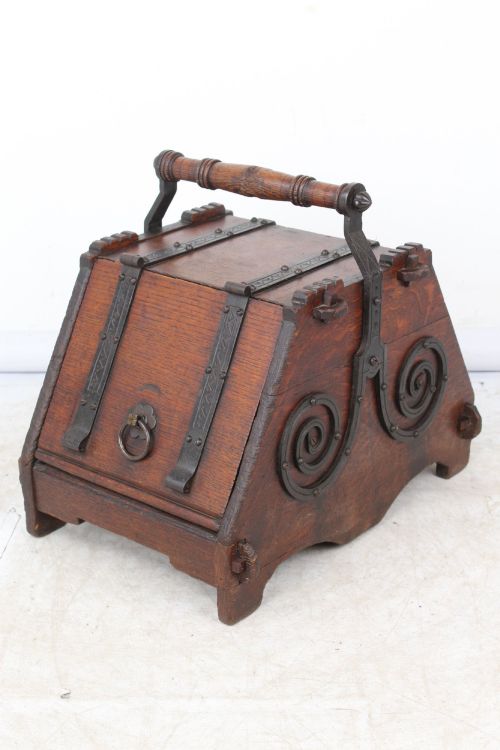
The versions most common on this page date from the Victorian and Edwardian eras, spanning the late nineteenth and early twentieth centuries. Alongside standard domestic designs, you also discover Gothic Revival and Arts and Crafts interpretations featuring carved panels or decorative metalwork.
Materials and construction
Cabinetmakers constructed these pieces primarily from solid oak, occasionally utilising figured pollard oak or incorporating walnut and pine elements. Timber boards were joined to create sturdy rectangular or sloping bodies designed to withstand daily domestic use beside active fires.
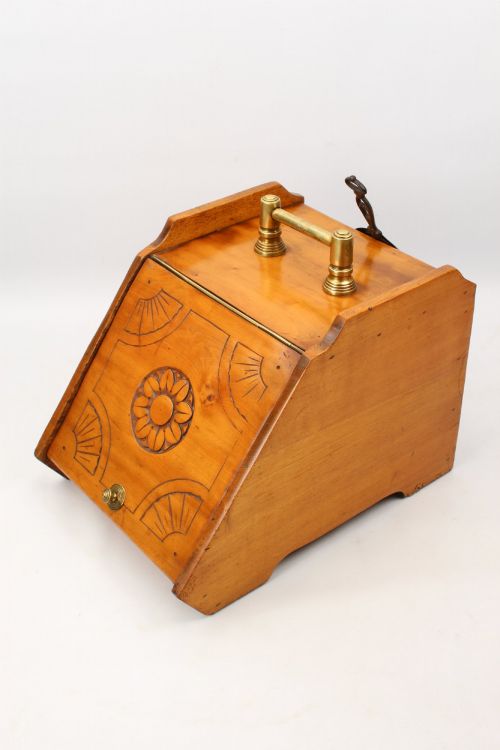
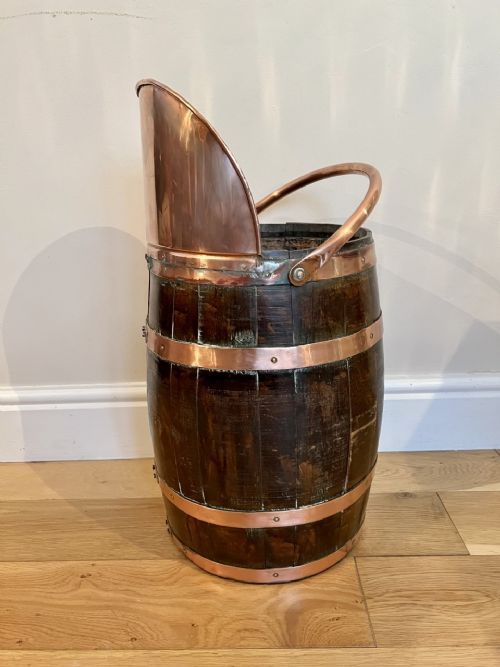
Metal fittings played a central role in both utility and decoration. Makers added brass handles, hinges, copper banding, and wrought iron mounts, alongside removable metal or iron liners to contain coal dust and protect the wood from moisture.
The archive records pieces dating from the eighteenth century through the Edwardian period.
Evaluating craftsmanship and design
Quality in these fireside boxes rests upon the crispness of the timber carving and the structural integrity of the joints. Finer examples display deeply carved panels, such as Gothic tracery or naturalistic motifs, executed directly into solid oak rather than applied as decorative mouldings.
The distinction between standard utility items and superior pieces also shows in the metalwork and internal hardware. Heavy cast brass handles, well-fitted drop fronts, and original metal liners or matching shovels elevate an ordinary coal box into a notable example of period fireside metalwork.
Edwards and Roberts
The Oak Coal Purdonium Glossary
- Drop front
- A hinged panel at the front of a cabinet that tilts forward to open, allowing coal to be scooped out easily. This mechanism distinguishes purdoniums from top-opening chests.
- Inliner
- A removable metal container fitted inside the wooden box to hold the coal. This zinc or iron tray prevents moisture and dirt from damaging the surrounding oak timbers.
- Pollard oak
- Timber taken from trees that have been pollarded, producing wood with a dense, highly figured grain pattern. Cabinetmakers utilised this decorative wood on select purdoniums for visual impact.
Oak Coal Purdonium: Frequently Asked Questions
What is the difference between a coal box and a purdonium?
A coal box is a general term for any lidded container used to hold fuel, whereas a purdonium specifically refers to a more refined cabinet style featuring a sloping drop front designed for the parlour.
While both served the same fundamental domestic purpose beside the Victorian hearth, purdoniums generally incorporated internal metal liners and dedicated compartments for a coal shovel.
How do I use an antique purdonium today?
Many people continue to use these oak containers beside wood-burning stoves or open fireplaces to store logs and kindling. The removable metal inner liner makes it easy to load fuel without harming the antique timber.
Alternatively, pieces converted into small cabinets or storage boxes find new life in hallways and living rooms as discreet places to hold shoes, small accessories, or fireside newspapers.
How can I tell a Victorian purdonium from an Edwardian one?
Victorian examples frequently display heavier proportions and deeper carving, often drawing on Gothic Revival or heavy geometric styles with bold brass mounts. The woodwork tends to be dark and substantial, reflecting mid-to-late nineteenth-century interior tastes.
Edwardian pieces often appear slightly lighter in build, sometimes showing the influence of Art Nouveau or Arts and Crafts movements through gentler carved motifs and brighter copper or brass banding.
Did these pieces always come with a shovel?
Many original purdoniums and coal scuttles were manufactured with a matching shovel stored either in a side compartment or resting inside the drop front. Finding a piece that retains its original metal shovel alongside the internal liner is a notable bonus for collectors.
However, because these items experienced heavy daily use in nineteenth-century homes, shovels were frequently misplaced or replaced over time without diminishing the core utility of the cabinet.