




Oak Church Pulpit
An oak church pulpit carries decades of ecclesiastical history, offering a commanding architectural centrepiece for domestic reading or hospitality spaces.
Oak Church Pulpit
When buyers search for an oak church pulpit, they encounter substantial ecclesiastical furnishings designed for reading scripture or addressing congregations. These pieces range from full architectural pulpits to related lecterns, book stands, reading stands, and podiums adapted for modern settings.
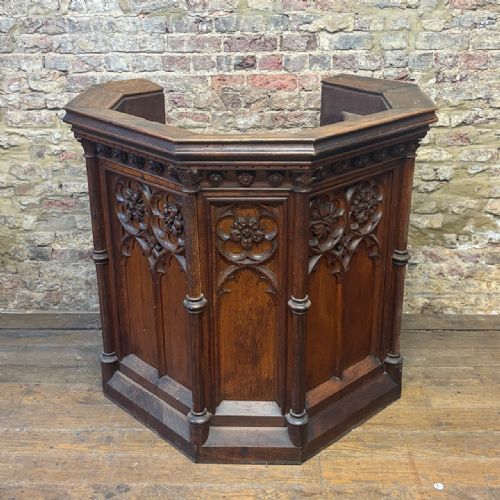
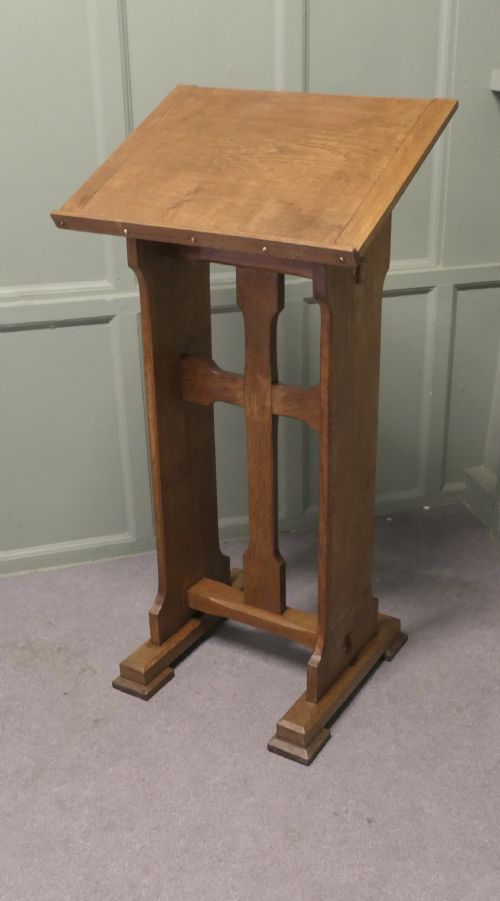
The versions most commonly met on this page date from the nineteenth century through the early twentieth century. Examples span Victorian Gothic Revival styles and simpler Arts and Crafts forms, occasionally appearing repurposed as home bars or restaurant reception greeters.
Materials primarily include solid oak, sometimes supplemented by pine or brass details, reflecting genuine ecclesiastical origins. Forms vary from towering carved structures to compact reading stands designed for floor placement.
Materials and construction methods
Construction relies heavily on sturdy oak timbers, chosen for durability and deep grain patterns suitable for heavy carving. Secondary structural elements sometimes incorporate pine, while brass components add functional hardware and decorative contrast.
Carpenters utilised traditional joinery and relief carving techniques to decorate surfaces with Gothic Revival motifs. The resulting pieces demonstrate robust nineteenth-century workshop practices intended to withstand continuous use in institutional environments.
Oak Church Pulpit Retail Price Guide 2026
Typical asking prices for oak church pulpit among the pieces listed under this phrase on Sellingantiques today, from the lower quarter to the upper quarter. They describe what is for sale here now, not the wider market.
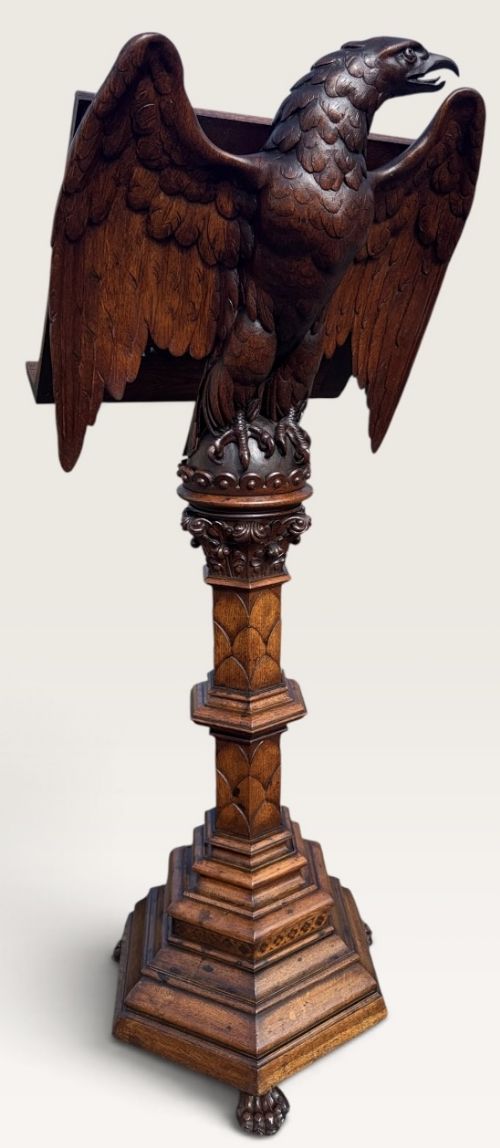
Several heavy oak lecterns feature carved wooden eagles poised to support massive sermon books upon their outstretched wings.
Assessing quality and craftsmanship
Quality in these ecclesiastical pieces rests upon the depth, sharpness, and ambition of the hand carving. Finer examples feature intricate sculptural work, such as detailed figures like eagles, whereas simpler items rely on plain chamfered edges and standard mouldings.
The integrity of the timber selection also marks the grade of the piece, with dense golden oak and well-seasoned boards representing the superior end of the range. Alterations or conversions from church interiors to domestic furniture can influence the overall architectural coherence.
The Oak Church Pulpit Glossary
- Gothic Revival
- An architectural and decorative style drawing inspiration from medieval forms. It dominates nineteenth-century ecclesiastical furniture with pointed arches and rich tracery.
- Lectern
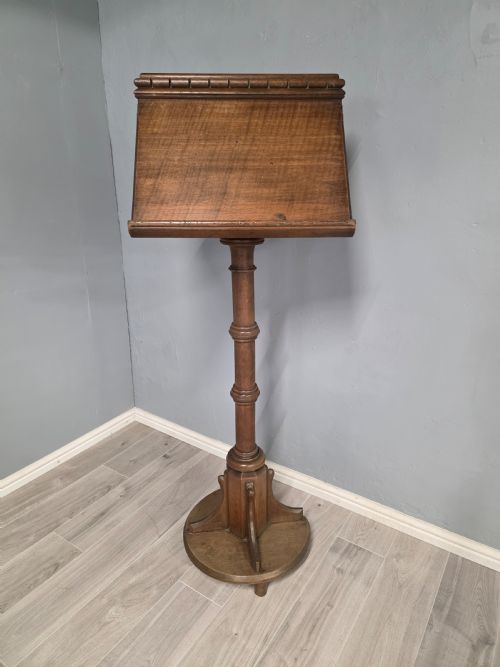
- A tall stand with a sloping bookrest for holding a Bible, notes, or books while standing. These share close construction methods with full pulpits.
- Arts and Crafts
- A design movement valuing traditional craftsmanship and simple forms. Objects from this style emphasise the natural grain of golden oak over heavy ornamentation.
- Ecclesiastical
- Relating to the Christian Church or its clergy. This term describes items originally manufactured for use within parish churches and chapels.
Oak Church Pulpit: Frequently Asked Questions
What is an oak church pulpit?
An oak church pulpit is a raised, enclosed platform or freestanding stand historically used by clergy for preaching. They are constructed from durable hardwoods and often decorated with traditional ecclesiastical carvings.
Today, buyers repurpose these architectural pieces as dramatic reading stands, music holders, or unique furniture for home bars and reception spaces.
How do I date an oak pulpit?
Dating relies on stylistic markers, construction methods, and material choices recorded across the nineteenth and early twentieth centuries. Victorian pieces frequently display Gothic Revival ornamentation.
Later items from the 1900s often reflect simpler Arts and Crafts influences with cleaner lines and exposed joinery.
Are these pieces suitable for homes?
Many items designed for ecclesiastical settings adapt well to larger domestic interiors, libraries, or studies. Freestanding lecterns and reading stands require minimal floor space compared to full architectural pulpits.
Some examples are even repurposed as restaurant greeter podiums or home bars, blending historical presence with modern utility.
What woods were used?
Oak serves as the primary material for these ecclesiastical furnishings, providing structural strength and a handsome surface for carving. Secondary woods like pine sometimes appear in concealed internal framework.
Brass is also utilised for attached reading mounts, hinges, and decorative accents that complement the dark or golden timber tones.