



Oak Brass Barograph
An oak brass barograph records atmospheric pressure on paper charts beneath bevelled glass, combining precision meteorology with handsome cabinetmaking.
Oak Brass Barograph
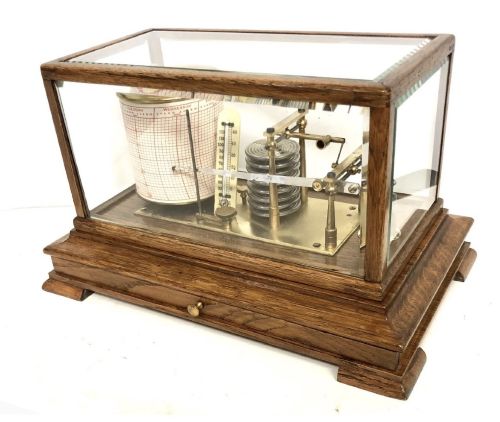
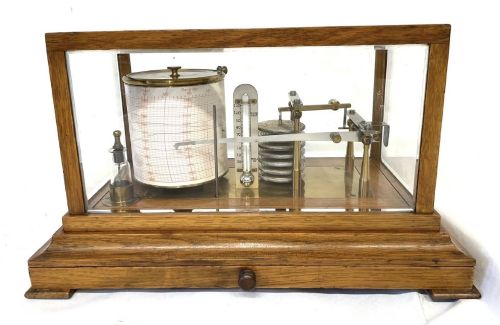
An oak brass barograph is a recording weather instrument housed within a timber case featuring glazed panels and mechanical brass movements. When you examine an oak brass barograph on this page, you encounter scientific instruments spanning the Victorian, Edwardian, and mid-twentieth-century periods.
Maker-signed examples from notable scientific instrument firms appear alongside unsigned domestic weather stations. These recording barometers served practical functions in country houses and offices, leaving a legacy of mechanical ingenuity and decorative timber cases.
Materials and construction
Makers constructed these weather instruments using solid oak and quarter-sawn veneers for the housing, often adding bevelled glass panels to the five-glass cases. Brass forms the mechanical chassis, recording arms, and vacuum capsules, while steel contributes to the spring-driven clockwork clock drums.
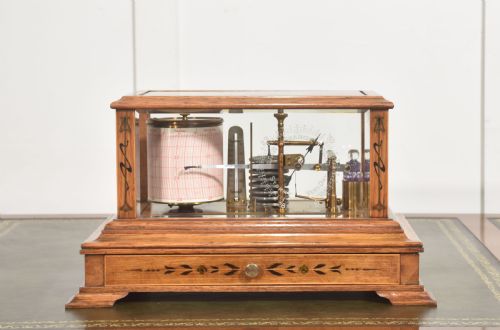
Paper charts receive the ink trace driven by the expansion and contraction of evacuated metal bellows inside the brass mechanism. Certain pieces display decorative inlay work in the Art Nouveau taste, contrasting dark or light oak bodies with subtle metal detailing.
Oak Brass Barograph Retail Price Guide 2026
Typical asking prices for oak brass barograph among the pieces listed under this phrase on Sellingantiques today, from the lower quarter to the upper quarter. They describe what is for sale here now, not the wider market.
Materials recorded across these scientific instruments include solid oak, brass, bevelled glass, steel clockwork, and paper recording charts.
Judging quality and execution
The distinction between standard commercial pieces and superior items rests in the reputation of the maker and the refinement of the cabinetwork. Recorded signatures from established makers elevate an instrument beyond anonymous workshop production.
Short & Mason·Negretti & Zambra·Hezzanith·Jules Richard·Dobbie son and Hutton London·BAINES HARROGATE
The Oak Brass Barograph Glossary
- Barograph
- A self-recording barometer that plots atmospheric pressure onto a revolving paper chart over a weekly period. It relies on aneroid metal chambers connected to an inked pen arm.
- Aneroid
- Containing no liquid, operating instead through the movement of flexible metal vacuum capsules that respond to barometric pressure changes.
- Bevelled glass
- Glass panes featuring an angled, polished edge fitted into the cabinet sides to enhance light transmission and visual depth.
- Chart drawer
- A shallow compartment built into the base of the wooden case specifically designed to store spare weekly recording papers and spare ink bottles.
- Clock drum
- The rotating brass cylinder housing a spring-driven clock movement that turns the recording chart through one full rotation per week.
Oak Brass Barograph: Frequently Asked Questions
How does a barograph work?
A barograph operates through sealed metal bellows that expand or contract as air pressure rises and falls. This mechanical movement transfers directly to a pivoted arm holding an ink nib, which traces the shifting pressure onto a rotating paper cylinder.
The revolving cylinder contains a clockwork mechanism that completes one full turn every seven days. This continuous line creates a permanent weekly record of meteorological conditions inside the oak and glass case.
How do I change the chart paper?
Changing the chart requires opening the glass case lid, lifting the pen arm gently off the drum using the small lever, and sliding the old paper off the brass cylinder. A fresh weekly chart wraps around the drum and secures along the overlapping seam.
After securing the new paper, replenish the nib with specialised recording ink if necessary and lower the pen gently back onto the grid lines. Ensure the clock drum is wound fully using its attached key before closing the case.
Where should I place a barograph at home?
Position your barograph on a stable, level surface away from direct sunlight, radiators, and exterior doors. Consistent indoor temperatures prevent thermal interference with the sensitive aneroid metal capsules inside the mechanism.
A study, hallway, or living room sideboard makes an ideal location where family members can observe the daily pressure trends. Avoid areas subject to heavy vibrations from slamming doors, as these disturbances travel directly into the recording arm.
How do I date an oak barograph?
Dating relies on examining the cabinet style, the maker's signature, and manufacturing details within the brass movement. Edwardian and nineteen-tens examples often display lighter oak tones and subtle Art Nouveau aesthetic influences, while Victorian pieces tend towards heavier, darker timber mouldings.
Signatures from firms like Short & Mason or Negretti & Zambra help narrow production windows when matched against known operational periods. Patents or retailer stamps inside the chart drawer provide further chronological markers for these scientific instruments.