


Oak Box Stool
An oak box stool combines sturdy utility with hidden storage, serving as a practical seat and a discreet receptacle for domestic items.
Oak Box Stool
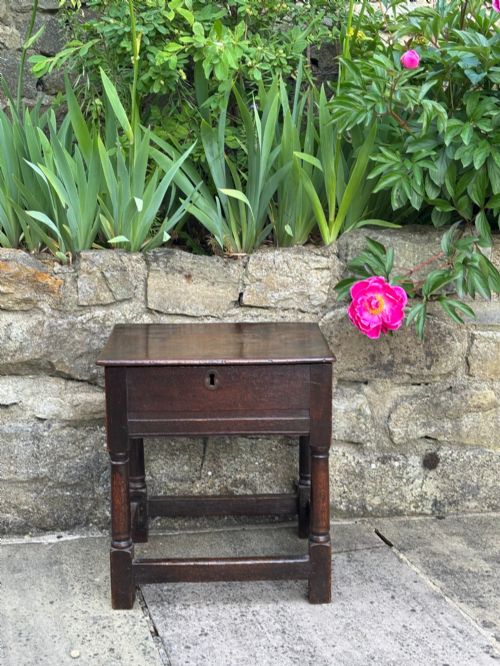
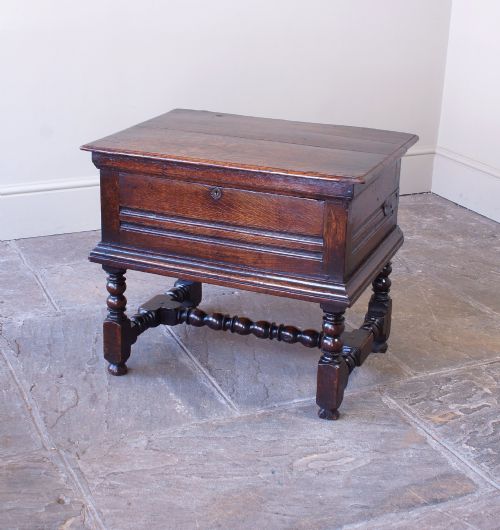
An oak box stool is a multifunctional seating form featuring a lidded compartment beneath the seat for storing household goods, linens, or personal items. When you search for this phrase, you encounter pieces spanning from the seventeenth century through the Georgian era, alongside later revival interpretations from the Victorian period and the twentieth century.
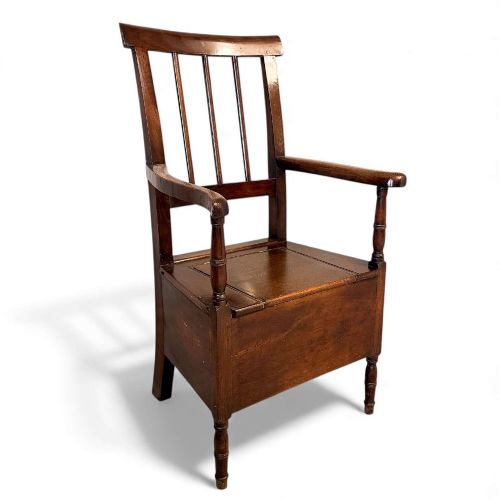
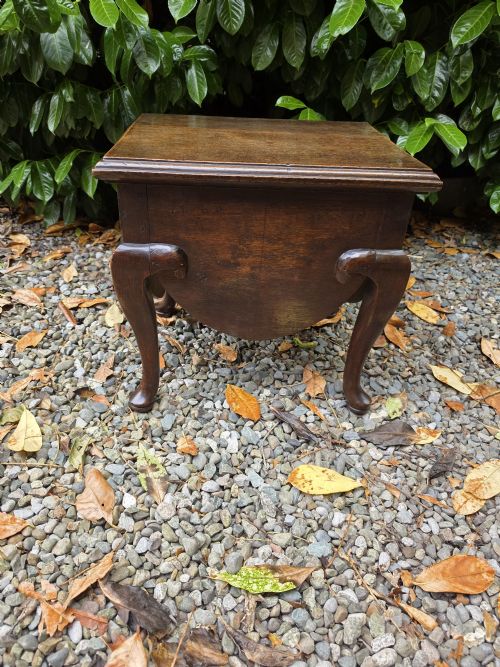
The most common examples on this page date from the seventeenth and eighteenth centuries, often displaying regional British craftsmanship. Forms range from simple jointed construction with hinged lids to more refined specimens standing on cabriole legs or incorporating commode elements.
Makers historically produced these sturdy items for domestic use in bedchambers and living spaces. Surviving pieces frequently show adaptations over generations, reflecting changes in household routines and interior requirements.
Materials and construction
Carpenters built these sturdy pieces primarily using native English oak, sometimes combining secondary woods like elm or walnut in internal framing or secondary panels. Boards were joined using traditional mortise and tenon joints secured with wooden pegs.
Hardware such as iron or brass hinges and latches appears on lids, though many early examples rely on wooden pivots or replacement fittings added during later repairs. Surfaces received hand-carved ornamentation, panel moulding, or simple wax finishes that highlighted the natural grain of the timber.
Many an antique box stool secretly moonlighted as a laundry basket or a toddler's time-out corner.
Assessing quality and authenticity
Quality in an oak box stool rests upon the integrity of its original timber and the crispness of any carved decoration. Superior examples retain their original board lids, internal compartments, and structural framing without excessive timber replacement.
The sophistication of the joinery and leg form distinguishes standard utilitarian versions from finer pieces commissioned for prosperous households. Later revival interpretations from the nineteenth and twentieth centuries display different tool marks and fresher timber patination compared to seventeenth-century originals.
St Dunstan s
The Oak Box Stool Glossary
- Joint stool
- A sturdy wooden stool constructed with mortise and tenon joints rather than turned legs inserted into a seat. These pieces provided robust daily seating in early households.
- Close stool
- A box stool fitted with an internal chamber pot and often featuring a pierced seat or hinged top for sanitary use. These functional items were essential bedroom furniture before modern plumbing.
- Commode chair
- An upholstered or wooden armchair enclosing a commode pot within a boxed seat base. They combine comfortable arm support with concealed sanitary utility.
- Cabriole leg
- A furniture leg that curves outward in a convex shape at the top and tapers inward in a concave shape toward the foot. This graceful form became popular during the early Georgian period.
- Mortise and tenon
- A traditional woodworking joint where a projecting tongue fits tightly into a corresponding cavity. This method creates strong, durable connections without relying heavily on metal fasteners.
Oak Box Stool: Frequently Asked Questions
What is an oak box stool?
An oak box stool is a traditional seat featuring a hollow compartment beneath the top panel for storage. These versatile pieces served multiple functions in historic domestic interiors.
Craftsmen built them to withstand heavy daily use while keeping personal belongings hidden away inside the frame.
How were box stools used historically?
Historic households utilised these items for seating by the hearth or beside the bed while storing linens, documents, or valuables inside. Some variants functioned as close stools for sanitary purposes in private chambers.
Their dual purpose made them essential furnishings in modest homes and larger estates alike.
How do I tell an early stool from a revival piece?
Early seventeenth and eighteenth-century pieces display hand-carving, timber shrinkage, and wear patterns consistent with centuries of use. Revival versions from the Victorian era or twentieth century often show machine tool marks and different finishing techniques.
Examining the construction methods inside the storage compartment helps reveal the true age of the timber.
How do I care for antique oak furniture?
Maintain these wooden pieces by keeping them away from direct heat sources and sudden humidity changes. Regular application of a traditional beeswax polish nourishes the dry timber and preserves the surface patina.
Avoid using modern liquid silicones that can penetrate open-grain oak and alter the historic finish.