



Oak Bergere Armchair
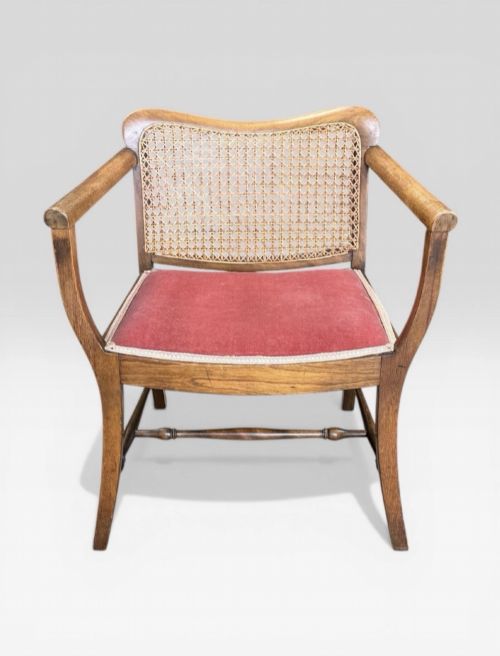
An oak bergere armchair combines sturdy timber framing with woven cane panels for a seat that is both supportive and resilient.
Oak Bergere Armchair
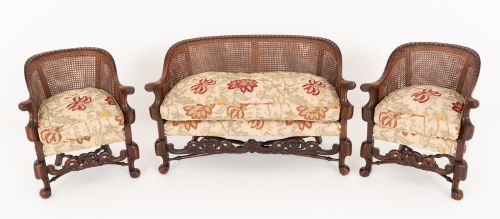
An oak bergere armchair offers a solid timber framework paired with woven cane work across the back and sometimes the sides. These pieces range from compact library chairs to generous fireside seating, often appearing alongside related forms such as desk chairs and full seating suites.
Most examples found here date from the nineteenth and early twentieth centuries, spanning periods from Victorian and Edwardian eras through to Art Deco designs. Revival styles like Jacobean, Carolean and various French influences appear frequently in the framing and carving details.
The form adapts well to domestic spaces, functioning as a reading chair, a fireside seat or a desk chair. Many retain their original proportions while incorporating loose squab cushions upholstered in fabric, leather, velvet or tapestry.
How they were made
Makers built the structural frames from solid oak, sometimes supplemented by beech or other hardwoods for internal components. Joinery involved traditional methods like mortise and tenon joints, often supported by turned block supports and carved stretchers.
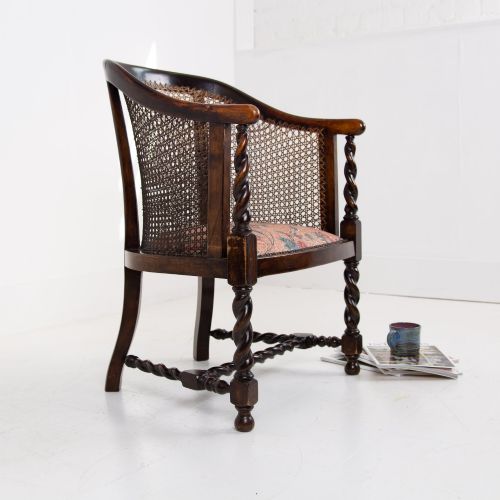
The characteristic bergere element relies on rattan cane woven tightly through holes drilled into the frame channels. Double caning appears on finer iterations, creating a finished appearance on both the interior and exterior faces of the backrest.
Oak Bergere Armchair Retail Price Guide 2026
Typical asking prices for oak bergere armchair among the pieces listed under this phrase on Sellingantiques today, from the lower quarter to the upper quarter. They describe what is for sale here now, not the wider market.
The archive records bergere seating in multiple configurations, including swivel desk chairs, low fireside models and matching parlour suites.
What varies in quality
The crispness of the timber carving and the weight of the oak frame distinguish standard production from superior craftsmanship. Finer pieces display deeply undercut foliage, barley twist turnings or precise proportions that balance the openness of the cane work.
The tightness and regularity of the cane weave indicate the standard of original construction and subsequent restoration. Premium examples feature uniform tension across curved backs and arms without sagging or broken strands.
James Shoolbred·Charles Bevan·James Lamb
The Oak Bergere Armchair Glossary
- Bergere
- An enclosed upholstered armchair with wooden framing and cane panels. This French seating form gained popularity in Britain during various revival periods.
- Cane
- Strips of rattan peeled and woven into open patterns. It provides a flexible yet durable support for the back and sides.
- Carolean Style
- A British furniture style spanning the late seventeenth century, characterised by rich carving and scrolling ornamentation. Later revival pieces emulate these motifs.
- Double Caned
- Cane work applied to both the inside and outside faces of a chair back. This conceals the raw ends and presents a finished look from every angle.
- Barley Twist
- A turned wood decoration resembling a spiral rope. It appears frequently on the legs and supports of nineteenth century seating.
Oak Bergere Armchair: Frequently Asked Questions
How do I care for cane panels?
Keep the woven cane hydrated by wiping it occasionally with a damp cloth to prevent the natural fibres from becoming brittle.
Avoid placing these chairs directly next to intense heat sources or radiators that dry out the rattan over time.
Are these chairs comfortable without cushions?
The curved wooden frame and tensioned cane back provide ergonomic support for upright sitting.
Most examples include a removable squab cushion filled with hair, down or modern padding to ensure long term comfort.
How do I date an oak bergere chair?
Examine the timber colour, tool marks on the frame construction and the style of any carved ornamentation.
Nineteenth century pieces often show darker patination and heavier turned supports, whereas Edwardian and Art Deco iterations display lighter oak tones and streamlined framing.
Can damaged cane be repaired?
Skilled craftspeople can re-weave broken sections of cane by threading new rattan through the existing holes in the frame.
Professional restoration preserves the structural integrity of the original oak framework while renewing the seating surface.