

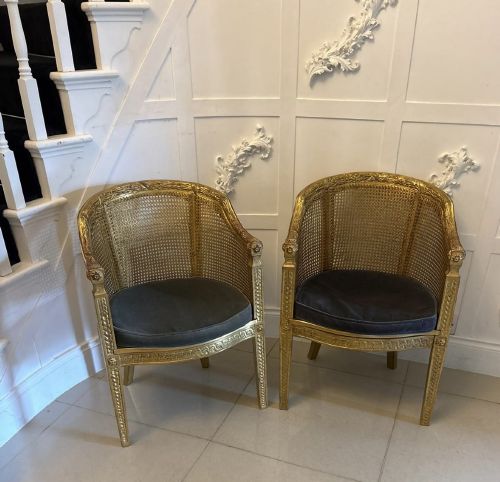
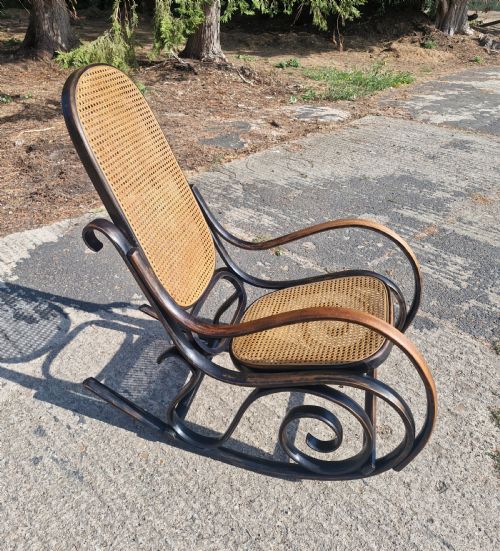
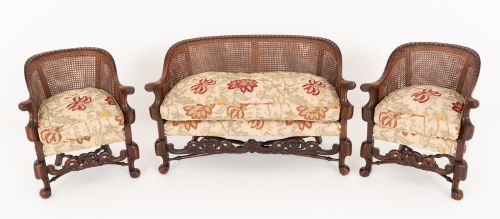


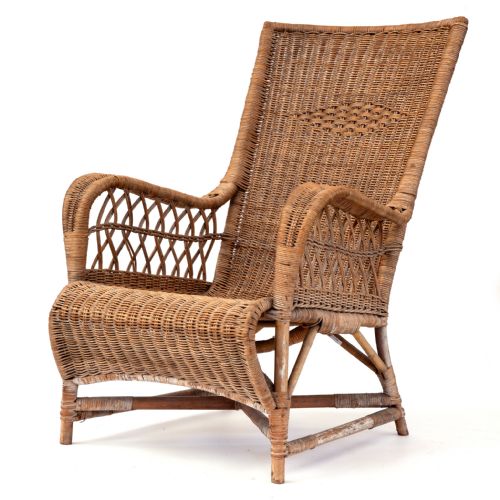


Cane Back Lounge Chair
These cane back lounge chair pieces offer deep comfort and period character, bringing tactile natural weaving into the room.
Cane Back Lounge Chair
A cane back lounge chair brings together structured timber frames and woven natural seating surfaces for relaxed daily sitting. The selection spans armchairs, rocking chairs, and seating suites designed for domestic comfort across various historic periods.
Buyers meet examples ranging from Victorian and Edwardian iterations to pieces carrying Jacobean Revival, Carolean, French Louis XVI, Regency, Arts and Crafts, and English Country styles. Frames take the form of bergere armchairs, reclining plantation chairs, fireside seating, and bentwood rocking chairs.
Origins stretch from English workshops to French salons, colonial outposts, and Anglo-Indian contexts. Oak, mahogany, walnut, teak, and giltwood provide the structural support for woven cane, rattan, and woven cane inserts.
How they were made
Maker construction relies on sturdy hardwood frames shaped in oak, mahogany, walnut, teak, and giltwood. Artisans join these timbers using traditional joinery to support the weight and movement inherent in lounge seating.
The characteristic backrests and seats utilise natural cane, rattan, and woven cane materials threaded meticulously through frame drillings. Upholstery integration often includes fabric and velvet cushions paired with open arm structures.
Cane Back Lounge Chair Retail Price Guide 2026
Typical asking prices for cane back lounge chair among the pieces listed under this phrase on Sellingantiques today, from the lower quarter to the upper quarter. They describe what is for sale here now, not the wider market.
The selection includes oak, mahogany, walnut, and teak frameworks paired with cane, rattan, and velvet materials.
What varies in quality
The grade of timber framing dictates the foundational stability of each seat, distinguishing simple utilitarian construction from refined cabinetmaking. Finer examples display crisply carved woodwork in mahogany, oak, or giltwood that holds its structural integrity firmly over decades.
The tightness and regularity of the cane or rattan weaving dictate the tactile finish of the backrest. Skilled hand-weaving maintains consistent tension across the grid, whereas simpler work shows uneven spacing and loose strands.
The Cane Back Lounge Chair Glossary
- Cane
- Material peeled from the outer bark of rattan palms and woven into a mesh. It provides a flexible, breathable surface for chair backs and seats.
- Bentwood
- Wood steamed and bent into curved structural forms. This technique creates fluid, continuous lines without traditional joinery.
- Plantation chair
- A deep lounge seat featuring extended adjustable arms for resting legs. It originates from colonial contexts where climate demands airflow.
Cane Back Lounge Chair: Frequently Asked Questions
How do I clean cane backs?
Dust cane gently using a soft brush to remove debris trapped within the woven mesh. Dampen the cane occasionally with a sponge to maintain moisture and prevent snapping.
Avoid harsh chemical cleaners that dry out the natural fibres over time. Keep the chair away from direct heat sources to preserve the elasticity of the weave.
Can I replace damaged cane?
Skilled restorers can re-weave damaged sections of cane using traditional hand-caning techniques. This process involves threading new cane strands through pre-drilled holes in the frame.
Matched repairs retain the historic integrity and aesthetic balance of the seating. Professional intervention ensures the tension matches the original remaining sections.
Are these chairs comfortable?
These lounge seats combine angled backrests with flexible woven cane to support the body naturally. Many examples include fitted fabric or velvet cushions for extra padding.
Deep proportions and reclining mechanisms in specific variants encourage extended relaxation. The breathable woven panels adapt to body contours during prolonged sitting.
How do I date these pieces?
Dating relies on identifying stylistic markers such as Jacobean Revival carvings or French Louis XVI framing details. Timber choice and construction methods also point towards specific decades like the Edwardian era or the nineteen-twenties.
Consulting recorded design shifts helps narrow down the origin period of unlabelled workshop pieces. Comparing turnery styles and upholstery formats provides further chronological clues.