
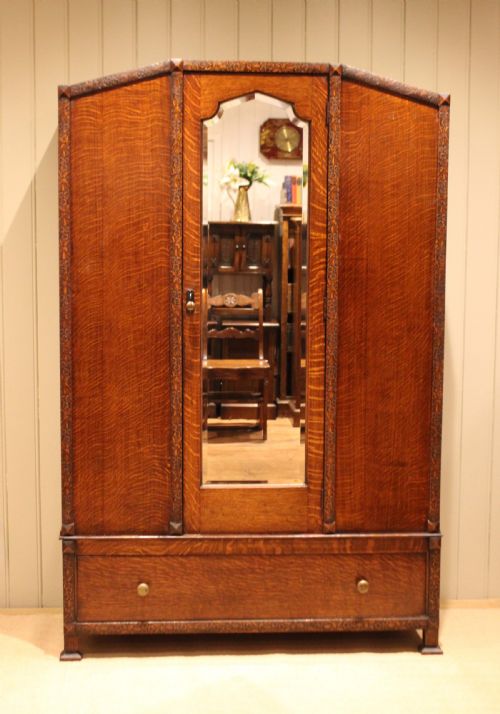


Oak Bedroom Clothes Press
An oak bedroom clothes press brings solid timber and enduring storage to a room, offering deep drawers and hanging space built to last.
Oak Bedroom Clothes Press
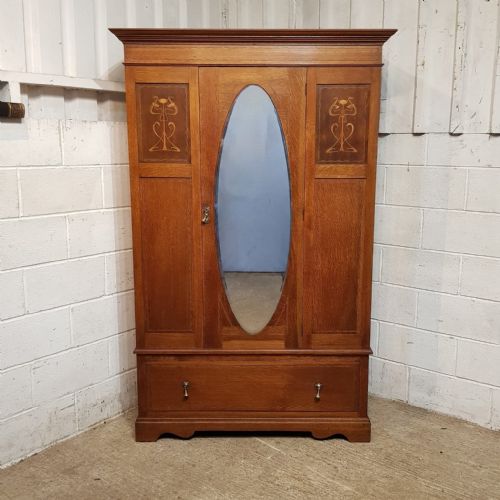
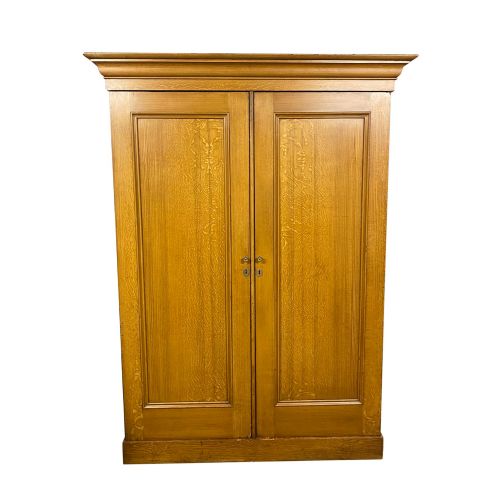
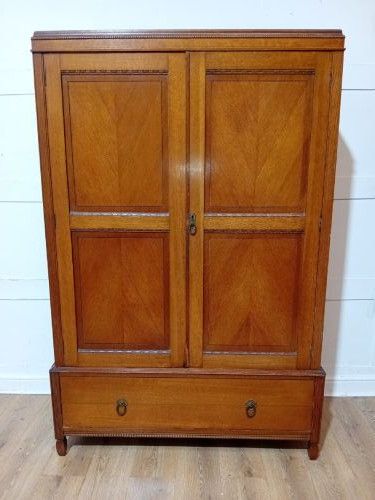
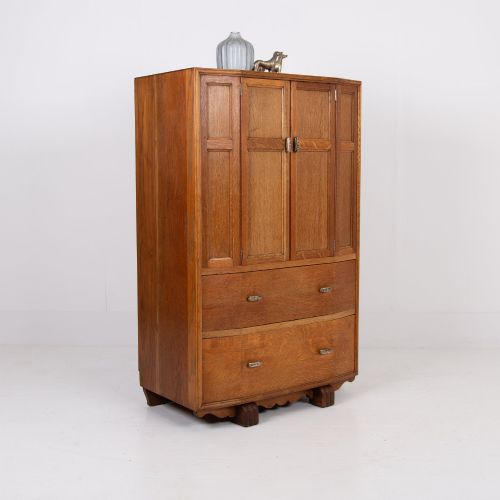
An oak bedroom clothes press is a substantial piece of furniture designed for storing garments and linens, spanning wardrobes, compactums, tallboys, and traditional linen presses. These items appear primarily across the Georgian, Victorian, Edwardian, and early twentieth-century periods, reflecting shifting domestic needs over generations.
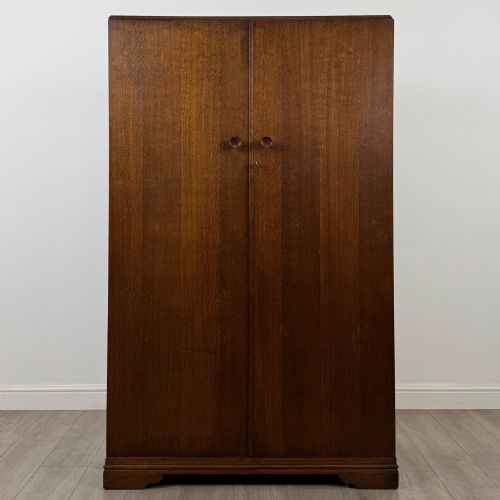
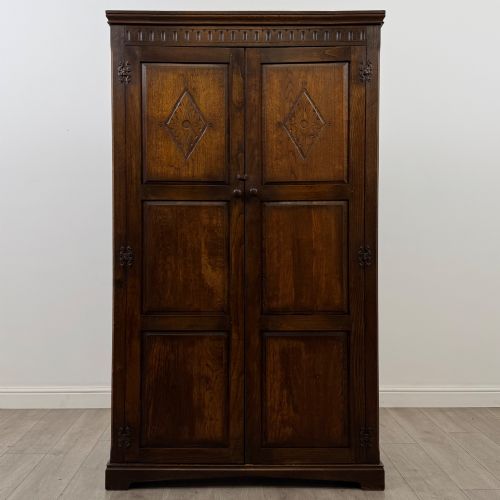
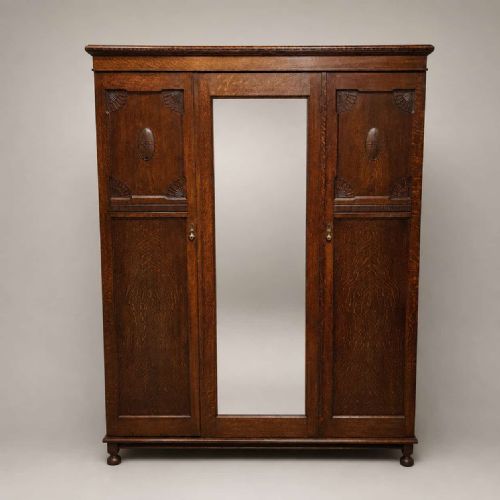
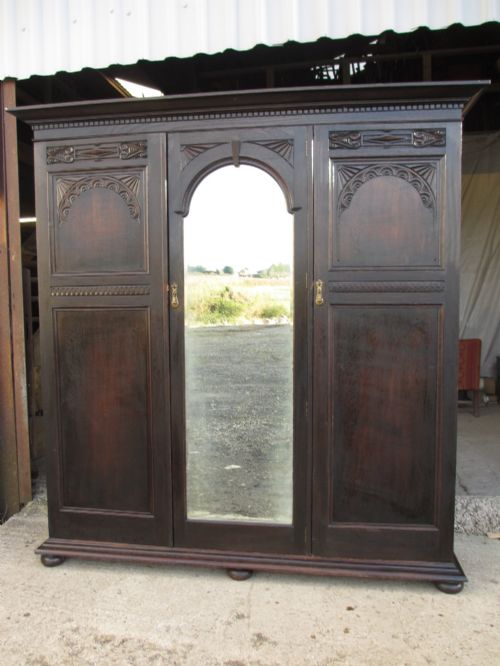
The pieces on this page range from grand triple wardrobes and carved armoires to practical compactums and gentleman's wardrobes. Buyers most frequently encounter Edwardian and early twentieth-century examples alongside earlier Georgian press cupboards in solid timber.
Makers and regional styles vary from local workshops to prominent firms, incorporating influences such as Arts and Crafts, Art Deco, Jacobean Revival, and French Provincial design. Each form provides a specific internal arrangement, whether sliding trays for linen, hanging rails, or multiple drawers.
Evaluating quality
Quality rests upon the selection of timber, the precision of the joinery, and the integrity of the original hardware and glass. Pieces constructed from solid oak with well-fitted panels and substantial internal framing stand apart from simpler iterations.
Design ambition and execution define the upper tier, particularly in items featuring skilled hand-carving, well-proportioned cornices, and integrated mirror doors. The presence of documented workshop attribution or distinctive regional vernacular details elevates the standing of an individual piece.
Some Edwardian wardrobes hide unexpected mirror doors that swing open to reveal morning light bouncing across the bedroom floor.
Harris Lebus·Maple Co
The Oak Bedroom Clothes Press Glossary
- Compactum
- A multi-functional wardrobe combining hanging space, drawers, and shelving within a single unified carcass. This format became particularly popular during the late nineteenth and early twentieth centuries.
- Linen press
- A piece of furniture featuring enclosed shelving or sliding trays in the upper section for folded textiles, paired with a chest of drawers below. Georgian and nineteenth-century examples often use deep panelled doors to conceal the interior slides.
- Tallboy
- A tall storage unit comprising multiple stacked drawers or a cabinet placed upon a chest base. It offers vertical capacity while occupying a minimal floor footprint.
- Scumble paint
- A decorative surface finish applied to mimic the grain and appearance of finer timbers like oak. It appears on nineteenth-century pieces where secondary woods were transformed visually.
- Arts and Crafts
- A design movement prioritising visible construction, simple forms, and traditional craftsmanship over mass-produced ornamentation. Pieces from this tradition often display hand-beaten metalwork and unadorned timber surfaces.
Oak Bedroom Clothes Press: Frequently Asked Questions
What is the difference between a wardrobe and a clothes press?
A wardrobe is primarily designed for hanging garments on rails or hooks within a vertical compartment. A clothes press traditionally combines hanging space with internal sliding trays or shelves specifically meant for folded linens and textiles.
While the terms often overlap in nineteenth and twentieth-century listings, traditional press cupboards place equal emphasis on shelf storage and drawer capacity.
How do I fit a large oak wardrobe into a modern bedroom?
Many period wardrobes and compactums were constructed in modular sections with removable cornices, plinths, and panelled sides to allow for transport up staircases. Measuring ceiling height and doorway clearance before delivery is essential.
Enlisting professional handlers ensures that heavy oak components and original mirrored doors are safely assembled in place.
How can I tell an Edwardian oak wardrobe from a Georgian one?
Georgian linen presses typically feature warm golden oak, classical proportions, fielded panels, and hand-cut dovetails on internal drawer trays. They often separate into a upper cupboard and a lower chest base.
Edwardian wardrobes frequently incorporate bevelled mirror doors, crown cornices, and stylistic influences from the Arts and Crafts movement or Jacobean Revival in their carved ornamentation.
How should I care for antique oak furniture?
Keep oak furniture away from direct heat sources and dramatic humidity shifts to prevent the timber from splitting or warping. Dust regularly with a dry cloth and apply a quality beeswax polish sparingly to maintain the finish.
Avoid commercial silicone sprays, which build up on the wood surface and dull the natural grain over time.