

Oak and Elm Dining Chairs
Oak and elm dining chairs bring robust vernacular comfort to the table, uniting sturdy timber frames with shaped seats built for daily use.
Oak and Elm Dining Chairs
When searching for oak and elm dining chairs, buyers encounter sturdy seating rooted in English country traditions. The selection spans the eighteenth century through to the early twentieth century, taking in Georgian, Victorian, and later vernacular styles.
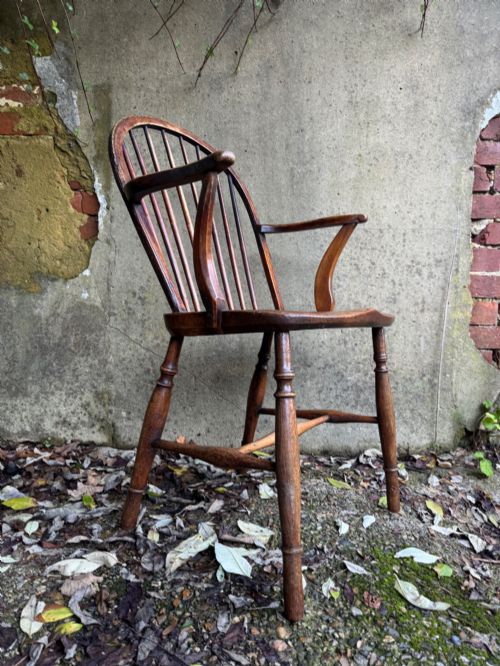
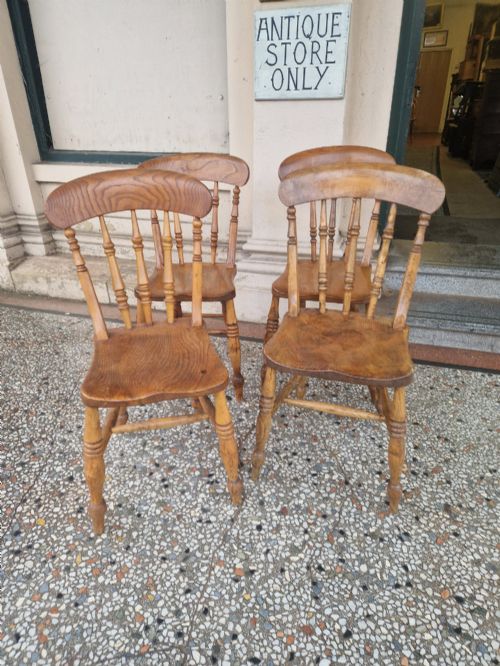
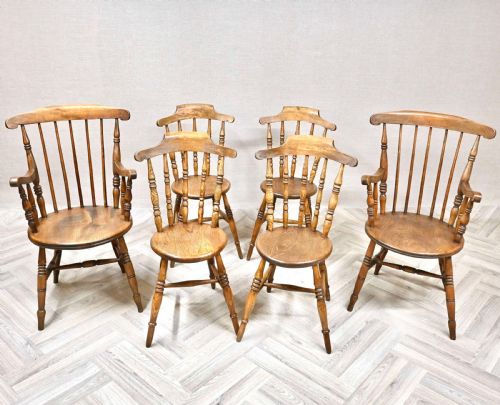
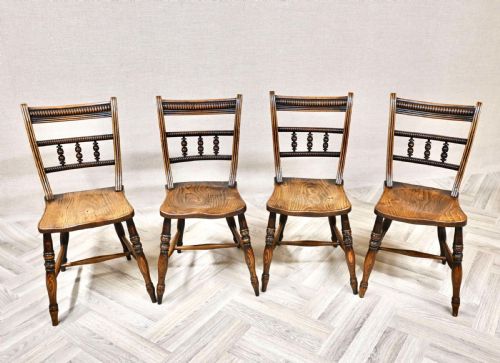
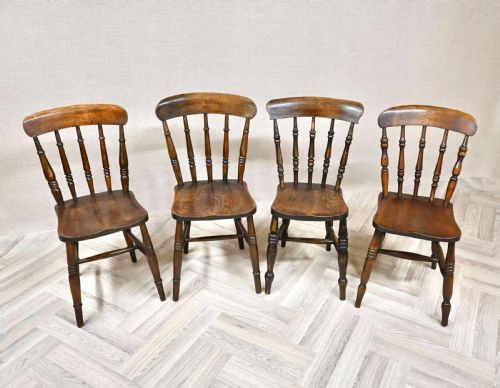
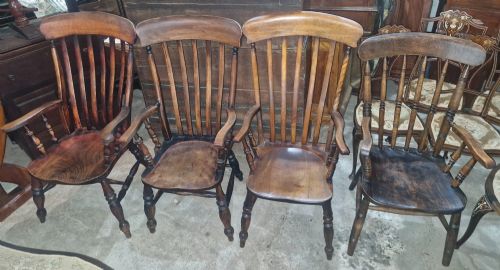
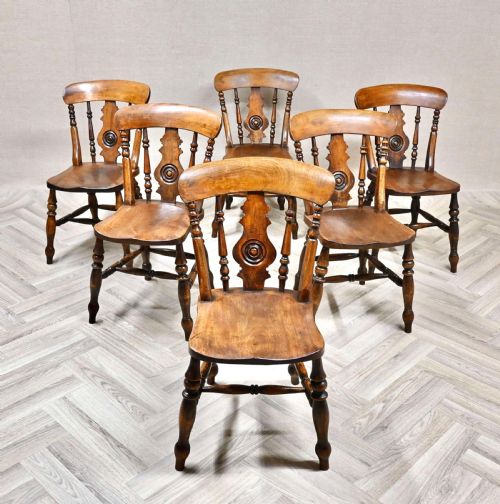
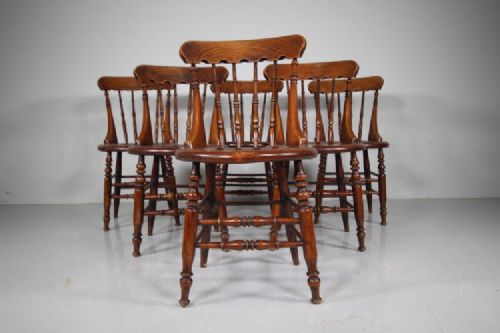
The most common form met here is the Windsor chair, appearing as kitchen chairs, armchairs, and side chairs. These pieces often arrive in sets of four or six, alongside pairs and individual carvers.
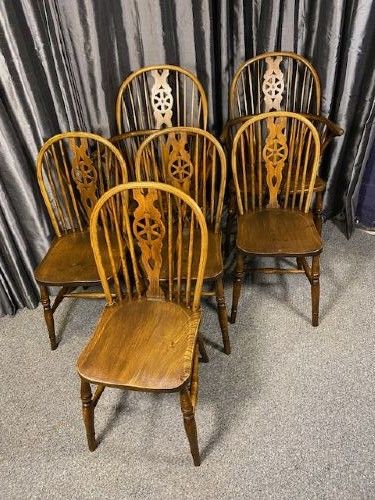
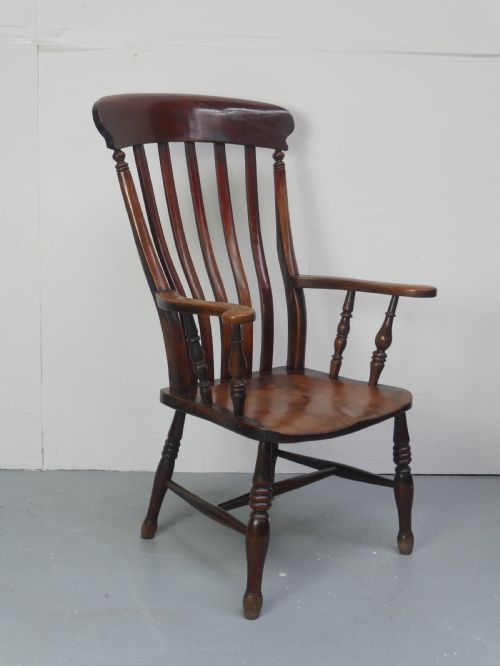
Design variations include lathback, wheelback, comb back, and smokers bow configurations. Regional identities also emerge, notably through Thames Valley examples and Worksop pieces.
Materials and Construction
Makers utilised a combination of native timbers, pairing elm for sculpted seats with oak, beech, ash, and yew for the framework. This multi-wood construction exploited the specific properties of each tree, using flexible woods for bent bows and durable hardwoods for legs and spindles.
Seats were frequently saddled or shaped from a single solid block of elm, sometimes referred to as penny seats. Spindles, legs, and stretchers were turned on lathes and wedged into bored holes to create rigid, resilient joints without metal fixings.
Oak and Elm Dining Chairs Retail Price Guide 2026
Typical asking prices for oak and elm dining chairs among the pieces listed under this phrase on Sellingantiques today, from the lower quarter to the upper quarter. They describe what is for sale here now, not the wider market.
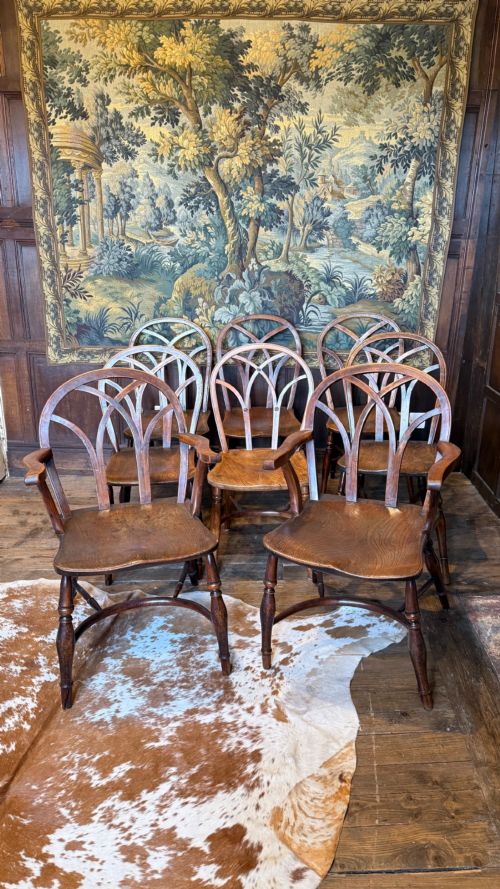
The inventory spans the eighteenth, nineteenth, and early twentieth centuries, with styles ranging from Gothic Revival to rural vernacular.
Evaluating the Build
Quality rests in the harmony of the timber selection and the crispness of the turning. Better examples display rich, deep patination on the elm seats and well-balanced proportions in the steam-bent back bows.
The integrity of the construction dictates the tier of the piece, particularly where legs meet the underside of the seat. Superior chairs retain matching turnings across a set and avoid excessive replacement parts in the spindles and stretchers.
Worksop Allsop
The Oak and Elm Dining Chairs Glossary
- Windsor chair
- A wooden chair built with a solid sculpted seat into which the legs and back spindles are directly inserted. This design creates a robust, frame-independent structure typical of country furniture.
- Comb back
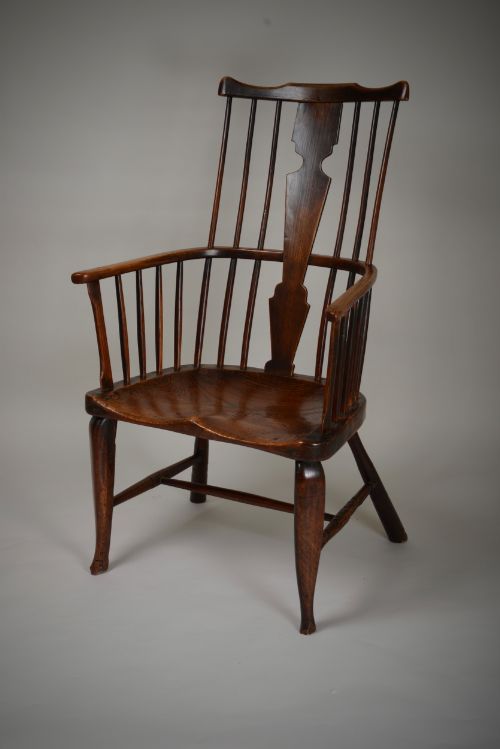
- A tall Windsor chair back featuring vertical spindles topped by a horizontal headpiece resembling a hair comb. This style offers extended support for the sitter's head and shoulders.
- Lathback
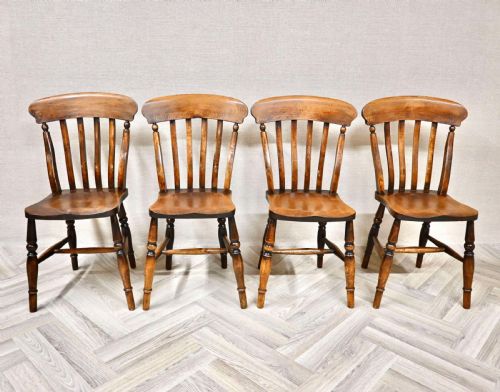
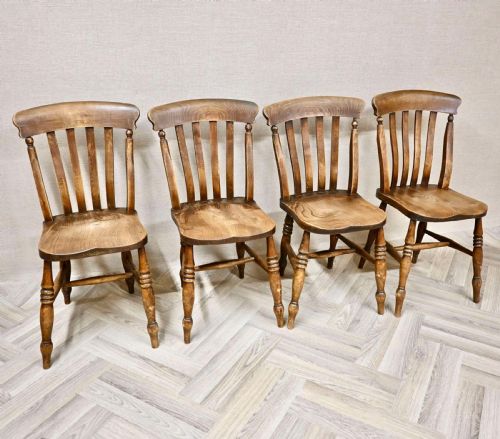
- A chair back featuring a central vertical slat, or lath, flanked by turned spindles. It is a common vernacular pattern found across nineteenth-century kitchen seating.
- Smokers bow
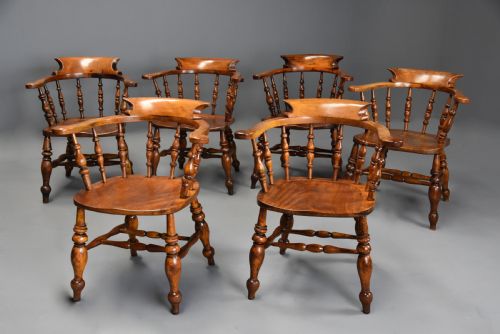
- A low-backed Windsor armchair with a continuous curved armrail and turned spindles. Also known as a captain's chair, it provides a compact and supportive seat.
- Wheelback
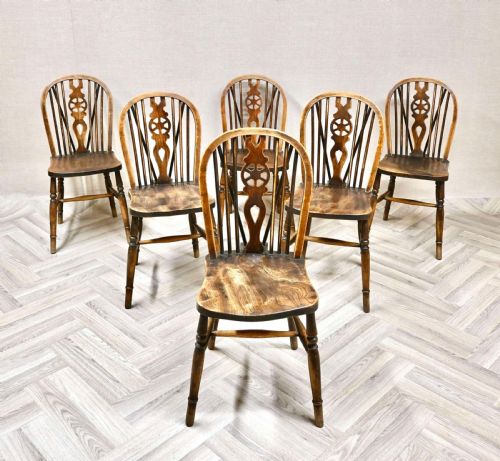
- A Windsor chair back incorporating a pierced central wooden splat shaped like the spokes of a cartwheel. This decorative motif gained popularity during the Victorian era.
Oak and Elm Dining Chairs: Frequently Asked Questions
How do I care for antique wooden seats?
Keep elm and oak chairs away from direct heat sources and sudden temperature shifts to prevent timber splitting. Feed the wood occasionally with a traditional wax to maintain the surface sheen.
Avoid heavy liquid polishes that build up a sticky residue over the grain. Gentle dusting with a dry cloth keeps the patination safe.
Are these chairs comfortable for daily meals?
The saddle-shaped elm seats are carved to fit the body, offering surprising support during long sittings. Their sturdy wooden construction is built for the rigours of everyday kitchen use.
Armchairs and smokers bows provide additional support for relaxed dining. Many people use seat pads if extra softness is desired.
What defines a Thames Valley piece?
Thames Valley chairs typically showcase refined craftsmanship using high-quality yew or elm woods. They often feature distinctive wheelback motifs and elegant, slender turnings.
These regional pieces represent a more formal expression of country chair making. Their refined proportions set them apart from heavier provincial kitchen seating.