


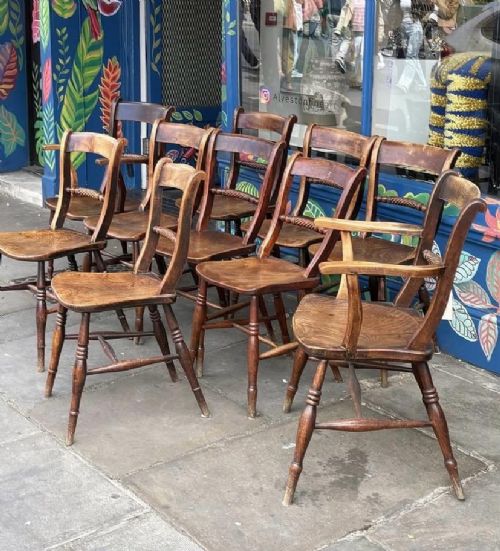
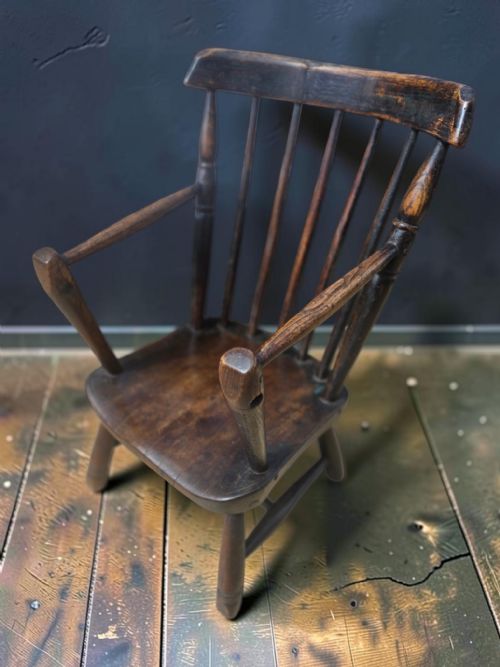
Oak and Elm Chairs
These oak and elm chairs bring sturdy regional character into a room, combining durable hardwood frames with comfortably turned seats.
Oak and Elm Chairs
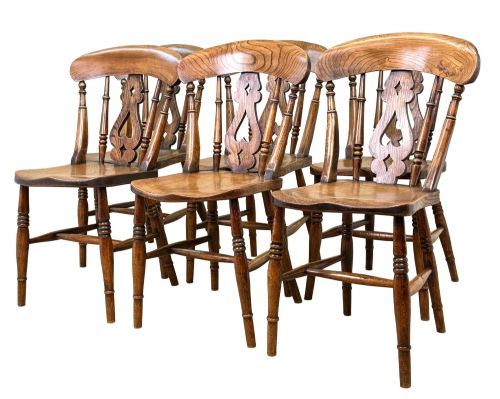
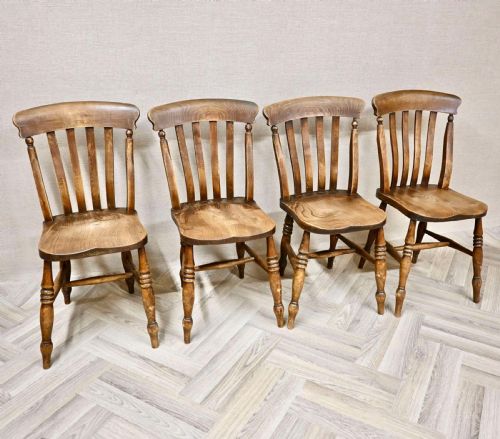
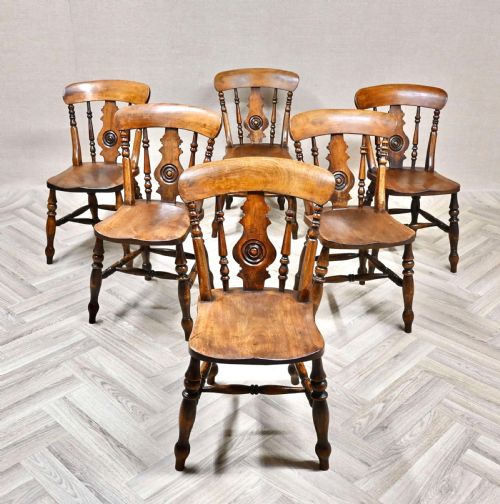
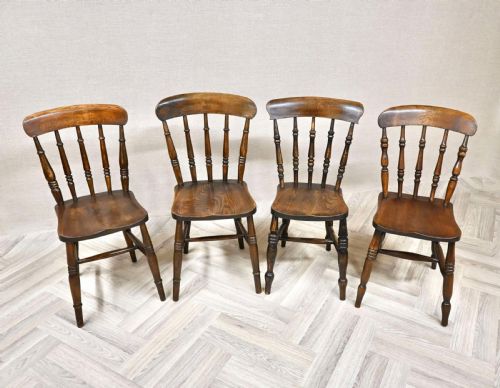
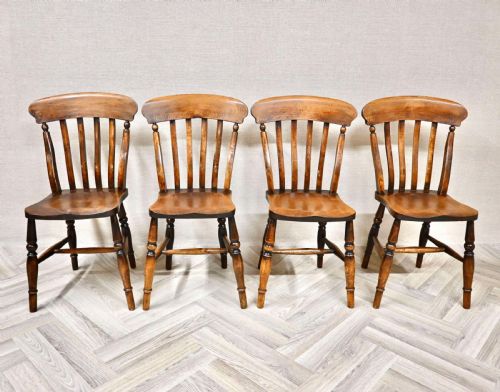
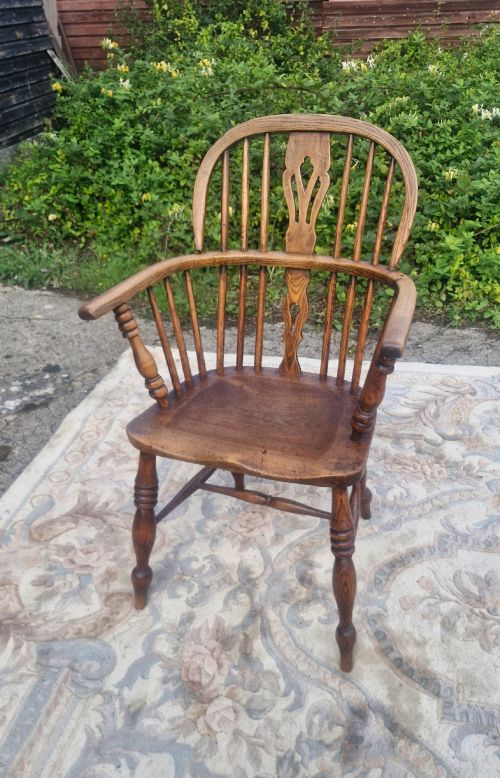
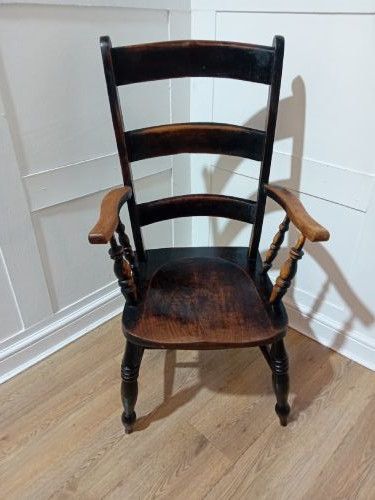
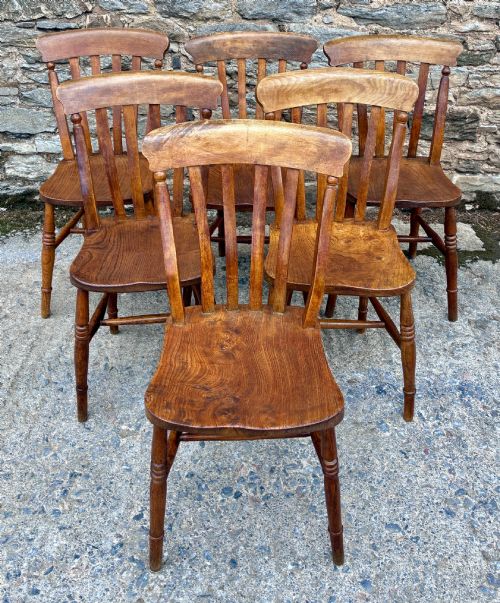
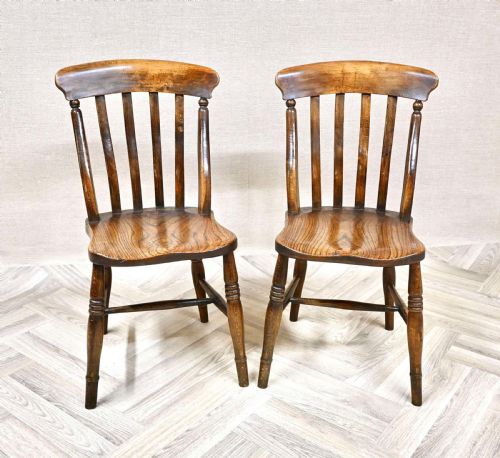
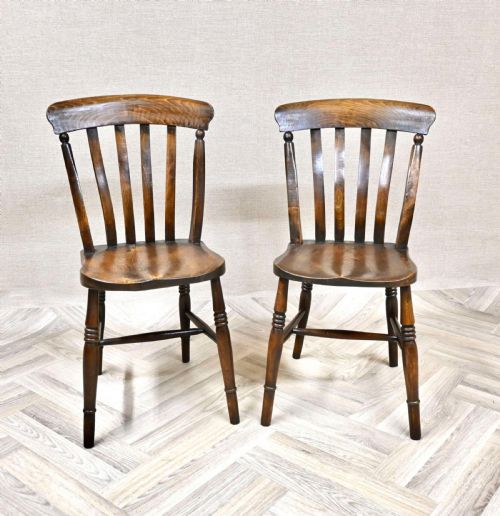
Oak and elm chairs span the eighteenth, nineteenth, and early twentieth centuries, emerging primarily from English regional workshops and provincial settings. These pieces include Windsor dining chairs, smokers bows, ladderbacks, and settles intended for robust daily use in farmhouses and country kitchens.
The most common examples on this page are nineteenth-century Windsor chairs and farmhouse kitchen seating. Makers utilised sturdy timber combinations, pairing oak for structural frames and elm for deeply sculpted seats.
How They Were Made
Craftsmen built these chairs using solid timber construction, turning spindles and legs on a lathe while shaping seats from a single thick block of elm. Ash, beech, and yew also appear in regional variations alongside oak and elm.
Traditional joints relied on pegged mortise and tenon construction for rigidity under heavy household use. Surfaces often retain original patinas or historic finishes developed over generations of domestic habitation.
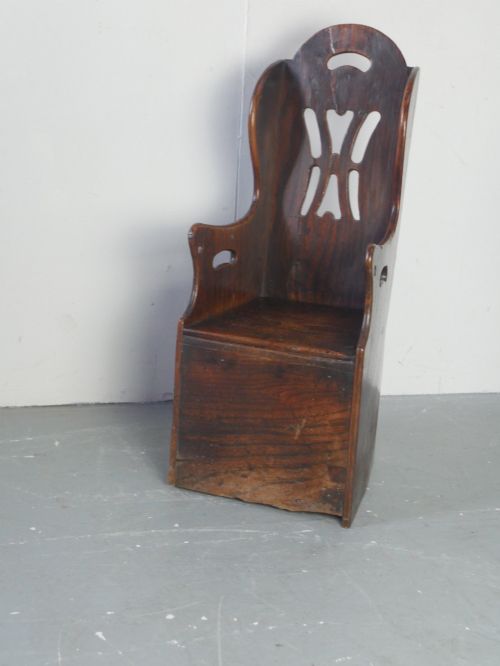
Available forms range from single children's chairs and Windsor armchairs to matched sets of dining chairs and storage settles.
What Varies in Quality
Quality rests in the depth of the elm seat carving and the balance of the turned spindle work. Superior examples exhibit harmonious proportions and confident joinery rather than hasty assembly.
The integrity of the original wood grain and the presence of an honest, undisturbed finish elevate certain pieces above standard vernacular production.
The Oak and Elm Chairs Glossary
- Windsor chair
- A chair built with a solid wooden seat into which the legs, back spindles, and bow are separately dowelled. This form offers strong construction and regional variety.
- Smoker's bow
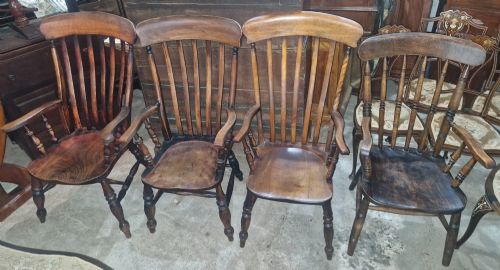
- A low-backed armchair with a continuous curved armrail supported by turned spindles, often used in country parlours. These chairs feature low backs and sturdy wooden arms.
- Comb back
- A Windsor chair variation where the vertical back spindles extend upward through a horizontal top rail to resemble a comb. This design provides extra upper back support.
- Vernacular
- Objects designed and built within a local regional tradition by jobbing carpenters rather than high-style cabinetmakers. Such pieces reflect local materials and practical needs.
- Settle
- A wooden bench with a high solid back, solid arms, and often a storage box beneath the seat. They stood near firesides to block cold drafts.
Oak and Elm Chairs: Frequently Asked Questions
How do I identify a Windsor chair?
A Windsor chair is characterised by a heavy solid timber seat into which the legs and back components are inserted directly. This construction method gives the chair its distinct silhouette and structural strength.
The back typically consists of turned spindles bent into a hoop, comb, or lath shape. Examining the underside reveals the wedged tenons of the legs where they pass through the seat.
Where were these country chairs made?
These pieces originate from rural workshops across English regions such as the Thames Valley, West Country, and Yorkshire. Local timber availability dictated the specific mix of woods used in each district.
Provincial joiners and chair bodgers supplied local farmhouses, country houses, and inns. Each region developed distinct turning styles and back patterns.
Can I use these chairs for daily dining?
These chairs were built specifically for heavy domestic service in farmhouse kitchens and dining rooms. Their robust timber construction handles everyday seating well.
Routine care involves keeping them away from direct heat sources to prevent timber shrinkage. Waxing helps preserve the dry historic finish on the oak and elm surfaces.
What is the difference between a smoker's bow and a captain's chair?
Smoker's bows and captain's chairs both describe low-backed country armchairs with continuous curved armrails. The terms often overlap in regional vernacular furniture descriptions.
Both forms feature sturdy turned spindle backs and deep elm saddle seats. They served as comfortable fireside or desk seating in nineteenth-century homes.