
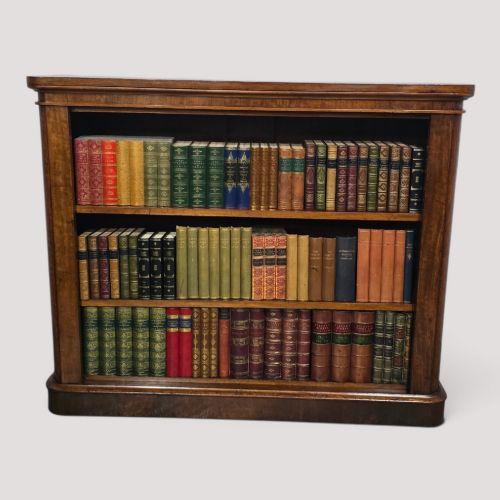
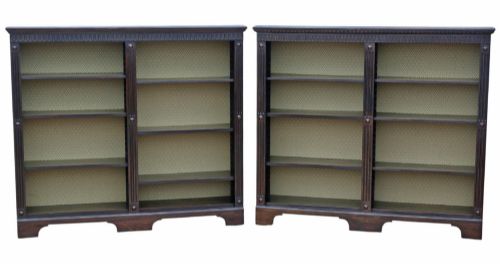
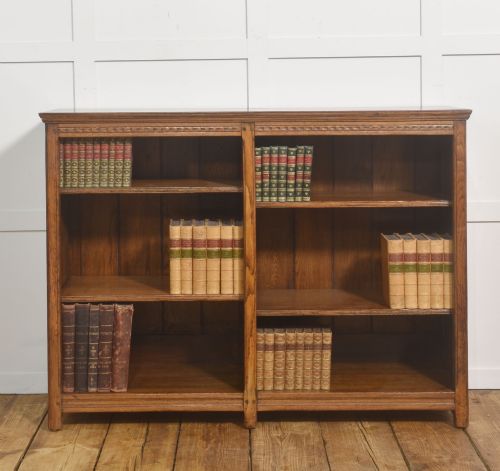
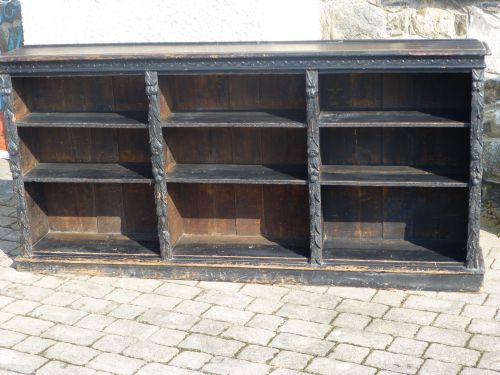
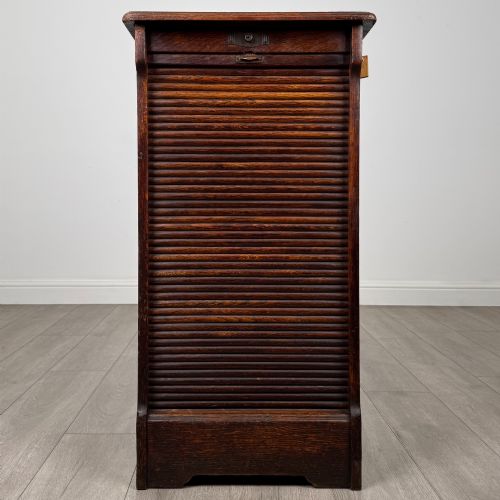
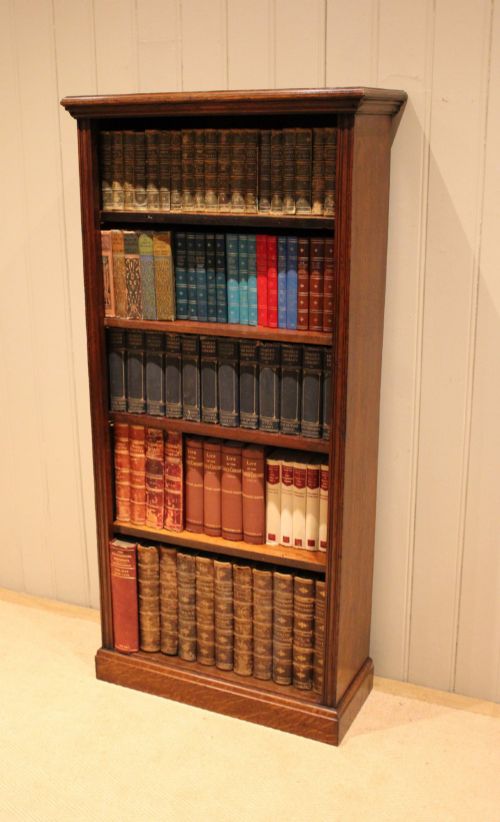
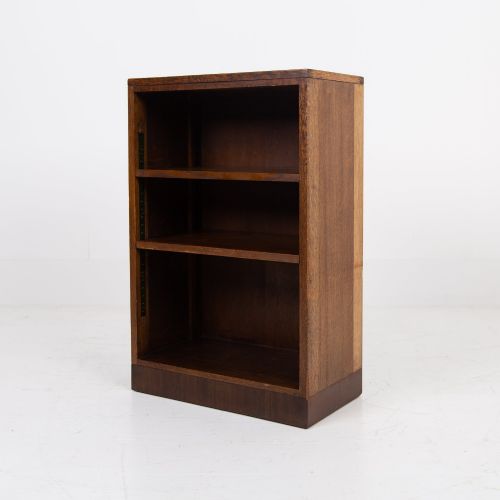
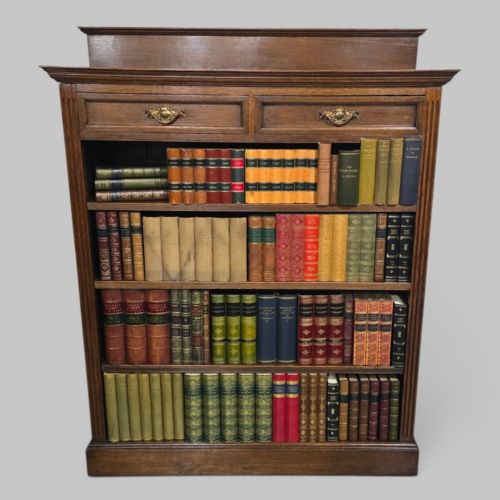
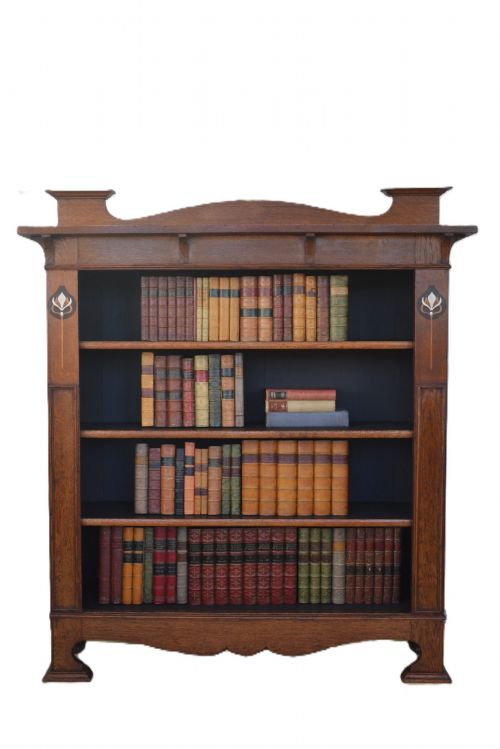


Oak Adjustable Shelves
Oak adjustable shelves bring adaptable storage to your library, most often seen in open bookcases from the Victorian and Edwardian periods.
Oak Adjustable Shelves
When you search for oak adjustable shelves, you are looking at sturdy bookcases designed to hold books of varying heights through movable internal boards. The pieces listed here are predominantly open front bookcases, though enclosed cabinet and glazed door variants also appear.
The versions you are most likely to meet on this page date from the nineteenth century through to the nineteen thirties. Victorian examples frequently display carved details, whilst Edwardian and later pieces lean towards simpler lines.
Forms range from low dwarf bookcases to tall library editions capable of holding substantial collections. Solid oak forms the core of these pieces, providing the necessary weight and durability for heavy volumes.
How they were made
Makers utilised solid oak alongside ebonised finishes, walnut, and mahogany accents to build these bookcases. Brass fittings often secure the internal mechanisms, allowing the shelves to move up and down easily.
Carving, inlay, and leather top surfaces distinguish specific pieces, particularly those from the Gothic Revival and Arts and Crafts movements. Glass doors protect the contents on select glazed variants, whilst open fronts remain the standard format.
Listings span the nineteenth century to the nineteen thirties, featuring solid oak, ebonised finishes, and glass door variations.
What varies in quality
The distinction between standard utility shelving and finer library pieces rests on the depth of the timber carving and the sophistication of the adjustable mechanism. Heavier mouldings and denser solid oak indicate higher workshops.
Decorative elements such as carved green men, lion heads, and floral columns separate mass-produced items from bespoke cabinet work. The integrity of the timber joints and the finish applied to the oak determine the lasting presence of the bookcase.
Waring and Gillows
The Oak Adjustable Shelves Glossary
- Dwarf bookcase
- A low bookcase, typically standing below chest height, designed to sit beneath windows or against shorter walls. These pieces provide accessible open storage without dominating a room.
- Open bookcase
- A bookcase lacking doors, exposing the book spines and shelf interiors directly to the room. This form makes up the majority of the available oak pieces.
- Ebonised oak
- Timber treated with a dark chemical finish to imitate ebony. This dark treatment appears on nineteenth century decorative library furniture.
- Breakfront
- A piece of furniture with a central section that projects forward from the flanking sides. This architectural layout adds depth and visual interest to larger library bookcases.
- Glazed doors
- Fitted glass panels set into wooden frames to enclose the shelving. These doors protect books from dust whilst maintaining visibility.
Oak Adjustable Shelves: Frequently Asked Questions
How do the adjustable shelves work?
Most historic versions use wooden support pins or integrated rack systems set into the interior sides of the bookcase. This allows the boards to be repositioned to accommodate taller or shorter books.
Moving the boards requires lifting them clear of their wooden or metal supports and placing them at the desired height.
Are these bookcases made of solid oak?
The listings feature a mix of solid oak constructions alongside pieces incorporating oak veneers and related secondary timbers. Heavier library editions generally employ solid oak throughout to support heavy book collections.
Inspect the grain patterns on the top and sides to determine the extent of solid timber used in construction.
What periods do these bookcases come from?
The available pieces span the nineteenth and early twentieth centuries, covering the Victorian, Edwardian, and Art Deco eras. Victorian examples frequently feature Gothic or carved ornamentation.
Later pieces from the nineteen twenties and thirties tend to exhibit simpler Arts and Crafts or traditional styling.
Where should I place an open oak bookcase?
Open bookcases suit studies, living rooms, and libraries where dry conditions help preserve both the books and the timber. Keeping the oak away from direct heat sources prevents the wood from drying out.
Ensure the floor is level so the tall upright frames remain stable under the weight of the volumes.