





Novelty Silver Cellar
These playful novelty silver cellar designs transform ordinary dining tables into miniature menageries and theatrical scenes.
Novelty Silver Cellar
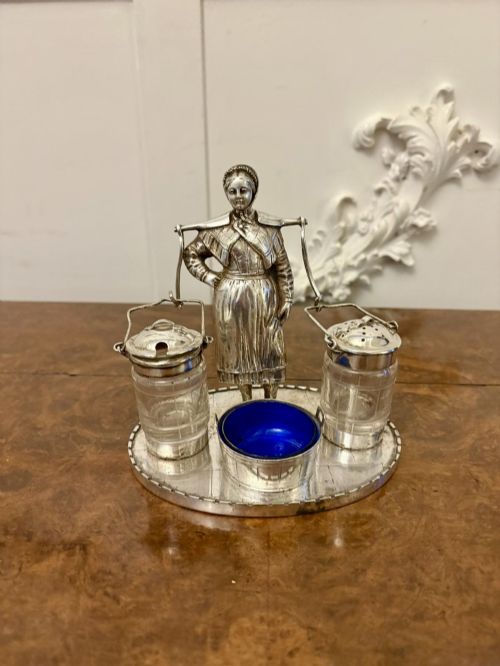
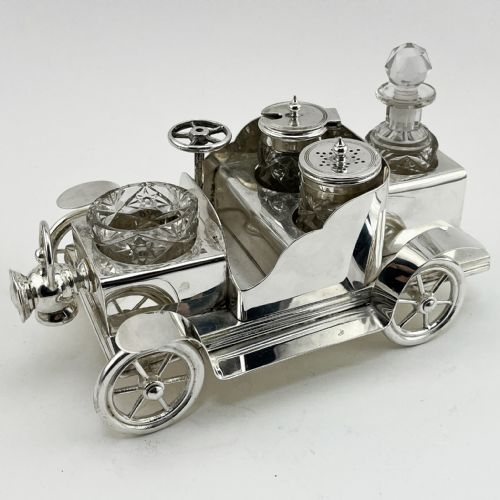
A novelty silver cellar brings sculptural whimsy to the dining table by shaping condiment vessels into animals, vehicles, and everyday objects. You will encounter figural designs ranging from farmyard animals and birds to wheeled carriages and garden wheelbarrows.
The pieces on this page span the nineteenth and twentieth centuries, taking the form of individual salt dishes, paired shakers, and complete cruet sets. Victorian and Edwardian examples dominate the selection, executed in both sterling silver and silver plate.
How they were made
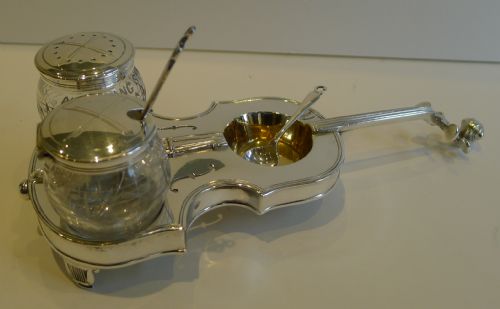
Silversmiths utilised traditional casting and plating techniques to achieve intricate detail in animal feathers, wheels, and musical instruments. Sterling silver and silver plate provide the primary metallic bodies, often paired with contrasting coloured glass inserts.
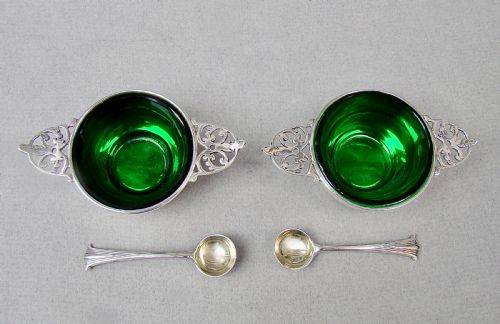
Makers integrated fitted glass liners, including cobalt and green glass, to protect the silver from the corrosive nature of salt and condiments. Gilding was also applied to internal surfaces for additional protection and visual contrast.
Novelty Silver Cellar Retail Price Guide 2026
Typical asking prices for novelty silver cellar among the pieces listed under this phrase on Sellingantiques today, from the lower quarter to the upper quarter. They describe what is for sale here now, not the wider market.
Listings feature items spanning the Victorian, Edwardian, and mid-twentieth century eras in both sterling silver and silver plate.
What varies in quality
The distinction between ordinary and exceptional pieces lies in the crispness of the casting and the realism of the figural modelling. Master silversmiths captured naturalistic textures in plumage and fur, whereas lesser pieces rely on simplified surfaces.
Completeness significantly influences the standing of a set, particularly when original glass liners and matched cruet components remain intact. The presence of clear hallmarks and registration marks further distinguishes notable maker production from unmarked workshop output.
Josiah Williams & Co·Sampson Mordan·Thomas Johnson·Berthold Muller
The Novelty Silver Cellar Glossary
- Cruet set
- A matched assembly of condiment containers holding salt, pepper, mustard, and sometimes oil or vinegar. These sets sit together on dedicated stands or trays.
- Salt cellar
- An open vessel used to hold salt at the dining table before the invention of the spring-loaded shaker. Guests took pinches of salt from the open bowl using small spoons.
- Silver plate
- A base metal, such as copper or Britannia metal, coated with a thin layer of pure silver. This technique provided an accessible alternative to solid sterling silver during the nineteenth century.
- Cobalt glass
- A deep blue glass frequently used for the interior liners of open salt cellars. The dark colour creates a striking visual contrast against polished silver.
- Sterling silver
- An alloy consisting of ninety-two point five percent silver and seven point five percent other metals, typically copper. This standard guarantees durability while maintaining the lustre of pure silver.
Novelty Silver Cellar: Frequently Asked Questions
What is a novelty silver cellar?
A novelty silver cellar is a small container for salt or condiments shaped to resemble an animal, vehicle, or other whimsical object.
These pieces were designed to amuse guests at formal dining tables during the Victorian and Edwardian periods.
How were salt cellars used?
Open salt cellars sat beside each place setting, holding loose salt that diners applied to their food using small spoons or fingers.
Enclosed shakers later emerged for pepper and finer salt, eventually forming the matched sets seen in later cruet assemblies.
How do I clean silver salt cellars?
Wash silver components gently in warm soapy water using a soft cloth, taking care to remove any corrosive salt residue immediately.
Remove glass liners before cleaning to prevent moisture from becoming trapped between the glass and the metal.
How do I date these pieces?
Maker marks, date letters, and silver hallmarks stamped onto the metal provide precise manufacturing years for sterling silver items.
Stylistic cues and registration numbers on silver-plated pieces help narrow down the decade of production when official hallmarks are absent.